





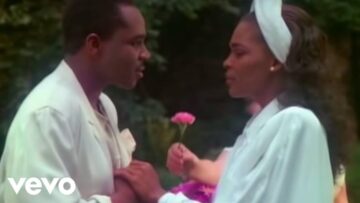

Steve Winwood – Higher Love
His First American No.1 Opens With A Drum Fill Played To Kill Time Between Takes
John Robinson had finished his drum overdubs at Unique Recording in New York and had nothing left to do. Chaka Khan was getting ready to sing. To pass the time he started tapping rimshots across a brass Ludwig snare with the snare wires switched off, so that it rang like a timbale. Tom Lord-Alge, 24 and working his first album as head engineer, had the tape machine in record. Those idle seconds now open Higher Love, and they show what made the record work. Steve Winwood had spent years playing everything himself, and his first American No.1 was built from the parts he didn’t play.
Keep watching: Traffic – Evening Blue · explore more →
That No.1 was a long time coming. Winwood was born in Birmingham, England, on May 12, 1948, joined the Spencer Davis Group in 1963 and co-wrote Gimme Some Lovin’ and I’m a Man before he was out of his teens. Traffic and Blind Faith followed. As a solo artist he retreated. He made Arc of a Diver in 1980 and Talking Back to the Night in 1982 at his home studio in Gloucestershire, playing every instrument on both. The first produced a No.7 American hit in While You See a Chance. The second showed that the method had a ceiling.
His manager, Ron Weisner, argued for the opposite approach: go to New York, hire players, and step out from behind the Hammond organ to front the band. Winwood’s marriage in England was ending, and he took the advice. He brought in co-producer Russ Titelman, who had worked with Rufus and Chaka Khan, and the sessions ran from August 1985 to May 1986 across several Manhattan studios. The song came from his partnership with Texas-born lyricist Will Jennings, who described the words as a modern hymn, a plea for something larger than ordinary romance.
A room full of other people’s ideas
A hymn needed a congregation, and Titelman supplied one. Robinson and Khan were both Rufus alumni. Nile Rodgers played rhythm guitar, Eddie Martinez played lead and David Frank programmed the synthesizer horns, while Winwood sang and handled keyboards. Khan’s answering vocals give the chorus its gospel lift. Then there was the fill. Lord-Alge credited his brother Chris with the rule that saved it: if a musician is in the room, the machine should be recording. To turn the ad-lib into an introduction he offset two tape machines, so the fill played first and the song landed on the beat behind it. Titelman remembered Khan hearing it and saying it sounded like voodoo. Robinson called it “one of the best drum intros I’ve ever played” and put it on his answering machine.
The public agreed with him. Island released the single in June 1986 and the album, Back in the High Life, on June 30. The Official Charts Company logged a No.13 peak in Britain on July 26. Billboard’s Hot 100 ranked the song No.1 on August 30, 1986, the first American chart-topper of a career that had started in 1963. The album reached No.3 on the Billboard 200, and the RIAA certified it triple platinum. At the 1987 Grammy Awards the Recording Academy named the single Record of the Year over Peter Gabriel’s Sledgehammer and Robert Palmer’s Addicted to Love, gave Winwood the male pop vocal award, and handed the album the engineering prize.
Out from behind the organ
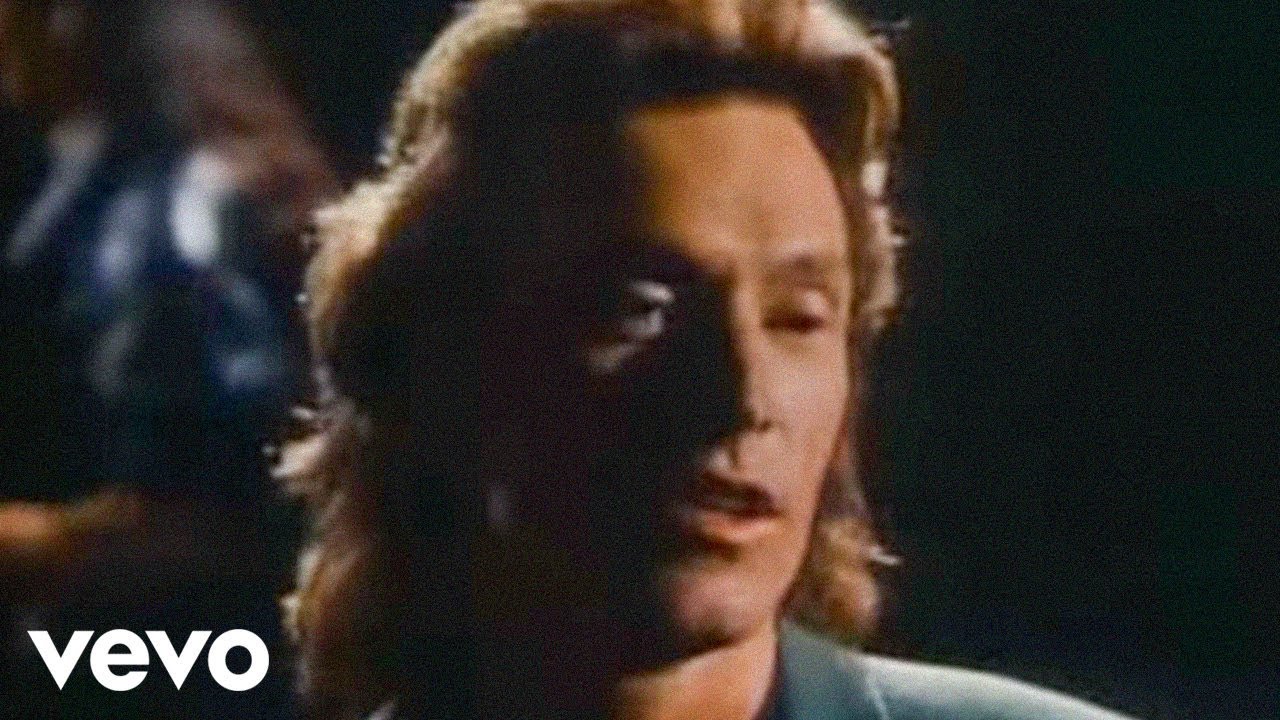
The video made Weisner’s other point for him. Peter Kagan and Paula Greif shot it in June 1986 to the shorter single edit, cutting fast between color and black-and-white, with Glenn Lazzaro and Laura Israel editing. It puts Winwood on his feet and dancing with Khan, while Rodgers plays guitar with the backing band. MTV played it heavily and nominated it for several Video Music Awards in 1987, none of which it won. Kagan and Greif reused the look almost shot for shot that November for Duran Duran’s Notorious.
The song has kept attracting other voices ever since. Whitney Houston recorded it in 1990 with producer Narada Michael Walden for the Japanese edition of I’m Your Baby Tonight. Kygo rebuilt that vocal into a new single, released June 28, 2019, and took it to No.2 in Britain. James Vincent McMorrow slowed it to a hush for a charity album in 2011. Each version repeats the lesson of the original session. Winwood spent six years proving he could make records alone. The one people remember starts with a drummer killing time, leans on a singer from another band, and exists because an engineer left the tape running. He got his No.1 when he stopped trying to play it all.
SONG INFORMATION
Enjoyed this one? New forgotten gems every day — tap Music Videos Club below to visit and follow us on Facebook:
Related videos
 Watch LaterAdded
05:29
Watch LaterAdded
05:29  Watch LaterAdded
02:58
Watch LaterAdded
02:58  Watch LaterAdded
04:13
Watch LaterAdded
04:13