




Sonny & Cher – I Got You Babe
She Hated It, Went Back To Bed, Then It Sold Three Million In 21 Days
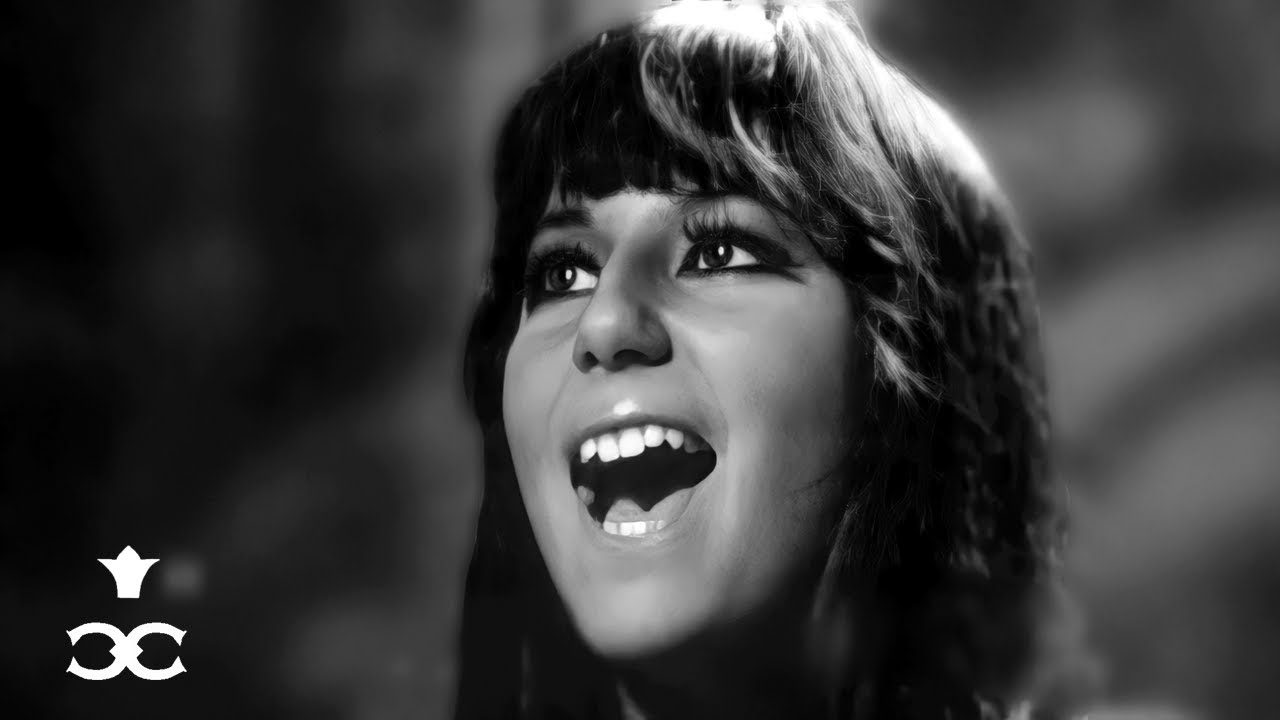
“I Got You Babe” was released in July 1965 as the lead single from Sonny & Cher’s debut album Look at Us, hitting No.1 on the US Billboard Hot 100 on August 14, 1965 where it stayed for three weeks. The song also topped the charts in the UK and Canada, selling over three million copies and becoming the defining love song of the mid-1960s counterculture. What most fans don’t know: Sonny Bono wrote the entire song late one night in their garage on an $85 piano with three broken keys at the bass end, scribbling lyrics on a scrap of dry cleaner’s cardboard, then woke Cher up in the middle of the night to sing it—and she absolutely hated it, told him “OK, I’ll sing it and then I’m going back to bed,” and only fell in love with the song after Sonny changed the key in the bridge to fit her voice.
The chart dominance was unprecedented for a duo that had been kicked out of venues for looking “too strange.” The song knocked Cher’s own solo version of “All I Really Want to Do” off KHJ radio’s No.1 spot, and at one point Sonny & Cher had five songs simultaneously in the top 50—a feat equaled only by the Beatles and Elvis Presley. The parent album Look at Us peaked at No.2 on the Billboard 200 for eight straight weeks in late 1965, blocked from the top spot by the Beatles’ Help! soundtrack. “I Got You Babe” sold over one million copies in 1965 alone, earning gold certification from the RIAA, and by November 2011, digital sales had reached 372,000 in the US. This success came after years of struggle—Sonny was 30 years old and Cher was just 19 when they recorded it, and they’d been living in their manager’s house while Sonny worked as a record producer for Phil Spector.
The song was inspired by Bob Dylan’s “It Ain’t Me Babe,” which had popularized using the word “babe” in song titles. Sonny deliberately wanted to echo that Dylan vibe while creating something warmer and more hopeful. He wrote it late at night sitting in the garage at his cheap piano, pouring out lyrics about devotion and partnership on whatever scrap he could find—in this case, a piece of cardboard from the dry cleaners. The message was earnest and sincere: “They say we’re young and we don’t know / Won’t find out until we grow.” Sonny later told the New Musical Express in 1966: “The lyrics of my songs are very important to me.” When he finished writing, he immediately rushed to wake Cher. She remembered to Billboard: “Sonny woke me up in the middle of the night to come in where the piano was, in the living room, and sing it. And I didn’t like it and just said, ‘OK, I’ll sing it and then I’m going back to bed.’ So I was never a very good barometer.” The bridge initially didn’t fit her vocal range, but once Sonny transposed the key to accommodate her voice, everything clicked and she realized they had something special.
Recording took place on June 7, 1965 at Gold Star Studios in Hollywood, with the session running from 2 PM to 5 PM. Harold Battiste—the New Orleans arranger who’d founded the first African American musician-owned label, AFO Records—provided the instrumental arrangement, and legendary session musicians The Wrecking Crew performed the backing track. The prominent instrumental figure that many assumed was an ocarina was actually an oboe, according to Battiste. The sound also featured a balalaika mandolin guitar layered with piano, creating a folk-rock atmosphere that perfectly captured the mid-1960s zeitgeist. The production borrowed heavily from Phil Spector’s Wall of Sound techniques—using the 6/8 rhythm and hook-heavy approach Sonny had learned while working for Spector. Engineer Stan Ross captured everything at Gold Star’s legendary facility on Santa Monica Boulevard, the same studio that had recorded “La Bamba,” “To Know Him is to Love Him,” and countless other hits. The Wrecking Crew were working around the clock on multiple projects, and Sonny’s sessions followed the Philles Records model, with Battiste substituting for Jack Nitzsche as arranger.
“I Got You Babe” served as the opening track and lead single from Look at Us, released on Atco Records—a subsidiary of Atlantic Records run by Ahmet Ertegun. Here’s where things got interesting: Ertegun wanted to release “It’s Gonna Rain” as the A-side, considering “I Got You Babe” merely a B-side filler. Sonny vehemently disagreed and took matters into his own hands. While Atco promoted “It’s Gonna Rain,” Sonny personally promoted “I Got You Babe,” making deals with radio stations and promising exclusives. He struck gold with program director Ron Jacobs at KHJ-LA radio, who agreed to play the song once per hour if he could have it exclusively. DJs loved it immediately, and the saturation airplay worked. Meanwhile, Sonny & Cher were hobnobbing with The Rolling Stones, who told them their look was too radical for American audiences to “get” and recommended they tour England instead. In July 1965, they did exactly that, and thanks to behind-the-scenes trickery by managers Charlie Greene and Brian Stone—who allegedly paid 100 pounds to the Hilton Hotel manager in London to publicly throw them out for the way they dressed—Sonny & Cher made headline news the day they arrived. The publicity stunt worked: within 21 days of release, the record sold three million copies.
The cultural impact extended far beyond the charts. In 2011, both Billboard and Rolling Stone named it one of the greatest duets of all time, and in 2017 it was inducted into the Grammy Hall of Fame. Rolling Stone ranked it No.444 on their 2004 list of the 500 Greatest Songs of All Time, though in a 2011 poll, their readers paradoxically ranked it the eighth-worst song of the 1960s—proof that even iconic songs divide audiences. The song made a major comeback when it served as Phil Connors’ (Bill Murray) recurring wake-up music in the 1993 film Groundhog Day, introducing it to a new generation. UB40 and Chrissie Hynde recorded a reggae-pop version in 1985 that hit No.1 in the UK and No.28 in the US. Etta James released a funky version in 1968 that reached No.69. In 1993, Cher re-recorded it with Beavis and Butt-Head—the duet peaked at No.35 in the UK and went double platinum in the US, with a psychedelic animated video where the characters called Sonny “a dork and a wuss” while Cher agreed.
Sonny and Cher performed the song together one final time on November 13, 1987 during an impromptu reunion on NBC’s Late Night with David Letterman. They hadn’t planned to sing, but Letterman convinced them to put their differences aside. Sonny got emotional during the performance, and it became a poignant moment—their last collaboration before Sonny’s death in a skiing accident in 1998. When Cher began her Las Vegas residency in 2017, she performed the song as a virtual duet with a projection of Sonny, and on February 14, 2002, she sang it with R.E.M. at the Kodak Theatre in Los Angeles—her first performance without Bono following his death. Looking back, Cher told Billboard in 2015: “Jesus, it was everything that we were living for. It was what we were breathing for. It was our goal to do it. We struggled and struggled and struggled because of the way we looked. I mean, we looked different than anyone else. We got thrown out of every place.” That struggle, captured in four minutes of earnest devotion on a piece of dry cleaner’s cardboard, became the soundtrack to 1965’s summer of love—and Cher’s reaction? She just wanted to go back to bed.
SONG INFORMATION
Related videos
 Watch LaterAdded
 Watch LaterAdded
03:07
Watch LaterAdded
03:07  Watch LaterAdded