



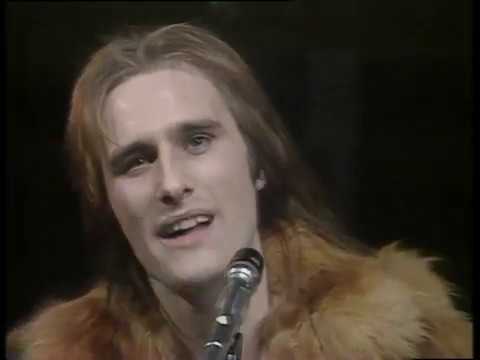




Steve Harley & Cockney Rebel – Make Me Smile (Come Up And See Me)
The Bitter Breakup Letter That Fooled The Entire World Into Dancing
On the surface, “Make Me Smile (Come Up and See Me)” sounds like a breezy pop song about a lost love — all acoustic guitars, stop-start dynamics, and an irresistible “ooh-la-la” chorus. It is not. Every line is a carefully aimed dagger aimed at the three bandmates who had walked out on Steve Harley in July 1974, leaving him to rebuild from scratch. “You’ve broken every code, and pulled the rebel to the floor” is not heartbreak over a girlfriend — it’s fury at the men who nearly destroyed Cockney Rebel. Released on January 31, 1975, it hit number one in the UK within weeks and has never really stopped being played since.
The single spent two weeks at number one on the UK Singles Chart in February 1975, also topping the Irish chart and charting across the Netherlands, Belgium, Australia, and South Africa. Its only American release — in 1976 — scraped to number 96 on the Billboard Hot 100, the band’s sole US chart entry. It has since sold over 1.5 million copies worldwide, received a platinum certification from the BPI in November 2024, and is one of the most-played songs in the entire history of British broadcasting. When the band heard it had hit number one — they were in Los Angeles at the time — they celebrated by jumping fully clothed into their hotel swimming pool.
The original Cockney Rebel had imploded when Jean-Paul Crocker, Milton Reame-James, and Paul Jeffreys quit, demanding Harley share songwriting credit. He refused. Only drummer Stuart Elliott stayed. Harley assembled an entirely new lineup — guitarist Jim Cregan, keyboardist Duncan Mackay, and bassist George Ford — and went straight into the studio nursing a wound he had to get off his chest. His first post-split single, released under his own name, was almost immediately withdrawn as a false start. Then came “Make Me Smile.” “They left me in the lurch, didn’t they?” Harley said later. “That was my way of getting it off my chest.” He deliberately set dark, cynical lyrics against a euphoric sound — laughing in the face of the people who thought they could break him. “Come up and see me!” was not an invitation. It was a taunt.
The recording sessions at Abbey Road Studios and Air Studios in November and December 1974 began with a problem: the song was initially a slow, dirgy blues number — “a bit ramshackle,” according to Cregan — and not an obvious single. Producer Alan Parsons suggested speeding the tempo and restructuring the chorus phrasing entirely, making it more rhythmic. “Suddenly it was swinging, and bopping, and ooh-la-la,” Harley recalled. “We saw a hit record being built here, there was no doubt.” Duncan Mackay devised the ascending keyboard intro. Jim Cregan’s flamenco guitar break — the song’s most distinctive moment — originated as a soundcheck warm-up captured on tape. A saxophone solo had been planned for that spot; Cregan’s accident replaced it entirely. Backing vocals came from Tina Charles, Linda Lewis, and Liza Strike, giving the chorus the warmth the venomous lyrics needed to hide behind.
The Best Years of Our Lives, the album that followed in March 1975, reached number four on the UK Albums Chart and gave Harley a second hit in “Mr. Raffles (Man, It Was Mean).” Harley continued to lead various Cockney Rebel incarnations through the late 1970s, came close to landing the lead role in Andrew Lloyd Webber’s The Phantom of the Opera, and duetted with Sarah Brightman on the show’s title track. He remained a beloved live performer in Britain for decades, reuniting with Cregan, Mackay, and Elliott for anniversary tours until his death from cancer in March 2024 at the age of 73.
The song’s afterlife has been relentless. Over 120 artists have covered it. Duran Duran’s version appeared on the Threesome soundtrack in 1994. Erasure recorded it. Jeremy Clarkson launched a national chart campaign in 2015 to help Harley pay a speeding fine. The song re-charted in 1992, 1995, 2005, 2015, and again in 2024 following Harley’s death — returning to the UK Downloads chart at number 13 as a spontaneous tribute from a country that clearly hadn’t finished with it yet.
Harley called the lyrics “schoolboy poetry” — written in distress, in anger, and with a smile sharpened to cut. “I made it really hooky,” he said, “because the lyrics are quite dark and cynical, frankly.” That was always the genius of it: a song that sounds like a celebration, a song that feels like an invitation, built entirely on the bones of something that had broken apart. Steve Harley reassembled those bones, sped them up, added a flamenco guitar break that was never supposed to be there — and made one of the most joyful-sounding acts of revenge in British pop history.
SONG INFORMATION
Related videos
 Watch LaterAdded
07:50
Watch LaterAdded
07:50  Watch LaterAdded
03:09
Watch LaterAdded
03:09  Watch LaterAdded
03:40
Watch LaterAdded
03:40