




The Monkees – Daydream Believer
The B-Side That Became a Classic — Because Nobody Could Find the Master Tape for the A-Side
The whole thing almost didn’t happen. “Daydream Believer” had been recorded during the sessions for Pisces, Aquarius, Capricorn & Jones Ltd. and then quietly shelved — it hadn’t even made the album. When it came time to release the next Monkees single in the fall of 1967, the plan was for Michael Nesmith to take the lead on a Barry Mann and Cynthia Weil song called “Love Is Only Sleeping,” with “Daydream Believer” riding along as the B-side. Then, a week before release, Colgems discovered that the European single masters for “Love Is Only Sleeping” weren’t ready. The masters for “Daydream Believer” were. A panicked last-minute flip — A-side becomes B-side, B-side becomes A-side — and the most beloved song in the Monkees’ catalogue was accidentally promoted to the position it was always supposed to occupy. Sometimes the music industry gets lucky by being incompetent.
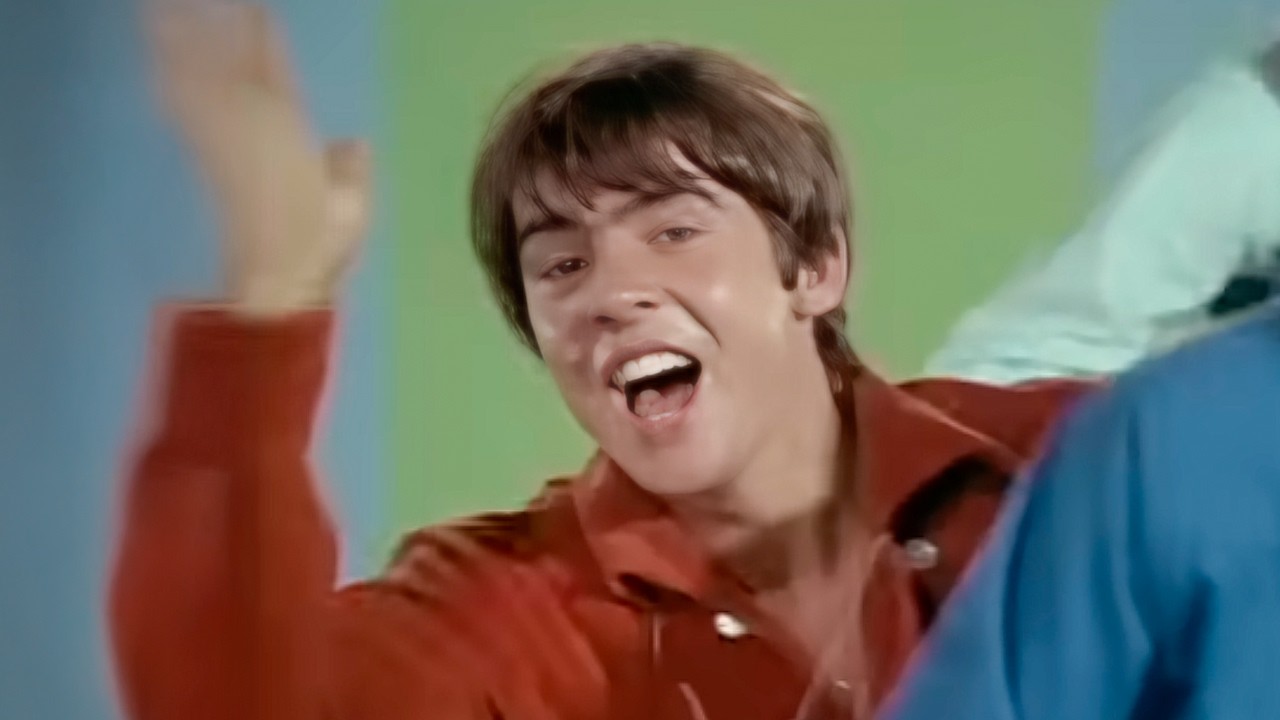
Released on October 25, 1967, “Daydream Believer” climbed to number one on the Billboard Hot 100 in December and stayed there for four weeks, simultaneously topping the charts in Canada and New Zealand and reaching number five in the UK. It was the Monkees’ third and final US chart-topper, and it was eventually knocked off the top spot by The Beatles’ “Hello Goodbye” — the kind of competition that tells you something about where pop music stood in the last weeks of 1967. The official promotional film, shot with the band’s characteristic loose energy, was performed on the October 9 episode of their NBC television series — Davy Jones bouncing at the microphone, all charm and energy, three weeks before the single was even in stores.
The song had been written by John Stewart, who had spent the previous six years as a member of the Kingston Trio before leaving the group in 1967 and briefly teaming up with a pre-famous John Denver. He described the genesis of the lyric with characteristic self-deprecation: he had gone to bed one evening feeling like he’d wasted the entire day doing nothing but daydreaming, and the title arrived from that feeling of mild, domestic guilt. Stewart himself didn’t think it was one of his best songs — “not at all,” he told interviewers repeatedly — which puts him in distinguished company among songwriters who couldn’t see what they had in front of them. He had already pitched it to We Five and Spanky and Our Gang, both of whom passed. The song that would keep him financially afloat for the rest of his life had already been turned down twice before Chip Douglas heard it at a party at Hoyt Axton’s house in Laurel Canyon.
Douglas, who had recently taken over as the Monkees’ producer, brought the song back to the studio and assembled a recording that remains a small marvel of collaborative craftsmanship. Peter Tork sat down at the piano and invented the intro — that clean, tumbling figure that sets the whole song up — entirely on the spot. Michael Nesmith added lead guitar. Micky Dolenz took care of backing vocals. Davy Jones sang lead, though not without friction: Jones has been quoted saying he was “pissed off” throughout the session, his patience worn thin by the number of takes Douglas was pulling. That barely-contained irritation never surfaced in the vocal — if anything, Jones sounds sunnier than anyone had a right to expect. The orchestral arrangement came from Shorty Rogers, a jazz trumpeter and composer whose lush woodwind writing gave the track its warm, autumnal shimmer. Colgems’ distributor RCA had one demand: the word “funky” in the second verse had to go. Stewart had originally written “now you know how funky I can be.” The label was unmoved. As Micky Dolenz explained years later, “funky” in 1967 carried enough sexual charge that the label was having none of it. “Happy” went in instead. Stewart resisted, then relented. He knew what he had.
The Monkees were, by October 1967, in the strange position of being one of the biggest acts in American pop while carrying the persistent stigma of being manufactured for television. That stigma wasn’t entirely unearned — the band’s earliest hits had been recorded largely by session players, with the four members added later — but by “Daydream Believer,” the group were playing their own instruments and the argument was moot. What Pisces, Aquarius, Capricorn & Jones Ltd. had shown, and what The Birds, The Bees & The Monkees would confirm when it arrived in April 1968 and peaked at number three, was that the Monkees were capable of making records that didn’t need a television show to justify their existence. “Daydream Believer” is the purest evidence of that: a song with no gimmick, no tie-in, and no trick beyond the quality of its melody and the warmth of its performance.
The song’s reach beyond its original moment is considerable. Anne Murray took a lush country version to number three on the US country chart and number 12 on the Hot 100 in 1979. The 1986 Monkees reunion — Dolenz, Jones, and Tork, without Nesmith — was accompanied by a remixed version with a heavier percussion track, released as the B-side to comeback single “That Was Then, This Is Now,” and a new generation of American teenagers found their way to it all over again. John Stewart, for his part, never stopped acknowledging that the song’s royalties had paid his bills across five decades. “It kept me alive for all these years,” he told an interviewer in 2006, with something between gratitude and gentle disbelief.
Davy Jones, who named “Daydream Believer” as his favourite Monkees song, died on February 29, 2012. Peter Tork — the man who wrote that piano intro on the spot in the studio — died on February 21, 2019. What they made together on a June afternoon in 1967, on a song that had already been rejected twice and was days away from being buried as a B-side, is as close to a perfect American pop record as the decade produced. It was knocked to number one by accident, and it has stayed there in the collective memory ever since.
SONG INFORMATION
Related videos
 Watch LaterAdded
 Watch LaterAdded
03:44
Watch LaterAdded
03:44  Watch LaterAdded
03:35
Watch LaterAdded
03:35