







George Michael & Elton John – Don’t Let The Sun Go Down On Me (Live)
The Song Elton Said Would End George’s Career
Released on November 30, 1991 as a live duet recording, “Don’t Let The Sun Go Down On Me” became a transatlantic number one, topping the UK Singles Chart for two consecutive weeks in December 1991 and reaching number one on the Billboard Hot 100 on February 1, 1992 where it stayed for one week. The track also dominated the Adult Contemporary chart for two weeks and reached number one in seven countries including Canada, Belgium, Norway, and Switzerland. What made this commercial triumph particularly sweet was that Elton John had left a message on George Michael’s answering machine warning him the song was not strong enough to be released and that doing so would mean the end of George’s career. When the single entered the Hot 100 at number seventy-two on December 7, 1991, allowing John to tie Elvis Presley’s record of twenty-three consecutive years with a song in the US top forty, the older artist had to eat his words as Michael’s instincts proved spectacularly correct.
The single spent twenty weeks on the Billboard Hot 100 and became George Michael’s final American number one before his death in 2016, while also marking Elton John’s eighth solo chart-topper. In the UK, it became Michael’s last chart-topper as well, peaking at number two behind only “Bohemian Rhapsody” and “I Will Always Love You” on that year’s sales chart. The track sold over one million copies in the United States alone and helped cement both artists’ legacies as premier vocalists of their generation. The song competed against MC Hammer’s “2 Legit 2 Quit,” Michael Jackson’s “Black or White,” and Mariah Carey’s “Can’t Let Go” for airplay through winter 1991 and early 1992, yet managed to outlast them all through sheer emotional power and the novelty of hearing two generations of British pop royalty trading vocals. Proceeds from the single benefited ten different charities for children, AIDS research, and education, with neither artist taking any money from sales.
The collaboration’s roots traced back to March 13, 1985 when Elton John presented George Michael with the Songwriter of the Year honor at the Ivor Novello Awards in London, making the then twenty-one-year-old Wham! frontman the youngest person ever to receive that accolade. The two became fast friends and began contributing to each other’s albums, with Michael helping on John’s 1985 Ice on Fire by sharing lead vocals on “Wrap Her Up” and singing backgrounds on “Nikita.” John returned the favor by playing piano on Wham!’s farewell single “The Edge of Heaven.” They first performed “Don’t Let The Sun Go Down On Me” together at Live Aid on July 13, 1985 at Wembley Stadium, where Michael described it as one of his favorite tracks of Elton’s before the two harmonized in front of seventy-two thousand fans. Six years later, the song became a regular part of Michael’s Cover to Cover tour setlist.
The recording that became the single was captured live at Wembley Arena on March 23, 1991, two days before Elton John’s forty-fourth birthday, during the final show of Michael’s four-night London residency. John showed up backstage as a surprise, and the official story claims they spontaneously decided to duet on the song that night, though the polished performance suggests at least some advance planning. Michael had been covering the song throughout his Cover to Cover tour, a nine-month global trek spanning January to October 1991 with twenty-nine shows across the UK, Brazil, Japan, Canada, and the United States. The tour focused primarily on covers of Michael’s favorite songs from the seventies and eighties by artists including David Bowie, Stevie Wonder, Seal, and the Doobie Brothers, with Michael explaining that singing other people’s songs gave him release from constantly singing himself. The Wembley audience erupted when Michael announced halfway through the performance that he was bringing out Mister Elton John, their wild cheers nearly drowning out the duet.
“Don’t Let The Sun Go Down On Me” originated on Elton John’s eighth studio album Caribou, released in 1974. Written by John and lyricist Bernie Taupin during a ten-day period in January 1974 at Caribou Ranch in Nederland, Colorado, the song was conceived with a Beach Boys meets Phil Spector production aesthetic. The original version featured backing vocals by Brian Wilson, Carl Wilson, and Bruce Johnston of the Beach Boys alongside Billy Hinsche and Toni Tennille, with horn arrangements by Del Newman and mellotron played by Dave Hentschel. Released as a single on May 20, 1974 in the UK and June 10 in the US, it peaked at number sixteen in Britain and number two in America behind John Denver’s “Annie’s Song,” becoming one of John’s signature ballads despite the artist’s dissatisfaction with his own vocal performance on the studio version.
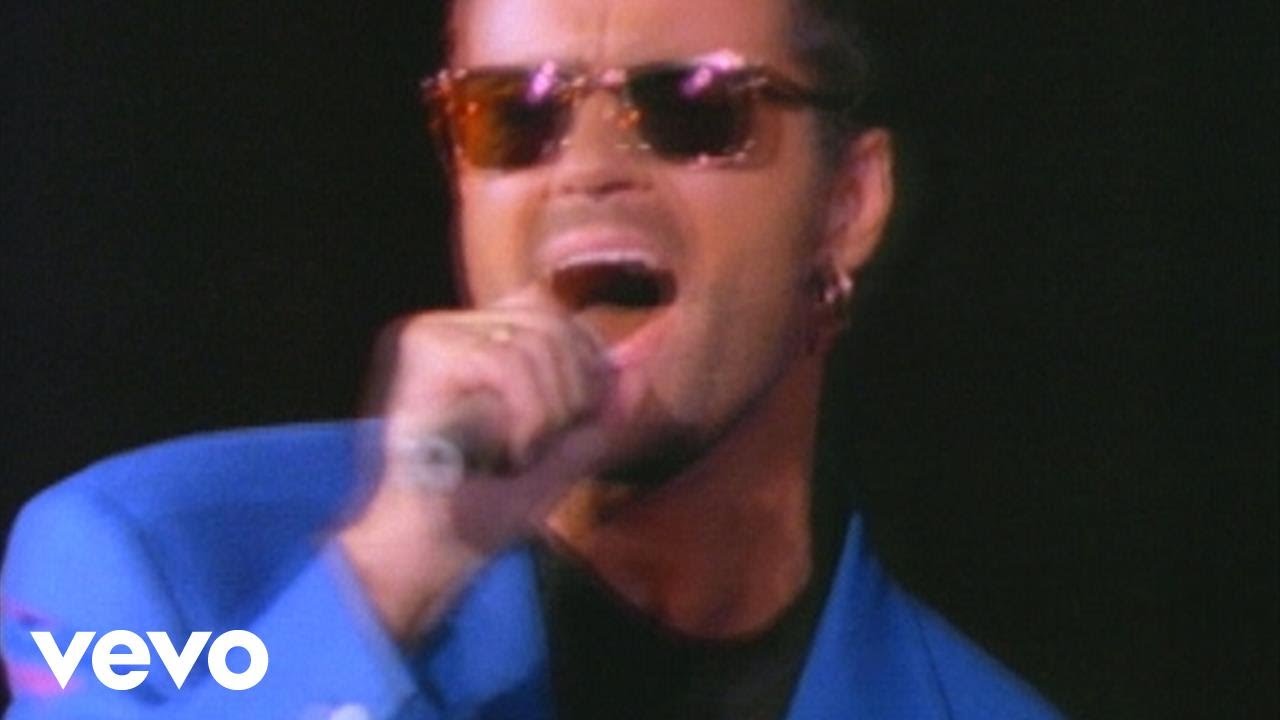
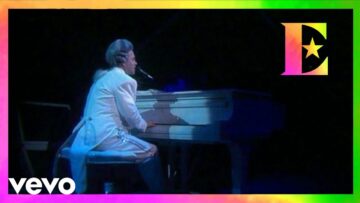
The music video for the Michael-John duet, directed by Andy Morahan, combined footage shot over several days at different locations. Portions were filmed at an airline hangar in Burbank, California where Michael had been rehearsing for his US tour leg, with John flying in for one night to run through the song a couple times. The live performance footage came from Michael’s show at the Rosemont Horizon near Chicago on October 20, 1991, where John again appeared as a surprise guest and the crowd went wild when he emerged from the wings. The edited video created the illusion of a single seamless performance, with the Wembley audio recording married to the more visually dynamic Chicago concert footage. The video won the 1985 MTV Video Music Award for Best Overall Performance in a Video and earned an American Music Award nomination in the category of Favorite Pop/Rock Video.
The song’s legacy extends far beyond its commercial success into the realm of friendship and tribute. George Michael and Elton John had a public falling out in 2004 after John made comments to the press about Michael’s marijuana use and lifestyle choices, but they reconciled in 2011 and even sang “Don’t Let The Sun Go Down On Me” together at John’s White Tie and Tiara charity ball that June. When George Michael died on Christmas Day 2016, John dedicated the song to him at concerts from that point forward, calling it his in memoriam song and performing it as tribute to the man who truly made one of Elton’s biggest hits his own. During his headlining appearance at Glastonbury Festival on June 25, 2023, John again dedicated it to Michael, telling the crowd about the kindest, sweetest, most generous person he’d ever met who gave so much money to great causes without telling anybody. The collaboration stands as proof that sometimes the songs we warn people not to release become the ones that define careers, and that friendship between artists can transcend commercial calculation to create moments of genuine emotional power that resonate decades later.