




![Fleetwood Mac – Dont Stop (Official Music Video) [4K]](https://musicvideosclub.com/wp-content/uploads/2026/01/fleetwood-mac-dont-stop-official-360x203.jpg)


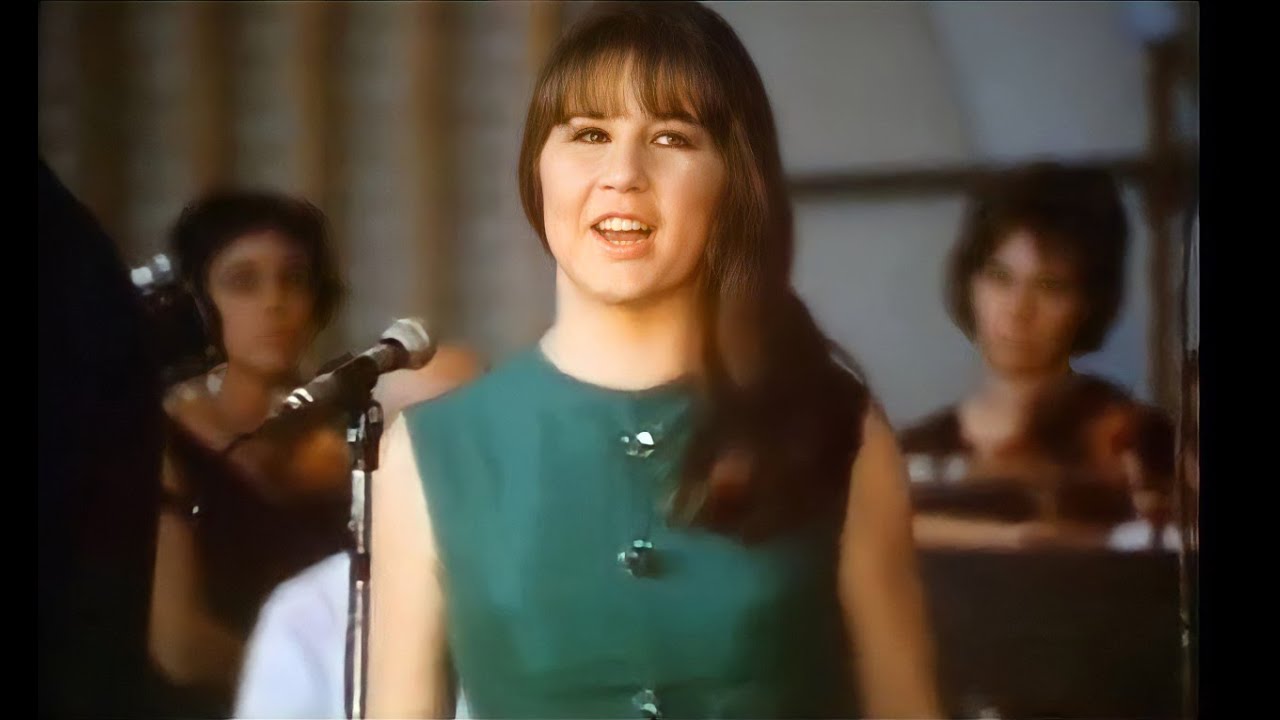
The Seekers – Georgy Girl
The Monkees Kept It Off Number One — and the Film’s Version Has Completely Different Lyrics
When director Silvio Narizzano approached Tom Springfield about writing a title song for his new British film in 1966, Springfield was already one of the more reliably successful songwriters in the London pop scene — he had written “I’ll Never Find Another You” and “A World of Our Own” for The Seekers, both global hits, and the band trusted him completely. What Narizzano needed was something that could carry the spirit of his unconventional heroine: a young London woman who didn’t fit the polished template of Swinging London, who was ungainly and vital and searching for something she couldn’t quite name. Springfield wrote the melody and brought in Jim Dale — the actor, comedian, and occasional songwriter — to supply the lyric. They delivered two entirely different versions: one that played over the film’s opening credits, and a separate set of words for the closing titles and the commercial single release. Most people have only ever heard one of them. The other gives the song a subtly different emotional weight. Both are worth finding.
“Georgy Girl” was released as a single in September 1966 in the UK and debuted on the US Billboard Hot 100 on December 3, climbing to number two — where it sat for two weeks, blocked from the top spot by The Monkees’ “I’m a Believer.” In Australia it went all the way to number one. In the UK it reached number three and was certified Gold. On the Cash Box Top 100 — Billboard’s rival chart — it actually did reach number one, a fact that gave the band and their American label some consolation for the Monkees roadblock. The song spent sixteen weeks on the Hot 100 in total and became the 57th biggest American hit of the entire year. It was nominated for the Academy Award for Best Original Song at the 39th Academy Awards, losing to “Born Free” — a result that stung somewhat given the song’s commercial dominance, though Springfield accepted it with characteristic grace.
The song’s lyric presents something genuinely unusual for 1966 pop: a direct, affectionate address to a young woman who doesn’t match the era’s beauty standards, urging her to shed her inhibitions and claim the life she deserves. Dale wrote it with obvious warmth and without a trace of condescension — the narrator isn’t rescuing Georgy, he’s cheering for her. What makes the song’s relationship to the film so interesting is that the character as played by Lynn Redgrave is considerably more complicated than the lyric suggests. On screen, Georgy never quite swings down the street fancy free, never fully sheds her dowdy feathers, and the ending is more ambivalent than triumphant. The song and the film occupy slightly different emotional registers, each enriching the other precisely because they don’t entirely agree.
The recording took place at EMI’s Abbey Road Studios in London, with Springfield producing. The arrangement — orchestral strings building across the choruses, acoustic guitar and subtle percussion anchoring the verses, and the four-part vocal harmony that defined The Seekers’ entire sound — was built to serve Judith Durham’s lead vocal rather than compete with it. Durham, who had trained as a jazz and gospel singer before joining the band, brought a warmth and specificity to the lyric that a more conventional pop voice would have smoothed away. Keith Potger played twelve-string guitar and banjo. Bruce Woodley added guitar and mandolin. Athol Guy anchored the whole thing on double bass. Springfield understood that the song needed to sound both airy and grounded — the kind of recording that could open a film and still work on a jukebox at full volume three months later.
The commercial success of “Georgy Girl” confirmed something that the band’s management had suspected since “I’ll Never Find Another You” went to number one in both the UK and US in 1964: The Seekers were the first Australian pop group to achieve significant chart success in both countries simultaneously, a fact that would be noted in every major Australian music history ever written. The album Come the Day was retitled Georgy Girl for its North American release, aligning it with the single’s momentum. On March 12, 1967, the band performed to an audience of over 200,000 people at the Sidney Myer Music Bowl in Melbourne — a crowd that set a record for the largest ever to attend an entertainment event in Australia at the time. Later that year they performed at Expo ’67 in Montreal. By then the song had become one of the defining recordings of their career, a position it has never relinquished.
Olivia Newton-John, who was a cousin of Judith Durham’s bandmate John Farrar, recorded a new version of “Georgy Girl” for the 2011 film A Few Best Men, a homage that underscored the song’s enduring Australian connection. AllMusic’s Stewart Mason later called it “one of the great sunshine pop singles” of the decade — a description that captures the surface without quite accounting for the feeling underneath. The song is about someone who has been overlooked, told she is not enough, and dares to believe otherwise. That is a considerably more complicated emotional transaction than “sunshine pop” implies.
Judith Durham died on August 5, 2022, at the age of 79, after a lifetime of performing that had taken her from Melbourne jazz clubs to Abbey Road Studios to 200,000 people in a Melbourne park on an autumn evening in 1967. “Georgy Girl” was the song most people heard first, and it remains the one they reach for when they want to remember what she sounded like: full of warmth, precise in its affection, and carrying the melody as if she had written it herself. She hadn’t. But the way she sang it, you’d never have known the difference.
SONG INFORMATION
Related videos
 Watch LaterAdded
 Watch LaterAdded
04:59
Watch LaterAdded
04:59  Watch LaterAdded
05:03
Watch LaterAdded
05:03