



![Kid Rock – All Summer Long [Official Music Video]](https://musicvideosclub.com/wp-content/uploads/2025/12/kid-rock-all-summer-long-officia-360x203.jpg)
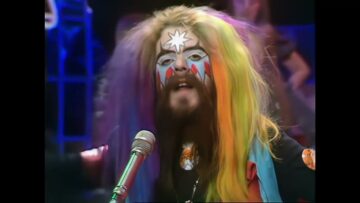
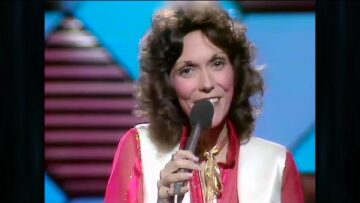
The Turtles – Happy Together
The Night The Smothers Brothers Put a Number One Hit on the Air Before America Knew It Was a Number One Hit
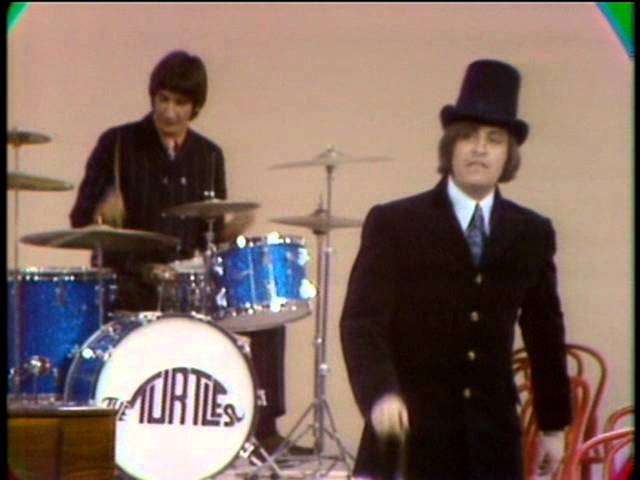
On February 12, 1967, The Turtles walked onto the set of The Smothers Brothers Comedy Hour for the second episode in the show’s entire run — and performed a song that had cracked the Billboard Hot 100 for the very first time the day before. The cameras rolled on “Happy Together” while it was still an unknown quantity, a new entry at the bottom of the chart that almost nobody in the country had heard. Eight weeks later it was sitting at number one, having knocked “Penny Lane” off the top spot in one of the more startling chart upsets of 1967. By then, millions of CBS viewers had already seen it happen in real time, on a Sunday night, performed by six young men from Los Angeles who were not yet entirely sure the song was going to work.
That debut visit to the Smothers Brothers set was, in retrospect, one of the most perfectly timed television appearances in the history of American pop. Tom and Dick Smothers had launched their Comedy Hour just one week earlier, positioning the show as a hip, youth-skewing alternative to the dominant western programming that NBC was running opposite it. They needed rock and pop acts who could deliver. The Turtles, riding a song that had already been polished through eight months of live performances — or two weeks, depending on whose account you believe — were exactly the right band for exactly the right room. And Mark Volman, with the kind of deadpan commitment that the show’s comic sensibility appreciated, sat down at a piano and mimed playing it through the entire performance. There is no piano in “Happy Together.” He did it anyway. On Ed Sullivan he had mimed a trumpet. On the Smothers Brothers it was the piano. The song didn’t need the instrument. Volman added it regardless.
What The Turtles were performing that night was a song that had already been rejected more times than its writers cared to count. Garry Bonner and Alan Gordon had written it while members of The Magicians, a New York group that had never quite broken through, and the demo acetate had been passed around the industry so many times it was physically worn out. The song had been turned down by enough acts that by the time The Turtles expressed interest, the writers flew from New York to California to perform it for them live at the Beverly Hills Hotel. Howard Kaylan described the performance diplomatically: they sounded, he said, even worse than the demo. It didn’t matter. The Turtles wanted the song and the writers wanted them to have it.
Recording took place at Sunset Sound in Hollywood — a deliberate departure from the United Western studios the band had used previously, driven by the publishers Koppelman-Rubin, who also replaced original producer Bones Howe with Joe Wissert. The newly arrived bassist Chip Douglas — who within months would leave the band to produce The Monkees and deliver “Daydream Believer” — arranged the horns and backing vocals, giving the track the sonic signature that distinguished it from the group’s earlier work. The B-side, “Like the Seasons,” was a minor footnote at the time: it had been written by a twenty-year-old from San Diego named Warren Zevon, still years away from “Werewolves of London” and a career nobody could have predicted from that credit alone.
The Smothers Brothers Comedy Hour in February 1967 was still finding its footing — political, provocative, but not yet the cultural lightning rod it would become. Within months, Buffalo Springfield would perform “For What It’s Worth” on the same stage. By September, The Who would destroy their instruments so violently that Pete Townshend suffered hearing damage that would never fully heal. Pete Seeger would be censored. Harry Belafonte would be edited. The Beatles would debut “Hey Jude” and “Revolution” from its platform. All of that was still ahead. On February 12, 1967, it was simply a show in its second week, and The Turtles were there with a song that the rest of the country was about to discover.
“Happy Together” reached number one on March 25, 1967 — the same week Jimi Hendrix released Are You Experienced in the UK. It held the top spot for three weeks before Frank and Nancy Sinatra’s “Somethin’ Stupid” edged it aside, and it remained on the Hot 100 for fifteen weeks in total, reaching number two in Canada and number twelve in the UK. The lyric that audiences responded to so warmly is, on closer inspection, a song about unrequited love: the narrator imagines a relationship that exists only in his mind, with a partner who has given no indication of returning his feelings. “If I should call you up, invest a dime,” he sings, “and you say you belong to me and ease my mind.” The conditional tense does all the work. It never stops being a fantasy. The joyous chorus is the sound of a man talking himself into believing something that isn’t true — and the performance on that Smothers Brothers stage, beamed into American living rooms before the song had even charted, caught the whole beautiful illusion at the exact moment it was about to become real.
SONG INFORMATION
Related videos
 Watch LaterAdded
04:17
Watch LaterAdded
04:17  Watch LaterAdded
05:18
Watch LaterAdded
05:18 ![Led Zeppelin – Trampled Under Foot (Live at Earls Court 1975) [Official Video] [HD]](https://musicvideosclub.com/wp-content/uploads/2026/03/led-zeppelin-trampled-under-foot-360x203.jpg) Watch LaterAdded
Watch LaterAdded