



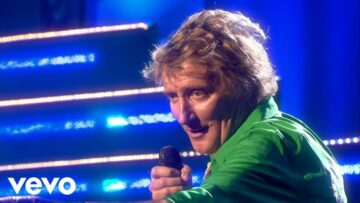
FREE – Be My Friend (Beat Club, 1970)
Four Teenagers From a Battersea Pub, Filmed Alone in a German Studio, at the Exact Moment They Became Immortal
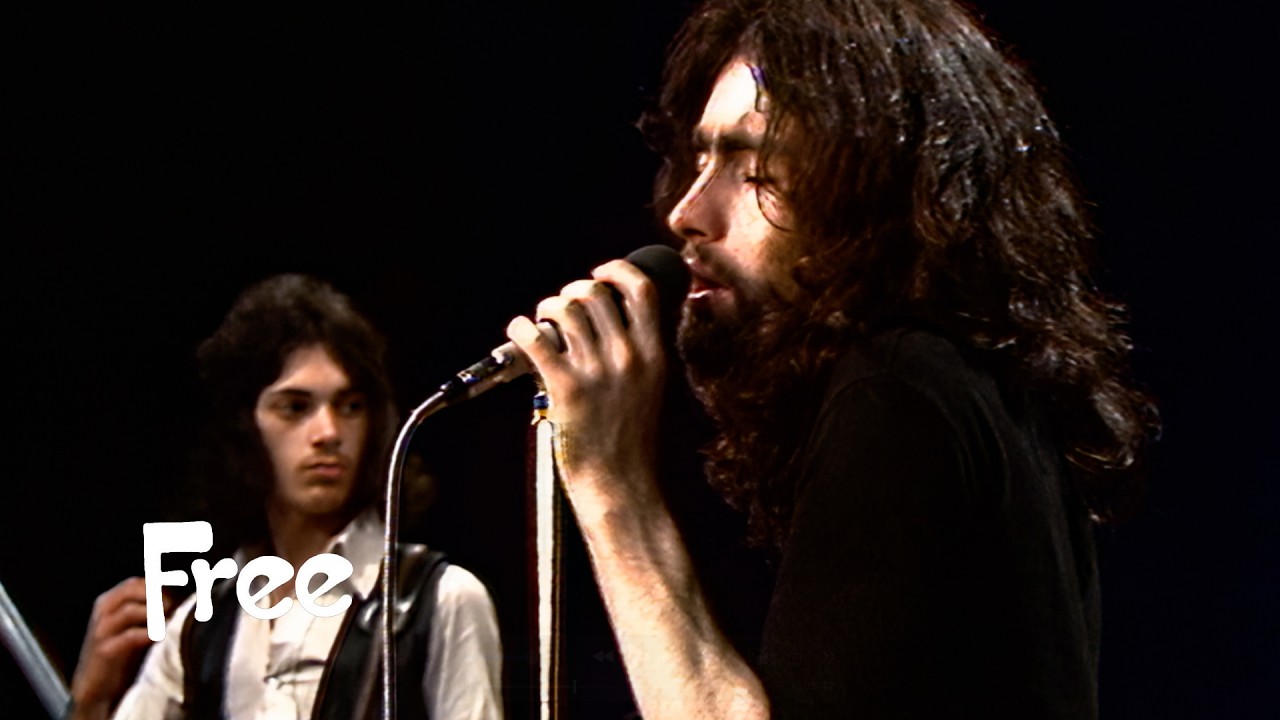
The Beat Club cameras rolled in a studio in Bremen with no audience present — that was the format from 1970 onward, live performances recorded in an empty room for broadcast across West Germany and beyond. What the crew filmed when Free walked in that September was four musicians who had just played to 600,000 people at the Isle of Wight Festival, who had a Number Two single in “All Right Now” still burning across European radio, and who were simultaneously rushing through recordings for a fourth album because the label needed product before the year ended. The intimacy of the empty Beat Club studio is almost absurd in that context. “Be My Friend” — one of the Highway album tracks being cut across those same weeks — gets the treatment it deserved, which the album’s rushed commercial reception never quite gave it: a proper room, four musicians fully present, and nothing else in the way.
“Be My Friend” was not released as a single and did not chart independently. It appeared on Highway — Free’s fourth studio album, recorded in compressed sessions at Island Studios in London in September 1970 — which peaked at a modest Number 41 on the UK Albums Chart and Number 190 in the United States. That commercial underwhelming is one of the more counterintuitive facts in British rock history: a band coming off their biggest hit, their biggest festival moment, and a live album that would reach Number Four in the UK, releasing an album that barely registered. The songs on Highway were not the problem. The timeline was. Everything had happened too fast, and the album arrived before anyone had time to absorb what preceded it.
Paul Rodgers and Andy Fraser wrote “Be My Friend” as part of the same creative partnership that had produced everything in the Free catalog from the debut onward — a collaboration that Rolling Stone’s Paul Evans described as one where Rodgers brought the soul and Fraser brought the architecture. Fraser had joined the band at fifteen, recruited by Alexis Korner from John Mayall’s Bluesbreakers, and had been writing melodically sophisticated basslines and song structures since before he was old enough to vote. Rodgers’ voice, which Simon Kirke famously described at their first rehearsal as sounding “like Otis, like he was 40 years old,” had never needed a larger room to fill than the one it already occupied. Together they were generating material at a rate that outpaced any label’s ability to market it. “Be My Friend” is the sound of that surplus — a song too good for the slot it occupied, sitting patiently in an album that the world hadn’t stopped long enough to hear properly.
Paul Kossoff’s guitar on the Beat Club performance is the argument for everything the band’s most devoted followers have always made about him. Rolling Stone placed him at Number 51 on their list of the 100 Greatest Guitarists of All Time — a position that, for anyone who has spent time with the Free recordings, feels conservative. His tone came from a combination of a 1959 Les Paul Standard, a Marshall amplifier, and a vibrato technique — a slow, wide, achingly expressive sustain — that no guitarist before or since has replicated with the same emotional transparency. He did not play fast. He played deep. Every note he chose on “Be My Friend” is chosen for feeling rather than decoration, which is exactly why the performance holds up in an empty studio with no crowd energy to draw from. The room doesn’t need to be full. The guitar is enough.
Free had assembled at the Nag’s Head pub in Battersea on April 19, 1968 — four teenagers, the youngest fifteen, who played their first rehearsal and first gig on the same evening. By the time this Beat Club footage was filmed, barely two and a half years had passed. In that window they had recorded four albums, toured the United States supporting Blind Faith and the Who, played Madison Square Garden, survived two albums that went unnoticed and one that broke them wide open, and stood on the Isle of Wight stage in front of the largest audience any of them had ever seen. Highway‘s mixed reception, combined with mounting tensions between Rodgers and Fraser and the beginning of what would become Paul Kossoff’s long struggle with addiction, meant the band would be gone within a year. In September 1970, none of that had happened yet. The Beat Club cameras caught them in the last clean moment of everything they had been.
Free split in May 1971, reformed briefly in 1972 to try to stabilize Kossoff’s deteriorating health, and disbanded for good in 1973. Rodgers and Kirke formed Bad Company. Fraser wrote for Paul Young, Robert Palmer, and Chaka Khan. Andy Fraser died on March 16, 2015. Paul Kossoff’s epitaph at Golders Green Crematorium reads simply: “All Right Now.” The live album recorded in Croydon in September 1970 — the same month as this Beat Club session — included “Be My Friend” alongside the tracks that have defined the band’s canonical legacy. In that recording the song opens with Kossoff’s guitar alone before the full band arrives, and the two minutes that follow make the case for Free as efficiently as anything they ever committed to tape. The Beat Club version makes the same case in a different room, with no one watching. That is sometimes when the truest performances happen.