




BW Stevenson – My Maria
Daniel Moore Thought the Song Was Too Bubble-Gum and Wouldn’t Finish It — His Publisher Took the Unfinished Verse to a Dallas Singer Instead. Stevenson Added the Missing Piece, Hit Number Nine, and Was Dead at Thirty-Eight. Brooks and Dunn Took It to Number One Fifteen Years Later.
The song had one verse, one chorus, and a songwriter who didn’t want to finish it. Daniel Moore had written the opening section of “My Maria” and played it for Lindy Blaskey, his music publisher at ABC/Dunhill Records, who heard something in it immediately — a melodic hook with crossover written into its bones, the kind of thing that radio programmers reach for without quite knowing why. Moore’s assessment of his own material was more sceptical: too bubble-gum, he thought. He wasn’t interested in developing it further. Blaskey took what he had and drove it across to another songwriter he knew — a Dallas singer named Louis Charles Stevenson, who performed under the name B.W., a shortened version of a childhood nickname, Buckwheat. Stevenson listened, heard what Blaskey heard, and wrote the additional verse that completed the song. David Kershenbaum, Stevenson’s producer at RCA Records, agreed with Blaskey’s original instinct: this was a hit. It was released as a single in July 1973 and reached number nine on the Billboard Hot 100, number one on the Adult Contemporary chart, and number three in Canada. The original verse and chorus belonged to Moore. The verse that made the song complete belonged to Stevenson. And the song that neither of them had planned to make together outlasted both of them.
What the backstory of “My Maria” often obscures is what preceded it — a peculiarly Dallas story about the same two men and a different song. In February 1973, Stevenson had released Daniel Moore’s composition “Shambala,” recorded it first, placed it on the Hot 100, and watched it stall at number sixty-six while Three Dog Night released their own version two weeks later and took it to number three on the same chart. The two recordings existed simultaneously on radio; the larger act with the bigger production won the commercial argument, as it usually does. Stevenson absorbed the result and went back to work. The “My Maria” collaboration with Moore that followed was, in the broadest sense, a response to that experience — two men who had a shared creative and commercial history, working on a piece that Moore was too doubtful about to complete alone, in the city where Stevenson had grown up, attended W.H. Adamson High School alongside Michael Martin Murphey and Ray Wylie Hubbard, and developed the musical instincts that would define his career.
Hollywood Session, Dallas Soul
The recording took place at RCA Victor’s Music Center of the World in Hollywood — the same room where vast amounts of the Los Angeles session economy passed through on its way to radio. Kershenbaum assembled a group of players whose combined credits read like a map of West Coast pop and rock from the late 1960s onward: Larry Carlton on lead guitar, then still working as a Blue Thumb Records artist but already recognisable to serious listeners as one of the most fluent session guitarists in California; Jim Gordon on drums, who had recently played on “Layla” and would soon be behind the kit for Traffic and George Harrison; Joe Osborn on bass, a Wrecking Crew veteran whose fingerprints were on an enormous proportion of the preceding decade’s hit records; and Larry Muhoberac on keyboards, who had worked with Elvis Presley and built a reputation as one of the most reliable arrangers in the room. The backing vocal section brought together Bill and Taffy Danoff — the writers and performers who would give the world “Take Me Home, Country Roads” — alongside Clydie King, Venetta Fields, and Lorna Willard, three singers whose individual credits spanned Ray Charles, the Rolling Stones, and Joe Cocker. Moore himself sang backing vocals on the track. The song he had considered too bubble-gum to finish arrived on record with a pedigree that few of its contemporaries on the Adult Contemporary chart could match.
Carlton’s guitar solo is the centrepiece of the arrangement and remains one of the most recognisable brief guitar moments of the early 1970s. It sits at approximately the ninety-second mark of a recording that runs two minutes and thirty-two seconds in total — compact even by the standards of the period, with no element that outstays its welcome and no production choice that calls attention to itself at the expense of the melody. The total runtime is almost entirely occupied by the song’s argument: a simple, direct declaration of feeling for a woman named Maria, delivered with the warmth and ease of a singer who had spent years in front of audiences before any of this reached tape. Kershenbaum’s production understood what Stevenson could do — the voice had a natural unpretentiousness that suited the material’s directness — and stayed out of its way.
Tommy’s and What Live Footage Means
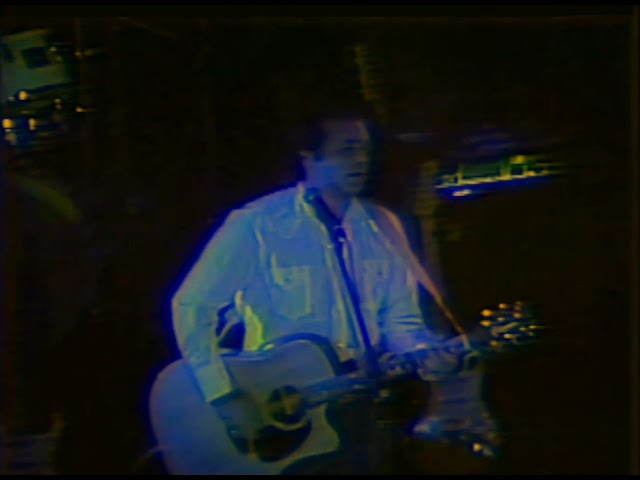
The performance at Tommy’s in Dallas captured in this video places Stevenson back in the city where the story began — a hometown show, the rough-edged intimacy of a live room that is the opposite of the Hollywood studio where the record was made. The image quality is what it is: a document rather than a production, the kind of footage that survives because someone in the room understood that what was happening was worth recording regardless of the technical result. There is a version of music history that only exists because somebody pointed a camera at a stage without waiting for ideal conditions. This is part of that history. Stevenson on a Dallas stage, singing a song that had passed through three pairs of hands — Moore’s incomplete verse, Blaskey’s instinct that it was a hit, Stevenson’s completed lyric — before it reached the radio and the charts and the Adult Contemporary number one position that gave him his peak commercial moment.
In April 1988, Stevenson was admitted to hospital for heart valve surgery. A staph infection developed in the aftermath of the procedure. He died on April 28, 1988, aged thirty-eight. Eight years later, Brooks and Dunn recorded “My Maria” for their fourth studio album Borderline — Kix Brooks having championed the song while Ronnie Dunn remained sceptical, finding the falsetto passages challenging and the song’s origins in rock rather than country unfamiliar territory. Brooks eventually persuaded Dunn to record a second version of the vocal weeks after the first attempt. The second take is the one that reached number one on the American and Canadian country charts and won the 1997 Grammy Award for Best Country Performance by a Duo or Group with Vocal. Daniel Moore, who had considered his own verse and chorus too bubble-gum to bother finishing, told interviewers afterward that the Brooks and Dunn version had earned him more in royalties than every previous version combined — by a substantial margin. The original sold approximately 950,000 singles. The cover has sold over six million. The song Moore couldn’t be bothered to complete, that Blaskey took across town to a Dallas singer, has accumulated over six million US radio performances for the Brooks and Dunn version alone. Stevenson’s version was at 1.5 million when the count was last reported. The live footage from Tommy’s is from somewhere in the middle of all that — a man who had a top ten hit, playing it for his own city, before anyone knew how the rest of the story would go.
SONG INFORMATION
Enjoyed this one? New forgotten gems every day — tap Music Videos Club below to visit and follow us on Facebook:
Related videos
 Watch LaterAdded
03:29
Watch LaterAdded
03:29  Watch LaterAdded
03:40
Watch LaterAdded
03:40  Watch LaterAdded
03:33
Watch LaterAdded
03:33