



![Starship – Nothings Gonna Stop Us Now (Official Music Video) [HD]](https://musicvideosclub.com/wp-content/uploads/2025/10/starship-nothings-gonna-stop-us-360x203.jpg)

![The Supremes – Where Did Our Love Go (TAMI Show 1964) [Restored]](https://musicvideosclub.com/wp-content/uploads/2025/08/the-supremes-where-did-our-love-360x203.jpg)
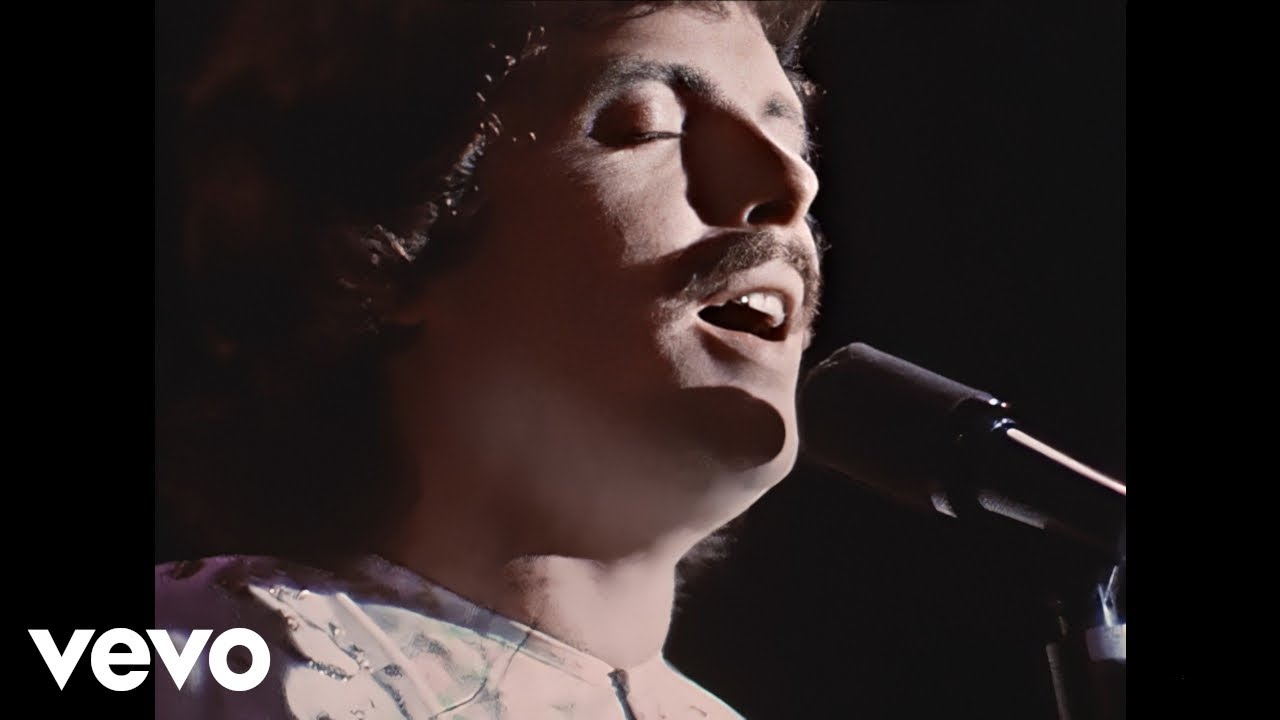
Scott McKenzie – San Francisco (Be Sure to Wear Flowers in Your Hair)
He Wrote It In Twenty Minutes From His Bel Air Mansion And Janis Hated It
Released on 13 May 1967, Scott McKenzie’s “San Francisco (Be Sure to Wear Flowers in Your Hair)” began as a promotional jingle written in twenty minutes by John Phillips to calm Monterey city officials terrified of hippie invasion. The song peaked at number four on the Billboard Hot 100 for four consecutive weeks starting 1 July 1967, but topped the UK Singles Chart and most of Europe, selling over seven million copies worldwide. It spent six weeks at number one in Germany, five weeks atop New Zealand’s chart, and hit the summit in Ireland, Norway, West Germany, Austria, and Belgium. Yet every actual San Francisco underground musician reportedly hated it. Janis Joplin, the Grateful Dead, and others derided it as inauthentic commercialization of their scene by someone who’d never lived the reality. Phillips admitted he wrote it while hanging out in his Bel Air mansion buying antiques and snorting cocaine, not because he lived in San Francisco or participated in the movement he portrayed, but to sell tickets to the Monterey Pop Festival he’d taken over planning with producer Lou Adler.
The chart dominance in Europe overshadowed its American performance. While peaking at number four in the US, it became the unofficial hippie era despite Capitol Records’ attempt to hijack momentum by re-releasing McKenzie’s earlier single “Look in Your Eyes” as the supposed follow-up. The song earned McKenzie introduction by Cass Elliott at the Monterey Pop Festival on 18 June 1967, where she cooed that he had the most beautiful voice. A Vietnam veteran later told an interviewer it was a tearjerker for American soldiers stationed there at the time, a haunting wistfulness giving it an air of regret, as if sung by someone in the distant future looking back at failed idealism. The follow-up “Like an Old Time Movie,” also written and produced by Phillips, reached number twenty-four on Billboard and number twenty-seven in Canada, but McKenzie never replicated his debut’s success. French singer Johnny Hallyday recorded it in French in October 1967, reaching number five in Wallonia Belgium.
McKenzie, born Philip Wallach Blondheim III on 10 January 1939 in Jacksonville, Florida, grew up in North Carolina and Alexandria, Virginia, where he befriended John Phillips through their mothers. They sang together in high school group The Singing Strings with Tim Rose, then formed doo-wop band The Abstracts with Mike Boran and Bill Cleary. In New York City, The Abstracts became The Smoothies, recording two Decca singles produced by Milt Gabler. By 1961, McKenzie and Phillips formed folk trio The Journeymen with Dick Weissman, recording three albums for Capitol before the label dropped them when The Beatles arrived. When Phillips formed The Mamas and the Papas, he invited McKenzie to join, but McKenzie declined, telling the Washington Post in 1977 he was trying to see if he could do something by himself and didn’t think he could take that much pressure. That decision probably cost him millions.
Recording took place in April 1967 at unknown studios, reportedly with McKenzie wearing a flower garland while friends gathered on the floor to meditate. Phillips played acoustic and twelve-string electric guitar plus sitar, while Joe Osborn supplied bass and Hal Blaine drummed, both Wrecking Crew session musicians who’d played on most Mamas and Papas recordings. Gary L. Coleman played orchestra bells and chimes. McKenzie contributed double-tracked vocals and acoustic guitar. Phillips orchestrated the session with meticulous attention to production values. The track lasted approximately three minutes, featuring McKenzie’s crystalline voice floating over folk-rock instrumentation that made the song immediately accessible to mainstream audiences unfamiliar with actual San Francisco psychedelia. Lou Adler co-produced with Phillips for Ode Records, making it the label’s first single release and instant hit that established Ode’s commercial viability.
“San Francisco” appeared on McKenzie’s debut album The Voice of Scott McKenzie alongside “Like an Old Time Movie,” “What’s the Difference,” and other tracks. A second album Stained Glass Morning followed, but neither achieved the debut single’s impact. The song’s purpose as festival promotion worked too well, bringing thousands of would-be hippies to San Francisco despite Phillips’ intention to implore attendees not to run wild in the streets. McKenzie later expressed dismay at this effect, telling the Post a decade later it was kind of frightening, a collective frenetic desire as people searched for something they didn’t know what. The landowners and political class of Monterey had been terrified of being overrun by tens of thousands of hippies, leading Phillips to conceive writing a promotional song. Twenty minutes later, he’d created what would become the Summer of Love’s defining track despite being part advertisement and part admonition.
The song appeared in multiple films including Frantic (1988), Forrest Gump (1994), The Rock (1996), and The Last Black Man in San Francisco (2019), which featured a cover by Michael Marshall. Led Zeppelin occasionally played it during improvised sections in the middle of “Dazed and Confused.” U2’s Bono led audiences in sing-alongs during PopMart performances in San Francisco Bay Area on 18 and 19 June 1997. New Order covered it on 11 July 2014 at Bill Graham Civic Auditorium in San Francisco. Greta Van Fleet performed it live during their early career, with traces heard in their unreleased song “Written in Gold.” Global Deejays sampled the title in “The Sound of San Francisco” and Green Day referenced it in “21 Guns.” The song entered the Grammy Hall of Fame and has been called the unofficial of the counterculture movement including hippie, anti-Vietnam War, and flower power movements.
McKenzie’s career never recovered momentum after his debut. He once turned down an offer to do a television commercial for an airline wanting to shoot him with flowers in his hair getting off a plane in San Francisco. In the 1970s, contemplating a comeback, he spent a couple years writing what he hoped would be another great song to match “San Francisco.” He abandoned the effort after hearing Jimmy Buffett’s “Margaritaville” and realizing his composition was too similar, telling the Post that was the story of his life. His fragile mental health and reluctance toward fame prevented sustained career development. He eventually collaborated with Phillips, Terry Melcher, Mike Love, and others on “Kokomo,” which became the Beach Boys’ last number one hit in 1988 and earned a Grammy nomination for Best Song Written Specifically for a Motion Picture or Television. In 1986, McKenzie joined a reconstituted Mamas and the Papas lineup for nostalgia tours, finally working with Phillips in the group he’d declined joining twenty years earlier.
On 11 April 2001, McKenzie performed as a solo artist for the first time in decades at a special concert at Lou Adler’s Los Angeles nightclub The Roxy. The show, called Dear John, served as memorial for John Phillips, who’d died eleven days earlier. Despite Phillips’ stormy and often abusive relationships, many colleagues and family attended, including Denny Doherty, Michelle Phillips, Barry McGuire, Spanky McFarlane, Mike Love, and Bruce Johnston. McKenzie closed the show saying goodbye to his lifelong friend with one final performance of “San Francisco.” It would be one of his last public appearances. McKenzie died on 18 August 2012 at age seventy-three in Los Angeles, his obituaries noting he remained one of pop music’s most intriguing enigmas, a talented performer who shied away from the spotlight despite the musical gifts he had to offer. The world barely got to know him despite his voice continuing as a musical gift.
Looking back, “San Francisco” represents the paradox of the Summer of Love itself. Phillips wrote promotional copy that became cultural , manufactured authenticity that transcended its commercial origins, and a jingle that inspired genuine migration. McKenzie never wanted the fame it brought, finding success overwhelming rather than validating. The San Francisco musicians who actually lived the scene hated the song’s romanticized portrayal, yet it remains their era’s defining track. Phillips writing it in twenty minutes from Bel Air while buying antiques and snorting cocaine rather than living in Haight-Ashbury makes it feel cynical, but Vietnam soldiers crying to it and teenagers fleeing Middle America toward gentle people they’d never find makes it profound. The song promised a place where people would wear flowers in their hair and live in harmony, a promise hippie culture couldn’t fulfill but which still resonates with those seeking escape from conformity. As McKenzie discovered when he watched thousands heed the song’s call and flood San Francisco with collective frenetic desire, sometimes the most dangerous thing an artist can do is write something that makes people believe. The flowers eventually wilted, the gentle people scattered, and the Summer of Love gave way to darker realities. But “San Francisco” endures, not as documentary but as dream, the siren call that still beckons to anyone stuck in Pittsburgh or Peoria imagining somewhere better exists, just three thousand miles west, if you’re sure to wear some flowers in your hair.
SONG INFORMATION
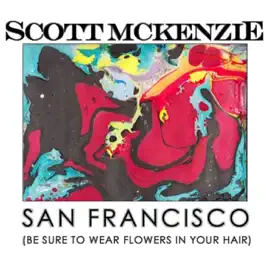
This has the longest title of any #1 in UK.
Related videos
 Watch LaterAdded
02:58
Watch LaterAdded
02:58  Watch LaterAdded
![Lady Antebellum – Silent Night [4K]](https://musicvideosclub.com/wp-content/uploads/2025/12/lady-antebellum-silent-night-4k-360x203.jpg) Watch LaterAdded
Watch LaterAdded