






Rainbow – Since You’ve Been Gone
Their own drummer called it a sell-out, and it gave Rainbow the first Top 10 hit of their career
Cozy Powell considered Since You’ve Been Gone a sell-out, and he played on it anyway. The drummer’s verdict sits awkwardly next to the scoreboard. The song gave Rainbow their first UK Top 10 and their first appearance on the Billboard Hot 100. It wasn’t even theirs. Russ Ballard had written it, released it and watched an American band chart with it before Ritchie Blackmore’s group went anywhere near it.
Keep watching: Deep Purple – Black Night · explore more →
Ballard, the former Argent guitarist, wrote it at the piano in 1975 and recorded it that year. Epic released it in January 1976 as a single and on his solo album Winning, with Muff Winwood producing. Ballard later admitted he had made a pop record out of what was plainly a rock song. Other people heard the rock song. Head East, a band from Illinois, took it to No.46 on the Hot 100 in 1978, and the South African group Clout recorded their own version the same year.
Rainbow came to it needing a hit and a singer. Ronnie James Dio had gone, and manager Bruce Payne wanted the band to sell records on a bigger scale. Blackmore backed the Ballard song, while Roger Glover, his old Deep Purple bandmate, doubted it suited them. Glover produced the sessions anyway and ended up playing bass on them. The band recorded at Château Pelly de Cornfeld in the French countryside, using the Maison Rouge mobile studio. Glover also found the singer: Graham Bonnet, formerly of the 1960s duo the Marbles, who auditioned in France and got the job.
Powell gave them the plainest beat he had
Powell was the hardest to convince. Glover had to talk him into recording a drum track at all, and Powell played a deliberately simple beat. By Blackmore’s account, the drummer disliked the song so much that he refused to do more takes. The rest of the song was built later at Kingdom Sound in Syosset, Long Island, where the band layered guitars, keyboards, percussion and stacked harmonies. Bonnet sang his lead there too. Blackmore moved Ballard’s keyboard riff onto lead guitar. Bonnet said the band had heard both Ballard’s and Clout’s versions and found them too pop, so the big shouted backing vocals became their answer. Glover later conceded that Powell’s bare-bones drumming was exactly what the finished record needed.
Polydor released the single in Britain on August 31, 1979, with the album outtake Bad Girl on the B-side. The Official Charts Company logged its entry at No.33 on September 15, its peak at No.6 on October 13, and ten weeks on the chart in all. Billboard’s Hot 100 picked it up on November 17, Rainbow’s first appearance on that chart, and it peaked at No.57 in December. Down to Earth reached No.6 in Britain and went gold. Ballard first heard the Rainbow version on the radio while sitting in his garden on a summer day, and he was struck by how strong it sounded. Even the title split. The Polydor label kept Ballard’s Since You Been Gone, but the Official Charts Company and the band’s own YouTube channel use Since You’ve Been Gone, the spelling Cherie and Marie Currie also used for their 1979 cover.
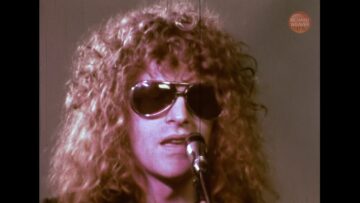
The promo on that channel is a staged performance, with the five-piece band miming to the studio recording, and it opens with something most videos cut. Before a note is played, two camera slates appear on Kodak color charts. One is marked Camera B, Roll 1, dated August 14, 1979, seventeen days before the single came out. Four framed photographs of the band follow, and then Rainbow appear on a darkened stage under colored lights. Bonnet sings in dark glasses, and behind him Powell’s name is painted across his bass drums. The channel posted the clip on November 11, 2014.
Powell had read the song correctly: it was the turn toward the radio, and Rainbow never turned back. All Night Long reached No.5 in Britain in 1980, and then Bonnet and Powell both left after the Monsters of Rock festival that August. Down to Earth stayed Bonnet’s only album with the band. With Joe Lynn Turner singing, Rainbow went back to Ballard for I Surrender, a UK No.3 in 1981. In 2017 Ballard joined the reunited Rainbow at London’s O2 Arena to sing the song he wrote, and Blackmore finally thanked him in person.
SONG INFORMATION
Enjoyed this one? New forgotten gems every day — tap Music Videos Club below to visit and follow us on Facebook: