



The Bangles – Hazy Shade of Winter
Paul Simon wrote it, Rick Rubin produced it and the movie paid for it, but the version America took to No.2 belonged to four musicians who had been playing it in clubs for years.
When Simon & Garfunkel took the stage on their Old Friends reunion tour in 2003, the A Hazy Shade of Winter they played was built on somebody else’s record. The arrangement leaned on the Bangles’ cover more than on the duo’s own 1966 single, which had stalled at No.13. Paul Simon later told Susanna Hoffs he thought the Bangles’ version was better than his. That is a rare verdict from a songwriter, and a stranger one given that the record’s own producer, Rick Rubin, had distanced himself from the hit version. The cover belonged to the band in a way neither its author nor its producer could claim.
Keep watching: The Bangles – Hero Takes A Fall · explore more →
Hoffs found the song by accident. Alone in a dark room with an oldies station on the radio, she heard a Simon & Garfunkel single she had somehow never come across, despite thinking of herself as an expert on the duo. She ran to rehearsal that night and told the band they had to cover it. The Bangles came out of a Los Angeles scene steeped in 1960s guitar music, and the song fit them immediately. From their club years onward it was a fixture of the set, often the opener, played as a guitar band’s rocker rather than a folk duo’s single.
The chance to record it came from the movies. In 1987 the band was asked for a song for Less Than Zero, the film of Bret Easton Ellis’s novel about wealthy, drifting young people in Los Angeles, starring Andrew McCarthy, Jami Gertz and Robert Downey Jr. Rubin, co-founder of Def Jam, supervised the soundtrack and produced most of it, setting LL Cool J and Slayer alongside Aerosmith and Roy Orbison. Busy between tours, with no time to write something new, the Bangles reached for the song they already knew best. Drummer Debbi Peterson put it simply: 1960s music was quality material.
Two producers, one record
Rubin cut the track lean. His version, the one on the soundtrack, runs 2:47, with the band trimming Simon’s bridge to half its length and adjusting a few lines. The band later described Rubin’s production as minimalist and said they filled it out themselves. For the single, the Bangles, working with Bill Drescher and David White, added production to the mix, and that is where the friction began. In January 1988, as the single climbed, Rubin said he disliked the extra processing, preferred the raw garage sound he had captured, and took his name off the single version.
The public sided with the band’s version. Def Jam and Columbia released the single in November 1987, and Billboard’s Hot 100 ranked it at No.2 on the chart dated February 6, 1988, held off the top only by Tiffany’s Could’ve Been. It reached No.3 in Canada and No.7 in Australia. In Britain it entered the Official Singles Chart on February 6, 1988, and peaked at No.11 on the chart dated March 12, during a ten-week run. In America, the cover finished eleven places higher than the original ever had.
Four voices against a narrative
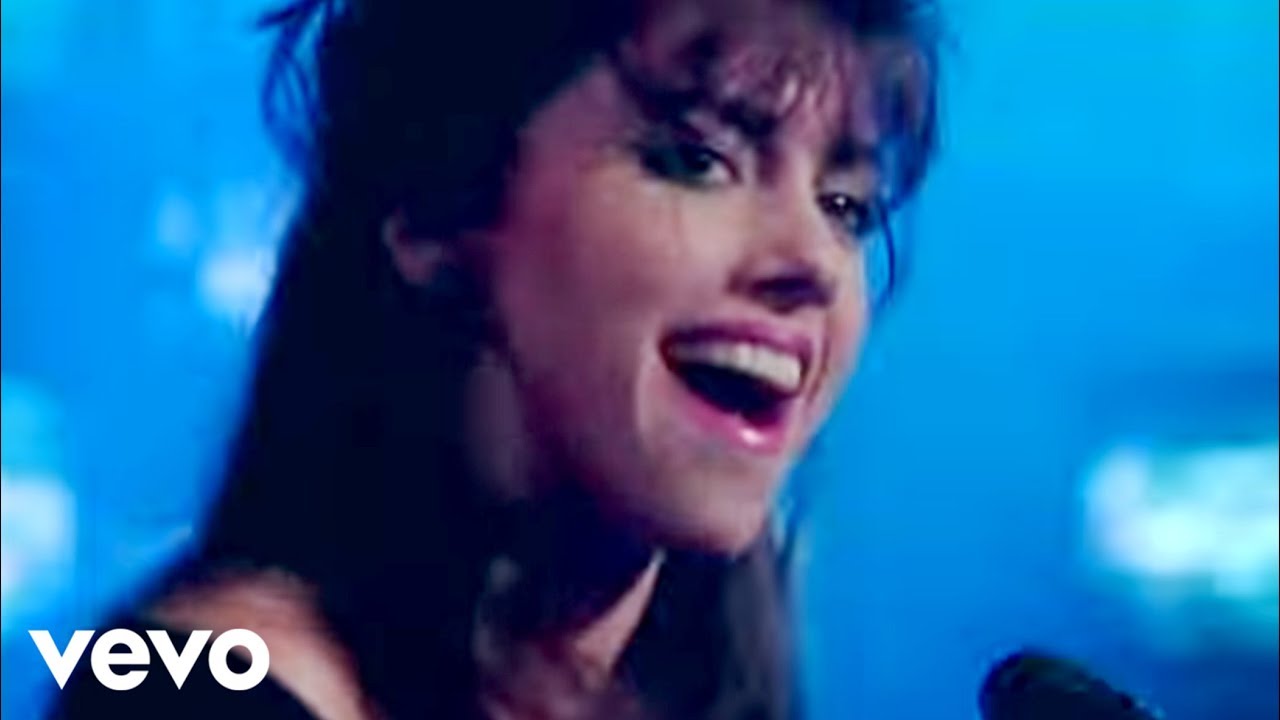
The video leaned into the film. Director Jim Shea placed Hoffs, Vicki Peterson, Debbi Peterson and Michael Steele in a dark studio washed in blue light and ringed with television monitors, cutting the performance against scenes from Less Than Zero. The result plays partly like a movie trailer, and it is far darker than the bright pop clips that had made the group famous. It earned a 1988 MTV Video Music Award nomination for Best Video from a Film.
It arrived at a fraught moment for the band. Hoffs was being positioned as the Bangles’ star, and the press increasingly treated four musicians as a singer with a backing band. On this record all four voices carry the vocal, and the band had fought for the sound it wanted. Vicki Peterson later said that as long as the group was left alone in a recording studio, it was fine. Years afterward she met Paul Simon and apologized for cutting his bridge in half. She said he was gracious about it.
That is why the record outlasted every claim on it. Simon wrote the song, Rubin produced the first take and the film supplied the occasion, but the version people remember is the one four musicians shaped through years of playing it live. Hoffs has named it her favorite Bangles song, and the band often opens its shows with it. The clearest endorsement came from Simon himself, onstage in 2003, playing an arrangement of his own song built on theirs.
SONG INFORMATION
Enjoyed this one? New forgotten gems every day — tap Music Videos Club below to visit and follow us on Facebook:
Related videos
 Watch LaterAdded
03:29
 Watch LaterAdded
03:40
 Watch LaterAdded
03:10