



Aretha Franklin – Do Right Woman, Do Right Man
Aretha Franklin left Muscle Shoals with this song half-finished, and it went out as a B-side before it became a soul standard
On the night of January 24, 1967, the voice on the guide track of Do Right Woman, Do Right Man at FAME Studios in Muscle Shoals, Alabama, belonged to Dan Penn. The co-writer was singing it in Aretha Franklin’s key because she hadn’t learned the song yet. By the next morning the session was over, the song had no finished vocal, and Franklin was on her way back to New York. The unfinished track became the B-side of her breakthrough single, and by the fall it was the song she chose to sing on national television.
Keep watching: Aretha Franklin – I Never Loved A Man The Way I Love You · explore more →
Franklin came to FAME with something to prove. Her years at Columbia had produced only two Top 40 pop singles, and Jerry Wexler had signed her to Atlantic with a plan to put her in front of Rick Hall’s house band. The first song of the session, I Never Loved a Man (The Way I Love You), came together quickly. The second was still missing part of its words when the band started on it.
Penn and Chips Moman had written most of it at Moman’s house in Memphis, after a quail dinner, with Moman playing a Gibson Super 400 and Penn singing. They came away with two verses and no bridge. Moman was booked to play guitar on Franklin’s session, Penn went along, and according to saxophonist Charlie Chalmers, Wexler let Moman take the lead in producing the song. Pianist Spooner Oldham remembered Penn off writing the bridge while the band cut the first song, with Franklin and Wexler each offering lines. The track the band laid down was sparse: an occasional drum fill, a little organ, Penn’s guide vocal pitched high for a woman’s range. Bassist David Hood said the horns never played on it in Muscle Shoals; the track wasn’t going anywhere, and the night ran late.
It never got finished in Alabama. Ted White, Franklin’s husband and manager, had complained during the day that the band was all white, and a confrontation with trumpeter Ken Laxton turned into something worse that night. Rick Hall went to the motel to smooth things over, and he and White came to blows. The next morning the session was canceled. Wexler admitted years later that he was “livid,” left with one finished song and the beginnings of another.
Finished in New York
Wexler lost the studio but kept the band. He brought the FAME rhythm section to Atlantic’s studio in New York, over Hall’s objections, and finished the album there. Franklin took over Do Right Woman, Do Right Man on her own terms, adding her piano and lead vocal, with her sisters Carolyn and Erma singing beside her. When Wexler played the result for Penn and Moman in the Atlantic control room, Penn, who had expected little from the bare track he’d heard in Muscle Shoals, said he was “blown away.”
Atlantic still treated it as a second song. The label put it on the flip side of I Never Loved a Man, Atlantic 45-2386, in early 1967, and the A-side did the heavy lifting: it gave Franklin her first No. 1 on the R&B chart and reached No. 9 on the Hot 100. That No. 9 is often credited to Do Right Woman, but it belongs to the other side of the record. The album, I Never Loved a Man the Way I Love You, followed on March 10, 1967.
The B-side found its own audience anyway. Penn credited radio play of the B-side for turning it into a hit. In June 1967, months after release, Billboard’s R&B singles chart picked it up, and it peaked at No. 37 during a four-week run, the same month Respect took Franklin to No. 1 on the Hot 100. The lyric has a woman laying out the terms of a relationship: loyalty runs both ways, and the man who wants hers has to earn it. Rolling Stone later heard it as the other side of Respect, the same demand made quietly at home instead of shouted.
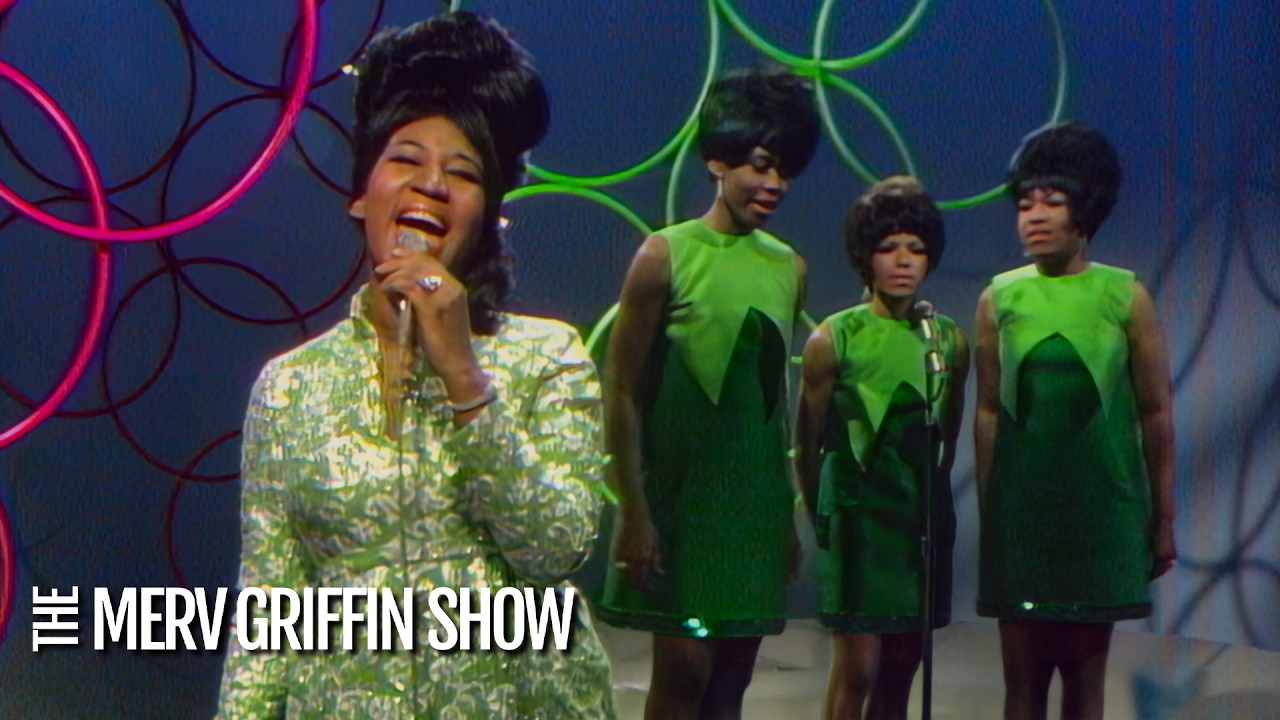
Merv Griffin, November 1967
By the fall, Respect had made Franklin a star, and she had hits to choose from. On The Merv Griffin Show, which Westinghouse syndicated to stations around the country, in the episode dated November 1, 1967, in the show’s archive, she chose the B-side. Griffin introduced her to his audience as an “unusual young singer.” Rolling Stone later picked the appearance as one of her 10 great performances, singling out the restraint and control she brought to a slow piano ballad that had reached radio as the back of another record.
The song kept traveling after that. The Flying Burrito Brothers recorded it in 1969 as a country-soul waltz, and in 1991 Penn and Moman’s songs, this one included, turned up in The Commitments, the film about an Irish soul band. Rolling Stone placed Franklin’s version on its 500 Greatest Songs of All Time list in 2004. Penn named his first major-label album Do Right Man when Sire released it in 1994.
Most B-sides stay where they’re filed. This one became a standard because Franklin finished it herself, at a piano in New York, weeks after a fistfight had left it half-written in Alabama. The Merv Griffin clip shows what she did with that ownership. With a string of hits to promote, she spent her national television slot on the song that had almost been lost, and sang it as if it had always been hers.
SONG INFORMATION
Enjoyed this one? New forgotten gems every day — tap Music Videos Club below to visit and follow us on Facebook: