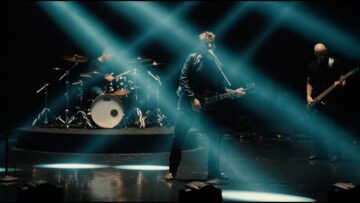
This is the fourth video for a song that came out seven months ago
A lyric video went up on January 16, 2026, the day the single arrived. A studio video followed on February 11, four days after that. A making-of film appeared on April 30. And in late August 2026, more than seven months after anyone could first hear the song, Caroline Jones released the official video for You’re It For Me, Honey. Four films for one three-minute record is not how singles usually work, and the reason it happened here says more about how country music is promoted in 2026 than anything the video itself contains.
The song sits on Good Omen, the album Jones released on February 13, 2026, and it is a deliberate period piece. She built it to sound like a mid-nineties Shania Twain record — the big confident chorus, the tongue in the cheek, the swagger about a relationship rather than the ache of one — and she has been open that the resemblance was the plan rather than an accident. She wrote it at home while on maternity leave, and described the result as empowering and “very tongue-in-cheek.” The subject is her husband, which is a less common thing to build a country single around than the alternative.
The woman in Zac Brown Band
Jones is a multi-instrumentalist who has spent the last few years holding down two jobs at once. She joined Zac Brown Band as a full member, the first woman to do so, and has been playing with them through the Love & Fear residency at the Sphere in Las Vegas while releasing her own records on a separate track. She appears on Million Little Bandaids with the band and on a live recording of Breathe In, Breathe Out, Move On. The solo work and the band work are not obviously the same artist, which is a useful position to be in and an exhausting one to maintain.
Good Omen runs to twelve songs and covers considerably more ground than this single suggests. Divorce In A Small Town and No Tellin’ sit in the darker half of the record, alongside All The Things and the title track. It has been described as her most lyrically direct writing, which tracks with an album made by someone whose life had recently changed shape.
Why a song gets four videos
The sequence is the interesting part. A lyric video on release day serves the streaming audience, who will find the song on a playlist and want the words. A studio video a month later gives the existing fanbase something to watch. A making-of in the spring feeds the album cycle. None of those is a music video in the sense the term meant in 1996.
What arrived in August is that: a proper narrative film, made and released long after the song stopped being new. The making-of clip carried an explicit request for viewers to call their local radio stations, which is the tell. This is a record being worked at country radio over a period of months rather than launched at it, and the official video is not the opening move. It is the reinforcement that shows up once a song has proved it will hold. A song styled after 1996 is being promoted on a timeline that would have been unrecognizable in 1996, and both of those facts are doing the same job.
SONG INFORMATION
Artist: Caroline Jones
Song: “You’re It For Me, Honey.”
Album:Good Omen
Released: January 16, 2026 (single); album February 13, 2026
Songwriter(s): Caroline Jones, Rob Grimaldi, Lauren McLamb, Brandon Ratcliff
Producer(s): Caroline Jones, Julian Raymond, Ric Wake
Engineering: Howard Willing, recording; Gustavo Celis, additional engineering and mixing
Mastering: Brad Blackwood
Length: 3:42
Lineup: Caroline Jones, lead and background vocals