



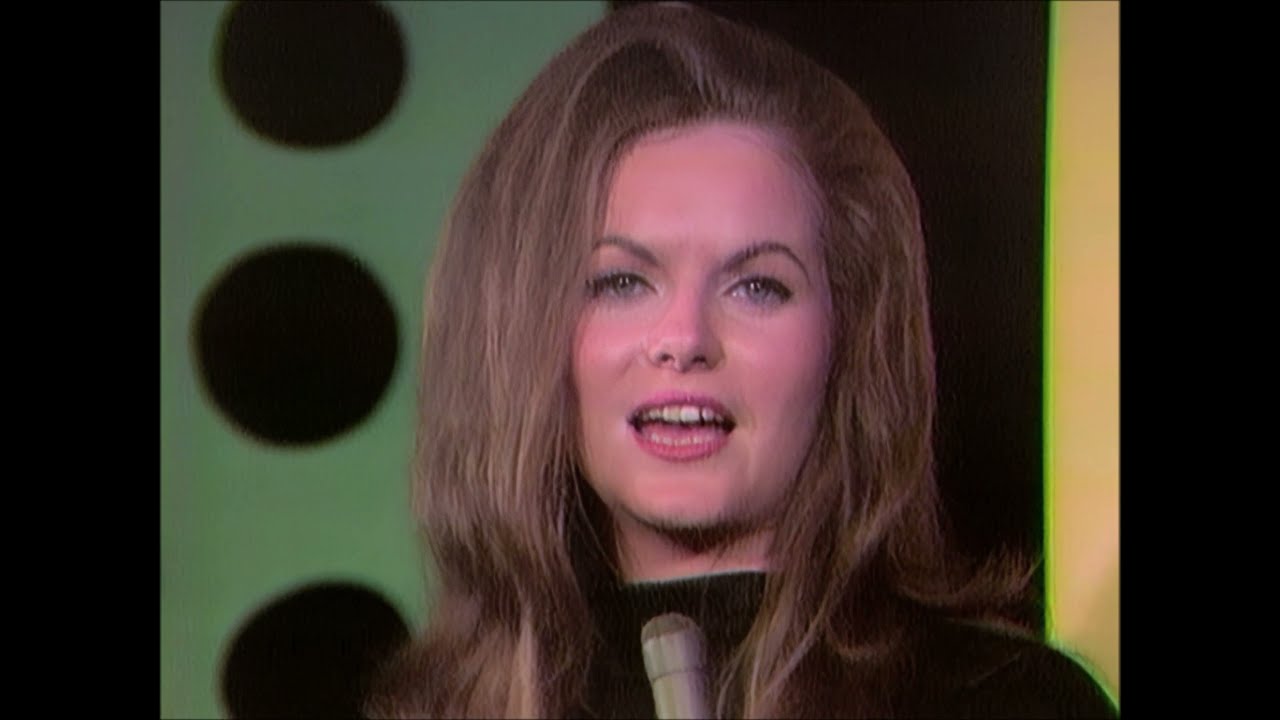






Jeannie C. Riley – Harper Valley P.T.A.
She didn’t want to record it, cut it after her day job, and made it the first record by a woman to top the pop and country charts at once.
The phones went first. On the evening Jeannie C. Riley cut Harper Valley P.T.A., she and producer Shelby Singleton took an acetate of it to Ralph Emery at WSM in Nashville, and when he played it, she later recalled, the station’s switchboard lit up. Within a month the single was No.1 on the Billboard Hot 100, and it topped the country chart as well, the first time a record by a woman had led both. Riley had not wanted to sing it at all.
Keep watching: Dolly Parton – Jolene · explore more →
The song began as a commission. Songwriter Margie Singleton asked Tom T. Hall for a story song in the mold of Bobbie Gentry’s Ode to Billie Joe, the hit of 1967. Hall took the name from Harpeth Valley Elementary School, which he drove past, and the plot from his own childhood in Olive Hill, Kentucky. In the mid-1940s a classmate’s mother there, rebuked by school officials for her modern ways, walked in and told them off, something nobody in town had seen before. In the song she becomes Mrs. Johnson, a mother the local PTA scolds in writing, who answers by walking into their meeting and listing each member’s secrets out loud. The last verse reveals that the narrator is her daughter.
Riley was working as a secretary on Music Row and cutting demos on the side when the song reached her, and she did not like what she heard. The demo she knew, sung by Alice Joy, leaned toward the moody style of the Gentry record, and Riley said it did nothing for her. A friend talked her into it anyway. Singleton, a former Mercury Records producer starting his own Plantation label, booked an evening session at Columbia’s Nashville studio in late July 1968, after her working day was over. Jerry Kennedy played the dobro that runs through the record, and Singleton’s wife at the time, Barbara, suggested rewriting the final line around the “sock it to me” catchphrase from Rowan & Martin’s Laugh-In.
The Steepest Climb of the Decade
Plantation released it in August 1968, and the climb was steep. The Hot 100 listed it at No.81 in the issue dated August 24. A week later it stood at No.7, the biggest jump into the Top 10 that chart saw all decade. The RIAA certified it gold on August 26, before it had even reached the top. It spent one week at No.1 on the Hot 100 and three on the country chart, plus four weeks at No.2 on the Hot 100, three of them stuck behind the Beatles’ Hey Jude. Sales passed six million copies.
In March 1969 it won Riley the Grammy for Best Country Vocal Performance, Female, and earned a Record of the Year nomination. No woman topped both the pop and country charts with one record again until Dolly Parton’s 9 to 5 in 1981. The song outgrew the single, too, inspiring a 1978 film and a 1981 television series, both starring Barbara Eden, and in 2019 Riley’s recording entered the Grammy Hall of Fame. It remained her only Top 40 pop hit.
She took it only because a friend insisted, after a demo she disliked and a full day at someone else’s desk, in a session squeezed into the evening. Nothing about the record was planned to last: a commissioned imitation of another woman’s hit, a last-minute line borrowed from a TV comedy show, and a singer who had to be talked into it. It lasted anyway, because Riley sang it like the mother in the story: unconvinced, unimpressed and finished with being told what to do.
SONG INFORMATION
Enjoyed this one? New forgotten gems every day — tap Music Videos Club below to visit and follow us on Facebook: