







Cyndi Lauper – Girls Just Want To Have Fun
The defining feminist pop song of the 1980s was written four years earlier by a man, from a man’s point of view, as a rock demo about girls he wanted to chase — and Cyndi Lauper rewrote it into the exact opposite.
It became the ultimate anthem of female independence, a song so tied to women’s joy and autonomy that protesters carried its lyrics on signs at marches decades later. And Girls Just Want to Have Fun was written by a man — from a man’s point of view, as a fairly ordinary rock song about girls being fun to be around. The transformation of that demo into Cyndi Lauper’s era-defining statement is one of the great acts of reinvention in pop history, and it came with a sting in the tail.
Keep watching: Cyndi Lauper – Time After Time · Cyndi Lauper – True Colors
The song was written in 1979 by Robert Hazard, a rock musician who performed around the Philadelphia area and recorded it as a demo that got some local college-radio play. Hazard’s version was sung from a male perspective — the women in it are something for the singer to enjoy, not the subject of their own story. It was never released as a proper single. When Lauper’s producer Rick Chertoff, a friend of Hazard’s, brought the song to her for her debut solo album, her first instinct was to refuse. She didn’t want to sing a song that looked at women from the outside. Then she saw a way to turn it inside out.
With some lyric changes suggested by Chertoff and shaped by her own instincts, Lauper flipped the entire meaning. Sung by a woman, “girls just want to have fun” stopped being a man’s observation and became a woman’s demand — a declaration that women deserve the same freedom, joy, and autonomy that men take for granted. She added a key line of her own intent, wanting to be “the one to walk in the sun.” The arrangement changed too: where Hazard’s was straight rock, Lauper’s bounced on bright synths and a buoyant, danceable beat, built with two musicians from the Hooters, keyboardist Rob Hyman and guitarist Eric Bazilian, whom Lauper called “my band before I had a band.”
The hit that almost topped the chart
Released in October 1983 as the lead single from She’s So Unusual, the song slowly conquered radio through late 1983 and into 1984. By March it had climbed to No.2 on the Billboard Hot 100, where it spent two weeks held off the top spot only by Van Halen’s “Jump.” It hit No.2 in the UK as well and went all the way to No.1 in Canada, Australia, and New Zealand. It earned Grammy nominations for Record of the Year and Best Female Pop Vocal Performance, and it powered She’s So Unusual to a historic feat: it became the first debut album by a female artist to produce four top-five hits on the Hot 100, alongside “Time After Time,” “She Bop,” and “All Through the Night.” Lauper won the Best New Artist Grammy in 1985.
For Robert Hazard, the song’s success was bittersweet. As his own 1984 album underperformed, Lauper’s version of his song went Gold and made him, by his own account, a millionaire — enough to buy a New Jersey lake house and a horse farm, though he said federal taxes took most of it. But after Lauper said in interviews that she had co-written the song, Hazard served her with a cease-and-desist letter. The credit remained his. The transformation, though, was unmistakably hers.
The video that taught MTV how to have fun
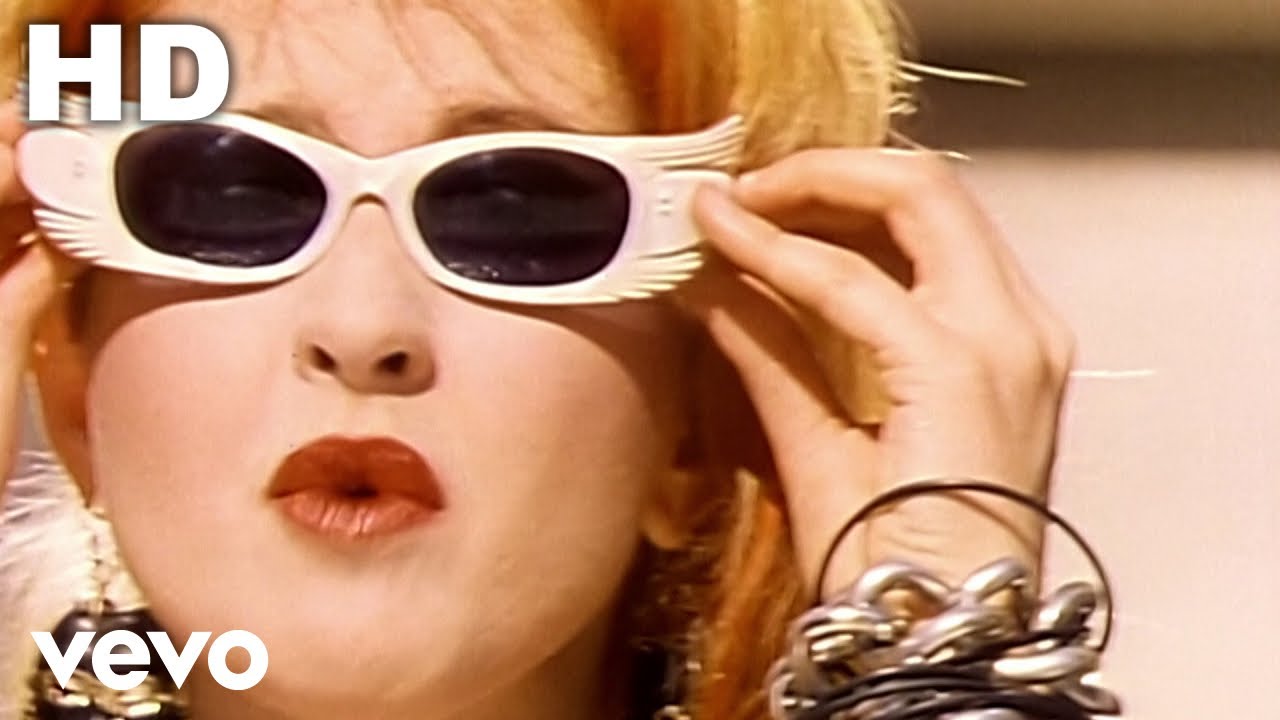
If the song made Lauper a star, the video made her a phenomenon. Directed by Edd Griles on a shoestring budget of around $35,000, it was shot on the Lower East Side of Manhattan in the summer of 1983 and became an instant MTV staple. Lauper, with her dyed-orange hair and gleeful thrift-store wardrobe — clothes she often supplied and styled herself — danced through New York streets leading a multicultural, multi-shaped cast of women, sending the clear message that fun and self-expression belonged to everyone. Wrestling legend Lou Albano played her exasperated father; her actual mother, Catrine, appeared as herself. The video won the first-ever Best Female Video award at the 1984 MTV Video Music Awards and helped invent the visual language of ’80s pop, setting a template — the independent woman in cheap, fabulous clothes — that artists like Madonna would build on. By January 2022 it had crossed a billion views on YouTube.
More than forty years on, Girls Just Want to Have Fun remains one of the most recognizable songs ever recorded — three notes of that synth riff and a room lights up. It has been covered by more than thirty artists, parodied by “Weird Al” Yankovic, and carried into the streets at women’s marches as a genuine political statement. Cyndi Lauper, born June 22, 1953, turns 73 in June 2026, a Rock and Roll Hall of Fame inductee and Tony winner whose career stretched far beyond this song — but it remains the one that announced her, the moment a borrowed rock demo became, in her hands, an enduring declaration of joy.