

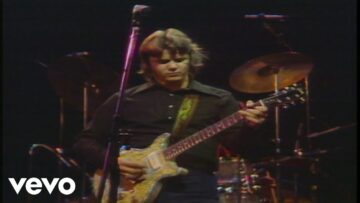
Eagles – Hotel California
The Single Was Twenty-Seven Days Old — and the Camera Belonged to the Arena
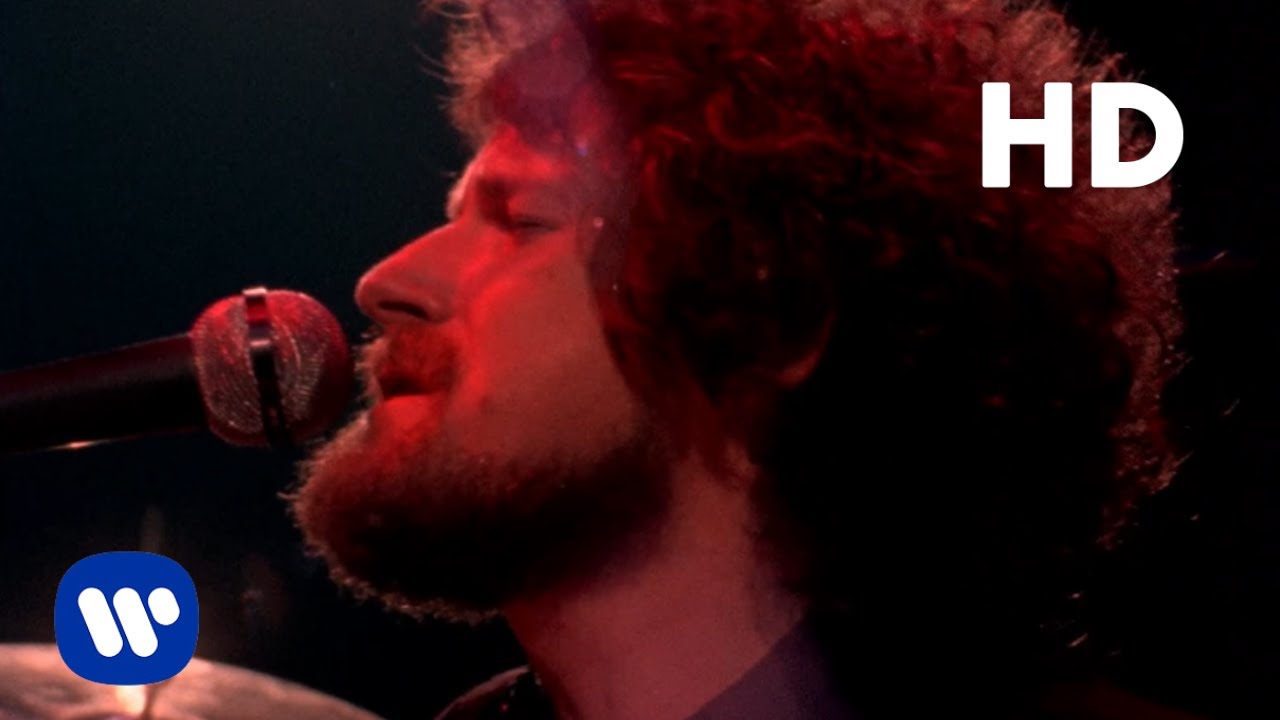
On March 21, 1977, the Eagles took the stage at the Capital Centre in Landover, Maryland, five shows into a tour built around an album the country was still learning. “Hotel California” — the single — had been in radio rotation for twenty-seven days. Asylum Records had been reluctant to release a six-and-a-half-minute track to Top 40 stations; the band held firm, agreeing only to a minor trim that brought the runtime to 6:08. The footage from that night — what would eventually become the most-watched Eagles live recording on YouTube, with hundreds of millions of views — was not captured by a television broadcaster or the band’s own production unit. It was shot by the Capital Centre’s Telscreen system: a four-sided video screen hung from the arena’s rafters, operated by venue staff with cameras on tripods in the upper decks. Bands could purchase the tapes afterward. The Eagles did.
The song’s origins predated the tour by nearly two years. In the summer of 1975, Don Felder was in the spare bedroom of a Malibu beach house he was renting — cut-off shorts, flip-flops, a four-track TEAC recorder — layering a 12-string guitar over a Rhythm Ace drum machine in search of ideas to pass along to his bandmates. The fragment he produced had traces of Latin pulse and Caribbean rhythm, something that made Don Henley, hearing it for the first time on a cassette while driving through Los Angeles at night, think of “Mexican reggae.” That became the working title. Henley recalled thinking there was something they could make interesting. He and Glenn Frey spent months building a lyric around Felder’s structure — a surrealist, cinematic narrative about wealth, entrapment, and the dark edge of the California dream, written, in Frey’s framing, like a Twilight Zone episode: one shot to the next, a picture of a guy on the highway, a picture of the hotel, the door opening onto strange people.
The definitive recording took three attempts. The first two, at the Record Plant in Los Angeles, failed to find the right key and the right tempo: Felder had to lower the song from E minor to B minor because the original was too high for Henley’s voice, and the second version ran too fast. The final take was assembled at Criteria Studios in Miami, with producer Bill Szymczyk making 33 edits to the two-inch master to build a composite from the strongest sections of multiple passes. The guitar solo nearly unraveled during the session: when Felder arrived to record his part, he began improvising a new version, and Henley stopped him immediately. He had to play it exactly like the demo. The problem was that the demo had been made a year earlier in Malibu, and Felder couldn’t recall what he’d played. A housekeeper held a cassette player up to a telephone so Felder could re-learn his own work from twelve months before. Once Joe Walsh joined the exchange — trading lead lines with Felder before the two harmonized toward the fade — the result was a two-minute-and-twelve-second guitar conversation that Guitarist magazine readers would later vote the greatest solo ever recorded.
The Lineup That Wouldn’t Last the Year
The five men who walked onto the Capital Centre stage that March represented what many consider the Eagles’ definitive lineup: Henley behind the kit on lead vocals, Frey on guitar and keyboards, Felder and Walsh sharing the guitar parts they had locked into the Miami sessions, and Randy Meisner on bass. It was the lineup’s final major tour together. Meisner — a founding member whose high tenor had shaped the harmonic architecture of the band since 1971 — would leave before the year was out, replaced by Timothy B. Schmit. Among the rarities in the Capital Centre setlist was “Try and Love Again,” Meisner’s own song from the Hotel California album, one of only a handful of documented live performances. Both nights of the two-night stand were opened by Jimmy Buffett. A newspaper review of the March 21 show recorded eighteen songs, the crowd’s particular response to “Take It to the Limit,” and a sense of a band operating well above the stadium-rock standard of the time.
The Telscreen footage captures the live arrangement of “Hotel California” at its most unguarded: fifteen thousand people hearing the closing guitar exchange between Felder and Walsh in real time, without the precision engineering of Szymczyk’s studio assembly to carry it. What the footage demonstrates is how completely the two guitarists had internalized the arrangement — Henley’s insistence during recording that Felder replicate the demo note for note had produced, whatever its frustrations, two musicians who had drilled the exchange until it was reflex. Live, the guitar dialogue breathes slightly more than on the record; the conversation has room. The arena’s camera operators, working without any particular reason to expect this footage would outlast the building, caught it cleanly.
The Award They Didn’t Pick Up
The Capital Centre was demolished in 2002. By then, “Hotel California” had passed through the full arc of canonisation. The song won the Grammy Award for Record of the Year at the 20th Grammy Awards in February 1978 — and the Eagles did not attend. Henley did not believe in competitions, and the band was in rehearsal with Schmit, learning the repertoire. According to Schmit, they watched the ceremony on television while they were working. The song was inducted into the Grammy Hall of Fame in 2003, and its guitar coda was ranked eighth on Guitar Magazine’s list of the 100 greatest solos. The HD-remastered Telscreen footage, released officially by the Eagles on YouTube, accumulated views at a rate that made it their most-watched live recording on the platform. The building is gone. The footage remains: a band at its commercial and creative peak, playing a song that was less than a month old, before anyone had decided what to call what they were watching.
SONG INFORMATION
Related videos
 Watch LaterAdded
05:35
Watch LaterAdded
05:35  Watch LaterAdded
05:35
Watch LaterAdded
05:35  Watch LaterAdded
04:38
Watch LaterAdded
04:38