



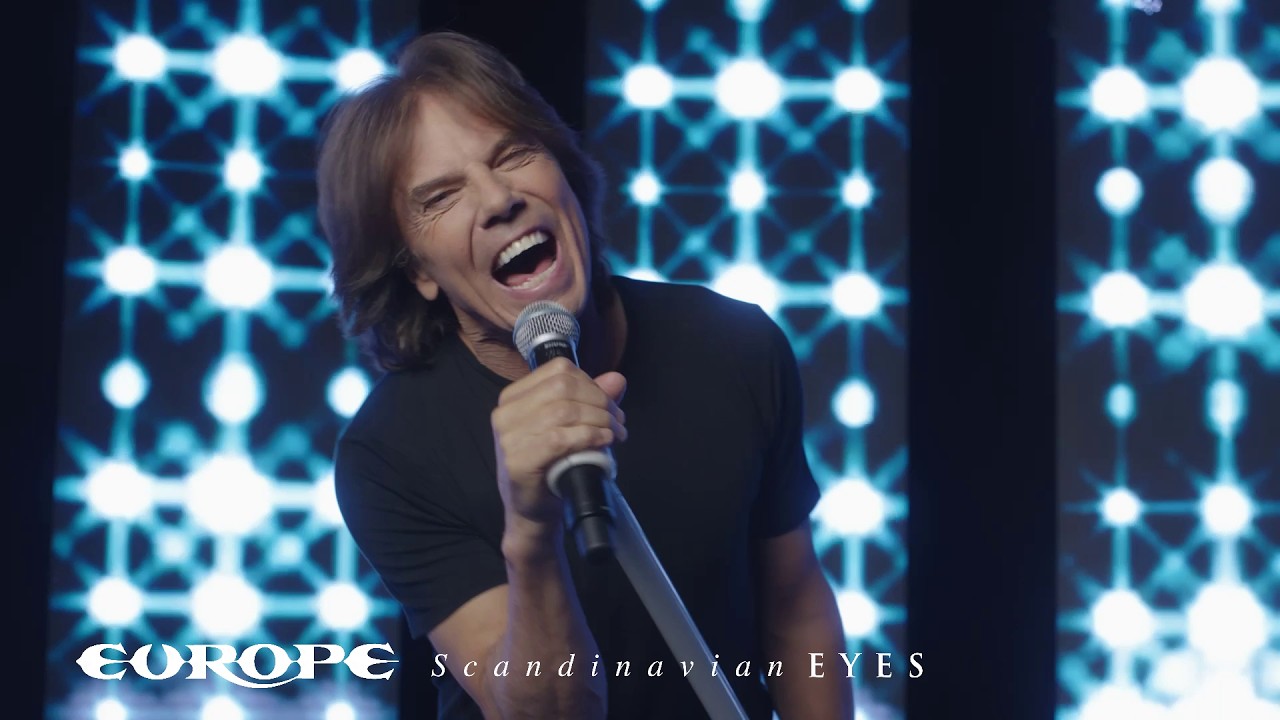







Europe – Scandinavian Eyes
Europe called it “Scandinavian Eyes,” and it has nothing to do with Scandinavia
Joey Tempest wrote a song called Scandinavian Eyes, and it is not about Scandinavia. Europe’s founding singer describes the lyric as being about crossing the line between good and “not so good,” which is a study in moral drift rather than a postcard from the North. The title points one way and the words go another. That mismatch is the first thing worth knowing about the sixth track on Come This Madness and the third single Europe has pulled from it.
Keep watching: Europe – The Cult of Ignorance · Europe – The Final Countdown
What arrives instead of nostalgia is scale. The track runs 4:51, making it the longest song on the album, and it sits on a hard repeating riff that Tempest has named as one of his favorite Europe songs in a long time. Mic Michaeli’s keyboards no longer tuck in under the guitars the way they did in 1986. They push the arrangement toward something orchestral, wide enough that the chorus behaves less like a hook and more like a stage cue. Patric Ullaeus, who has been shooting Europe’s videos since 2009, filmed the accompanying clip as a straight performance piece: five men in a room, playing. No cameos, no narrative, nothing to look at but the band. That is a deliberate contrast with the video for The Cult of Ignorance, which packed the frame with Swedish celebrities.
The Scandinavian part is the room, not the lyric
Europe recorded Come This Madness at RMV Studio on Skeppsholmen, a small island in the middle of Stockholm, a few hundred meters from the royal palace. The building is an 1874 naval warehouse that Benny Andersson and his son Ludvig converted into a recording room, sitting next door to the brick barn where Andersson has run his Mono Music label for decades. ABBA cut their 2018 reunion recordings in that same space. Cat Stevens, Céline Dion, Coldplay and The Hives have all worked there. So the most Scandinavian thing about Scandinavian Eyes is not a word in it. It is the address.
That address matters more than a trivia line suggests. Europe brought in Tom Dalgety to produce, a man whose credits run through Ghost, Rammstein, Pixies and Opeth, and Tempest says he functioned as a sixth member of the band across both the writing and the recording, to the point that the group asked him to co-write. Mike Fraser, who has mixed AC/DC, Van Halen and Metallica, handled the mix. Tobias Forge of Ghost and Mikael Åkerfeldt of Opeth both sing backing vocals somewhere on the record. The result is a hard rock album assembled with the arrangement ambition of a Swedish pop institution, in the room that institution built.
It took nine years to get there. Walk the Earth arrived in 2017, the band’s North American tour with Foreigner and Kansas collapsed during the pandemic, and the calendar kept sliding. Ian Haugland has argued the delay worked in Europe’s favor: ideas piled up across the years, songs got revisited and re-evaluated, and the album ended up assembled from the best of everything collected since 2017 rather than written in a single sprint. Haugland has also been direct about the standing decision underneath all of it. When Europe reunited, the band refused to become a novelty act living off its 1980s catalog, and the heavier, Deep Purple and Rainbow-shaped sound the group has chased ever since is the consequence of that refusal.
Five days after the album, the countdown starts again
Silver Lining Music releases Come This Madness on September 25, 2026. Five days later, on September 30, Europe opens The Final Countdown 40th Anniversary Tour in Glasgow, a run built entirely around a song the band wrote four decades ago. The scheduling is not accidental, and it amounts to a strange kind of dare: put out the heaviest record of your career, then spend a year playing the keyboard fanfare that made you famous, to rooms that in many cases sold out before the new album existed.
Joey Tempest and John Levén are the only two men who have played on all twelve Europe albums, and in 1985 it was Levén who told Tempest that an old keyboard riff he had been sitting on since around 1981 deserved a song. That riff became The Final Countdown. Forty-one years later the same two men are still arguing for scale over restraint, and Scandinavian Eyes makes it clear where that instinct actually came from. Europe’s Scandinavian inheritance was never the fjords or the folk melodies that the title invites you to expect. It was the local example of a band that treated arrangement as the entire point, and a title that misdirects about the lyric turns out to describe the record exactly.
SONG INFORMATION
Enjoyed this one? New forgotten gems every day — tap Music Videos Club below to visit and follow us on Facebook:
Related videos
 Watch LaterAdded
04:11
Watch LaterAdded
04:11  Watch LaterAdded
03:30
Watch LaterAdded
03:30  Watch LaterAdded
04:03
Watch LaterAdded
04:03