Roxy Music spent the better part of a year perfecting their farewell, and the voice that finished it belonged to a Haitian singer Bryan Ferry heard through the wall on a Sunday.
One Sunday early in 1982, with the Avalon sessions nearly done, Bryan Ferry and producer Rhett Davies heard a voice coming from the studio next door at the Power Station in New York. It belonged to Yanick Étienne, a Haitian singer recording a demo down the corridor. She spoke no English, so her boyfriend translated as Ferry asked her to sing on his record. She added the high, wordless line that floats over the final minute of Avalon, and Ferry went straight back to the microphone and sang his own part again. A song Roxy Music had worked on for the better part of a year was finished by a stranger who happened to be booked next door.
Nobody had planned on that. Work on the album began in mid-1981 at Phil Manzanera’s studio in Surrey, moved to Compass Point in Nassau, and ended at the Power Station, where engineer Bob Clearmountain handled the final overdubs, the drums and the mix. Ferry has said he started writing the songs on the west coast of Ireland, and he credited the Bahamas with the warmth that crept into the title track. That track would not settle. As mixing drew to a close, the band recorded it again from scratch, and Ferry was still completing lyrics shortly before he sang them.
The finished lyric is set at the end of a party: the singer worn out, the evening over, until someone appears across the room. Ferry took the title from Arthurian legend, explaining to NME in June 1982 that Avalon is the enchanted island where the queens carry the dying King Arthur. He later called the song a swan song, which fits a band on its eighth and final studio album. Andy Newmark’s drums and Alan Spenner’s bass keep the pulse low, Neil Hubbard and Manzanera play guitar lines that barely rise above a murmur, and Andy Mackay’s saxophone carries the fade with Étienne riding over it.
A director between features
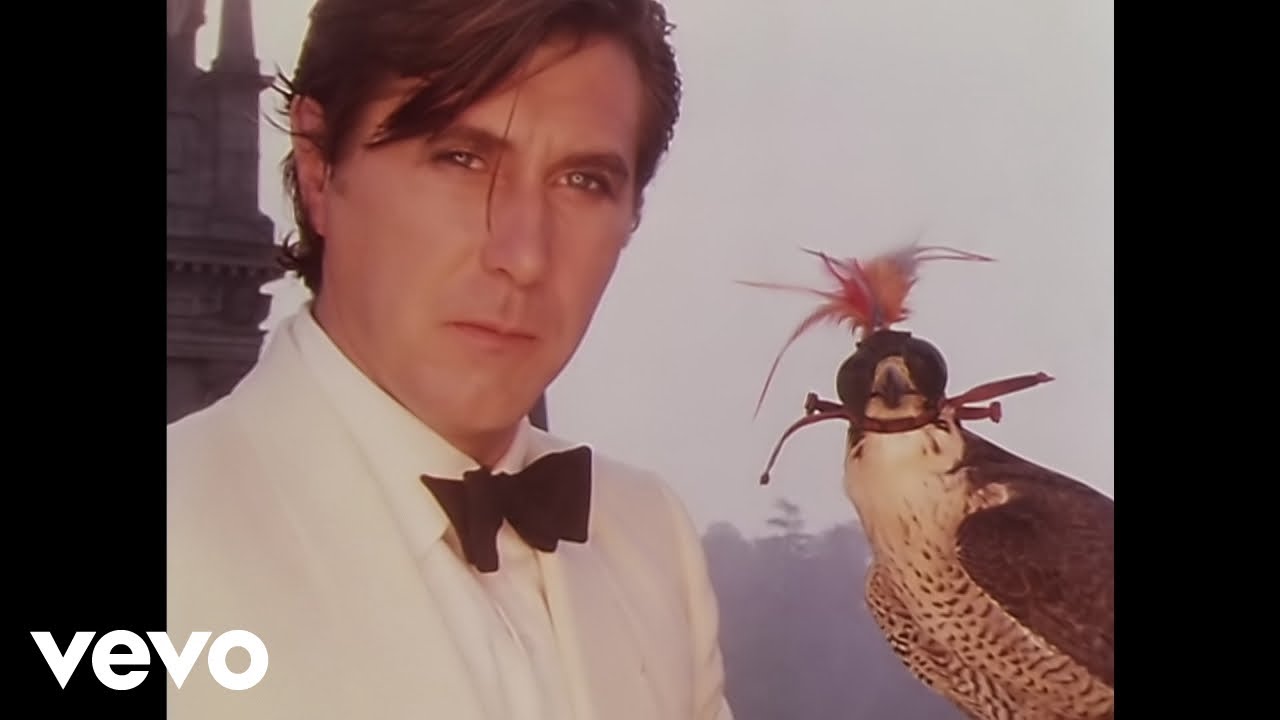
For the promotional film, the band turned to Ridley Scott, three years past Alien and in the same year as Blade Runner, during a short run of commercial and music-video work he took on between features. The setting was Mentmore Towers, the Victorian mansion in Buckinghamshire later used in Eyes Wide Shut and Batman Begins. Scott staged a candlelit gala with Roxy Music performing in evening dress and Ferry in a white dinner jacket. The actress Sophie Ward, daughter of the actor Simon Ward, plays the mysterious woman who draws his eye, and the falcon from the album cover turns up too. The clip runs about four minutes and looks the way the record sounds.
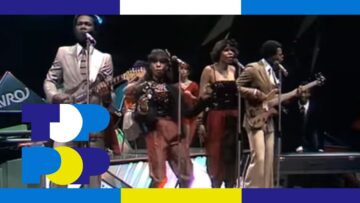
E.G. Records released Avalon in June 1982 as the album’s second single, after More Than This. The UK chart took it to No.13, which turned out to be Roxy Music’s last Top 20 single, and Belgium sent it to No.5. In the United States, Billboard’s rock chart gave it No.59. The band performed it on Top of the Pops on June 17, 1982. The album did the heavier lifting. Released on May 28, 1982, Avalon went straight to No.1 in Britain, held the top spot for three weeks and stayed on the chart for 57 weeks. In America it stalled at No.53, then kept selling quietly until the RIAA certified it platinum in December 1992, a decade later.
Roxy Music toured the album and then stopped, and Avalon remained their last studio record. Étienne stayed in Ferry’s orbit, singing on his 1985 solo album Boys and Girls, and the song became the one his audiences waited for. That is the quiet irony of the farewell. The closing statement of a band famous for control, styling and studio perfection rests on a voice nobody arranged for, captured because a singer from Haiti was booked down the hall that weekend.
SONG INFORMATION
Artist: Roxy Music
Song: “Avalon”
Album:Avalon
Released: June 1982 (single); album May 28, 1982
Recorded: 1981–1982
Studio: Compass Point, Nassau; Power Station, New York City
Label: E.G. / Polydor
Songwriter(s): Bryan Ferry
Producer(s): Rhett Davies, Roxy Music
Length: 4:15 (album version)
Chart Performance: UK No.13; Belgium No.5; US Billboard Mainstream Rock No.59
Lineup: Bryan Ferry (vocals, keyboards), Phil Manzanera and Neil Hubbard (guitar), Andy Mackay (saxophone), Alan Spenner (bass), Andy Newmark (drums), Jimmy Maelen (percussion), Yanick Étienne and Fonzi Thornton (backing vocals)