






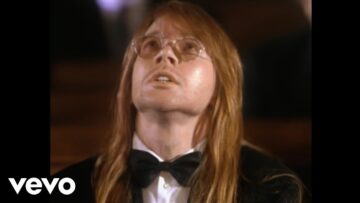
Gloria Estefan – Mi Tierra
She wrote a homesick record about a country she left before she was two years old.
Gloria Estefan has no memory of Cuba. She was born in Havana on September 1, 1957 and her family left after the revolution, before she was two. She grew up in Miami, went to school in English, took a master’s in psychology, and built one of the biggest pop careers of the 1980s singing in a language her parents learned as adults. Then in 1993, at the point where the commercial logic said to keep doing exactly what she was doing, she made an entire album in Spanish about a homeland she knows only from other people’s descriptions.
Keep watching: more 90s music videos · explore Latin pop →
Nothing about that decision was safe. Epic had a performer who had sold enormous numbers with Conga, Anything for You and Rhythm Is Gonna Get You, and who had come back from a broken back in a highway accident to a No.1 record. What she wanted to make instead was Mi Tierra — twelve songs in the Cuban forms of the 1940s and 50s, boleros and sones and danzón, with no English-language version and no obvious route onto American radio.
The title track went out as the lead single in June 1993, written by Estefan with the Colombian songwriter Estéfano, produced by her husband Emilio alongside Jorge Casas and Clay Ostwald. It is a son montuno, which means the arrangement is built to open out rather than resolve — the horns arrive and keep arriving, and the whole thing gathers rather than climaxes. Her voice sits differently on it than on anything she had recorded before, less pop-forward and more inside the band.
Who is playing on it
The players are the argument. Emilio assembled a room at Crescent Moon Studios in Miami that included Tito Puente, Arturo Sandoval, Paquito D’Rivera, the Mexican guitarist Chamin Correa, and Israel “Cachao” López — the bassist who had helped invent the mambo in Havana in the 1930s and who plays on half the record. Juanito Márquez arranged most of it and conducted.
And then there is the detail nobody expects from a Cuban roots record. The orchestral strings were recorded in London, at Air Lyndhurst Studios in Hampstead, by the London Symphony Orchestra, with Márquez conducting there too. A record about Havana, made in Miami, with its string sections cut in north London by an English orchestra.
What it did
Mi Tierra entered Billboard’s Top Latin Albums chart at No.1 on July 10, 1993 and stayed there for fifty-eight weeks — more than a year at the top, on a chart it went on to occupy for a hundred and eighty-four weeks in total. It sold over five million copies worldwide and won the Grammy for Best Tropical Latin Album at the 36th ceremony in 1994, where Estefan performed the title track live. Epic pulled seven singles out of it across the following year, and one of them, Tradición, became the first Estefan record to top Billboard’s dance chart — in Spanish, which had not previously been how that chart worked.
It won the Grammy for Best Tropical Latin Album at the 36th ceremony in 1994, where Estefan performed the title track live. Epic pulled seven singles out of it across the following year, and one of them, Tradición, became the first Estefan record to top Billboard’s dance chart — in Spanish, which had not previously been how that chart worked.
Its longer effect is harder to measure and probably larger. Before Mi Tierra, Latin music reached the American mainstream by translating itself. After it, an artist at the top of the English-language market could make a record in Spanish, in traditional forms, without diluting any of it, and expect to be met. Everything that followed in the Latin pop boom of the late nineties had this record somewhere behind it.
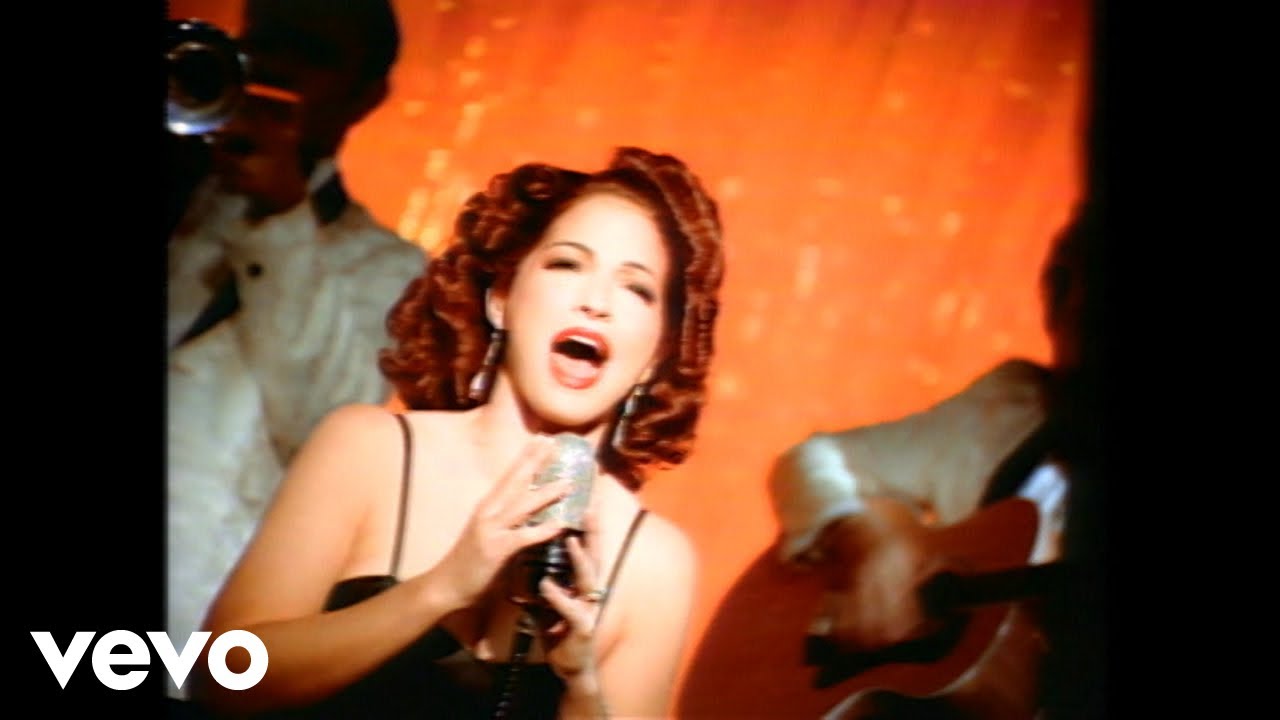
Alberto Tolot directed the video as a nightclub performance — Estefan singing with the band arranged behind her, no narrative, no location work, nothing borrowed from the pop videos she had been making for a decade. It is a straightforward document of musicians playing in a room, which for a 1993 major-label single was itself a decision. Anything more elaborate would have argued against the record.
Estefan re-recorded the song in 2020 with Brazilian arrangements for Brazil305, which is a reasonable summary of where the last thirty years took her. But the 1993 version is the one that mattered, and what makes it work is that she is not performing nostalgia. She is performing somebody else’s nostalgia — her parents’, her grandparents’ — and discovering on the record that it belongs to her as well.
SONG INFORMATION
Enjoyed this one? New forgotten gems every day — tap Music Videos Club below to visit and follow us on Facebook:
Related videos
 Watch LaterAdded
03:43
Watch LaterAdded
03:43  Watch LaterAdded
04:53
Watch LaterAdded
04:53  Watch LaterAdded
04:22
Watch LaterAdded
04:22