




Everly Brothers – All I Have To Do Is Dream
Born From A Dream In A Milwaukee Hotel Elevator
Released in April 1958, “All I Have To Do Is Dream” became the only single ever to top all of Billboard’s singles charts simultaneously, reaching number one on Best Sellers in Stores on May 12, then hitting the summit on Most Played by Jockeys and Top 100 charts on May 19, where it remained for five, four, and three weeks respectively. In the UK, the song spent seven weeks at number one on the New Musical Express chart beginning in June, including one week tied with Vic Damone’s “On the Street Where You Live,” and stayed on the British chart for twenty-one weeks total. What audiences swooning to Don and Phil Everly’s impossibly close harmonies didn’t realize was that the song sprang from one of music history’s most romantic origin stories. Felice Bryant, then working as an elevator operator at Milwaukee’s Schroeder Hotel in 1945, claimed she recognized musician Boudleaux Bryant the moment he stepped into her elevator because she’d seen his face in a dream when she was eight years old and had been waiting for him ever since.
The track demonstrated extraordinary dominance across multiple chart formats. It topped the R&B chart and became the Everly Brothers’ third country chart-topper, an unprecedented feat of crossover success that displayed the genre-blurring power of their sound. The song ranked number two on Billboard’s year-end chart for 1958 after the introduction of the Hot 100 in August, and briefly returned to that chart in 1961. The single sold over two million copies in the United States alone, while internationally it became one of the bestselling records of the late fifties. The Everly Brothers were competing against Elvis Presley’s dominance and the emergence of doo-wop groups, yet managed to carve their own distinctive space with pristine harmonies that influenced everyone from the Beatles to Simon and Garfunkel. Rolling Stone magazine later ranked it number 141 on their list of The 500 Greatest Songs of All Time, while the Rock and Roll Hall of Fame named it one of the 500 Songs That Shaped Rock and Roll.
Husband-and-wife songwriting team Felice and Boudleaux Bryant wrote “All I Have To Do Is Dream” based on Felice’s premonition and their whirlwind romance. The couple eloped just five days after meeting in that Milwaukee hotel elevator, with Boudleaux giving Matilda Scaduto the nickname Felice that she’d use for the rest of her life. The Bryants became Nashville’s first professional songwriters, moving to Tennessee after struggling years that included living in a trailer and various odd jobs. By 1958, they’d established themselves as the premier songwriting team for the Everly Brothers, having already penned “Bye Bye Love” and “Wake Up Little Susie.” Boudleaux wrote the song inspired by Felice’s childhood dream of meeting him, though original single releases credited only him, reflecting era practices where male writers received primary billing. The composition followed AABA form with deceptively simple construction that belied its emotional depth, capturing longing and romantic escapism in minimal words and melody.
The recording session happened on March 6, 1958 at RCA Studios in Nashville, with the entire track captured live in just two takes. Legendary guitarist Chet Atkins provided the tremolo-style guitar chords that gave the song its distinctive shimmering quality, his picking creating the dreamy backdrop for the Everly Brothers’ seamless vocal blend. Phil Everly later recalled hearing Boudleaux’s demo version and thinking it could have been released as-is because the song itself was so strong. The brothers delivered their signature close harmonies with Don handling lead vocals while Phil provided the high harmony parts, their voices locking together with such precision that separating them became nearly impossible. The minimalist arrangement featured piano, bass, and subtle percussion that never competed with the vocals, creating space for the harmonies to float effortlessly. The entire session demonstrated the efficiency of Nashville’s emerging recording industry, capturing lightning in a bottle before anyone could overthink the magic.
“All I Have To Do Is Dream” was released as a single on Cadence Records with “Claudette” on the B-side, a Roy Orbison composition named after his first wife that became his first major songwriting success. The single’s success led Orbison to terminate his contract with Sun Records and affiliate with the Everly Brothers’ publisher Acuff-Rose Music, launching his own string of hits. The Everly Brothers were already established acts by 1958, having scored with “Bye Bye Love” and “Wake Up Little Susie” the previous year, but this song solidified their status as one of the most influential rock groups ever. The track appeared on various Everly Brothers compilation albums over the decades and was inducted into the Grammy Hall of Fame in 2004, recognizing its enduring cultural and historical significance. The Bryants would write over twenty songs for the Everly Brothers, but this remained their most perfectly realized collaboration.
The song has been covered across remarkably diverse territories and generations. Richard Chamberlain recorded a version for his 1962 album that peaked at number fourteen on the Billboard Hot 100 in 1963. Glen Campbell and Bobbie Gentry released a duet version in 1969 that reached number twenty-seven on the Hot 100 and number six on the Country Singles chart. The Nitty Gritty Dirt Band took their version to number sixty-six in 1975. Andy Gibb and Victoria Principal released it as a single in 1981, with the track peaking at number fifty-one and becoming Gibb’s final single before his death in 1988. Cliff Richard singing with Phil Everly reached number fourteen on the UK Singles Chart in 1994, bringing the song back to British consciousness. Roy Orbison covered it on his 1963 album In Dreams, while French singer Sheila released a French version titled “Pendant les Vacances” that became a hit in France in 1963.
The cultural impact extended beyond commercial success into the realm of influence and inspiration. Chet Atkins noted that the Bryants changed the direction of music all over the world through their songs for the Everly Brothers, with many of those compositions greatly influencing the Beatles who in turn influenced countless others. Phil Everly called the Bryants masters, saying he learned more from them than anybody. The song’s harmonic innovation pioneered close-harmony techniques in rock music that became foundational for folk-rock and soft rock movements of the sixties. The track appeared in numerous films and television shows, was sampled in hip-hop tracks including O.G.C.’s 1996 “Flappin’,” and became a staple of oldies radio formats worldwide. Brandi Carlile performed it at the 2021 Rock and Roll Hall of Fame Induction Ceremony when the Everly Brothers were honored. Boudleaux Bryant passed away in 1987, while Felice continued writing until her death in 2003, their legacy secured through over six thousand songs and three hundred million records sold.
Looking back, the story of a nineteen-year-old elevator operator recognizing the man she’d dreamed about thirteen years earlier seems almost too perfect to be true, yet Felice insisted throughout her life that she knew Boudleaux the moment she saw him. The only thing wrong was that he didn’t have a beard like in her dream, though he grew one for her later. Their marriage lasted over forty years until Boudleaux’s death, producing not just two sons but a songwriting partnership that helped define American popular music in the fifties, sixties, and seventies. “All I Have To Do Is Dream” stands as proof that sometimes the most enduring love songs come from actual love stories, and that dreams can become reality if you’re patient enough to wait for the right person to step into your elevator.
SONG INFORMATION
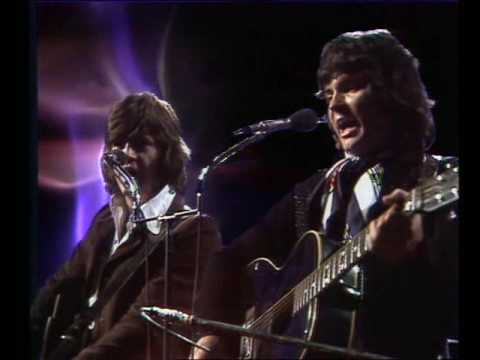
When asked for the most memorable moment of his career, Phil Everly replied “the Albert Hall reunion”. It was September 1983 – ten years on from one of the most acrimonious splits in popular music history- when the Everly Brothers, Don and Phil, took to the stage at London’s Royal Albert Hall. One of the most successful duos of all time, the Everlys had dominated the charts in the late fifties and early to mid sixties. Their close harmony singing, acoustic guitars and brilliant songwriting had become instantly recognizable and inspired millions of fans worldwide. 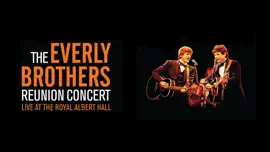
Related videos
 Watch LaterAdded
05:04
Watch LaterAdded
05:04 ![Christopher Cross – Ride Like The Wind (Official Music Video) [45th Anniversary]](https://musicvideosclub.com/wp-content/uploads/2025/12/christopher-cross-ride-like-the-360x203.jpg) Watch LaterAdded
Watch LaterAdded
 Watch LaterAdded