



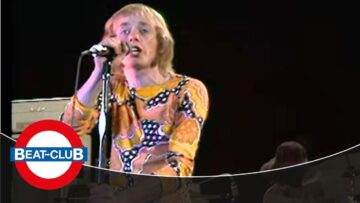
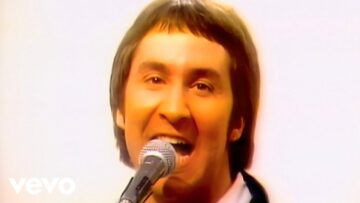
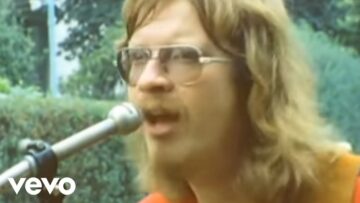

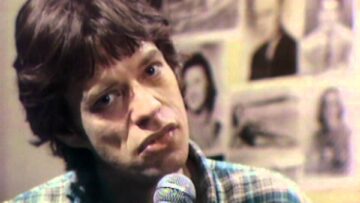
Player – Baby Come Back
Clive Davis heard it in person and passed; within months it had knocked the Bee Gees off No.1
Clive Davis sat down in front of an unsigned band at a Beverly Hills hotel showcase, listened to them play Baby Come Back on stools with acoustic guitars, and told them, as Peter Beckett tells it, “you guys look good, you sound good, but I don’t hear a hit.” A few months later the song sat at No.1 on the Billboard Hot 100, wedged between two Bee Gees chart-toppers on the label that signed the band instead. Davis, who died in June 2026, made his name hearing hits that other executives missed. This one got past him, and the reason it did is the same reason the record has outlived the band that made it.
Keep watching: 70s Music Videos · explore more →
The song came out of two breakups. Beckett, born in Liverpool, had played in the British band Paladin before moving to Los Angeles in 1974 and fronting Skyband, which split in 1975. With his money running low he went to a party in the Hollywood Hills where every guest was dressed in white, and found exactly one other person in jeans: J.C. Crowley, a singer and songwriter from Texas. They started writing together almost at once. Beckett’s long relationship had just ended and Crowley was getting over one of his own, so the subject chose itself. Crowley found the verse chords and Beckett the guitar riff. Then, after their second day of work, Beckett came back with the title, which had arrived overnight.
What they had was a song, not a deal. Their manager, Paul Palmer, introduced them to bassist Ronn Moss, who brought in John Friesen, his drummer from their high school bands. The managers walked the group from one producer’s office to the next, and most of the rooms passed, as Davis had. Dennis Lambert and Brian Potter were the exception, and they told the band plainly that Baby Come Back was a hit. Robert Stigwood’s RSO Records signed them. Even the name came late. The group had worked as Riff Raff and then Bandana before they noticed a TV movie whose end credits listed the cast as “players,” and they dropped the final letter. Bandana left one relic behind: its single’s B-side, Love Is Where You Find It, which ended up on the Player album and on the flip of Baby Come Back.
An album finished before the first gig
Lambert and Potter produced the debut album, Player, before the four musicians had played a single concert together. Beckett sang lead and played guitar, Crowley handled piano and electric piano, Moss played bass and Friesen drums, and the chorus stacked three of their voices in tight harmony over the riff. RSO issued the album in September 1977, and radio picked up the single that fall. Player’s first show came on October 27, 1977, opening for Gino Vannelli at the University of Texas at El Paso, with the record already climbing. By December the band had moved to an opening slot on Boz Scaggs’ tour, and Beckett remembers the song reaching No.1 in the middle of it.
On January 14, 1978, Baby Come Back replaced the Bee Gees’ How Deep Is Your Love at the top of the Hot 100. Three weeks later it gave way to the Bee Gees’ Stayin’ Alive. All three were RSO releases, so the only record to interrupt the Bee Gees that winter came from their own label, in the middle of a run of six consecutive RSO No.1s. The single logged 32 weeks on the Hot 100, reached No.10 on the R&B chart and topped the Canadian chart. The RIAA certified it Gold, and Billboard named Player its Best New Single Artist of 1978. Britain was cooler. The single stopped at No.32 there, in a country where the Equals had topped the chart in 1968 with an unrelated song of nearly the same name.
Player never found a second record that size. The follow-up, This Time I’m in It for Love, came from outside writers Steve Pippin and Larry Keith and peaked at No.10. Crowley left after the 1978 touring to make country records for RCA, and in 1989 the Academy of Country Music nominated him for Top New Male Vocalist. Moss turned to acting and spent 25 years as Ridge Forrester on The Bold and the Beautiful. Beckett joined Little River Band from 1989 to 1997 and sang Baby Come Back at their shows, so a Player song spent most of a decade on the road with an Australian band.
Hold music for the Department of Missing Babies
The song’s second life began without the band. In “Homer Alone,” a 1992 episode of The Simpsons, Homer calls the Department of Missing Babies and is put on hold to a fresh recording of Baby Come Back featuring Beckett and Crowley. Michael Bay’s 2007 film Transformers handed it to Bumblebee, who cues it up through his radio to help Shia LaBeouf’s character win over Megan Fox’s. Swiffer built a run of commercials around it. Biz Markie rapped over a sample of it on Things Get a Little Easier in 1989, and Yung Gravy later built Cheryl on the same hook.
That afterlife explains the miss. The record names no person and no place. It offers regret in its most general form, sung with harmony polish instead of ache, and that makes it portable enough to score a cartoon phone queue or a mop commercial without losing its grip. Two men wrote it to get over two specific people, then sanded the specifics away. Davis heard a band without a run of hits in it, and on that point he was right. What he missed is that one record can be enough, and Baby Come Back has kept Player’s name on the radio for almost fifty years.
SONG INFORMATION
Enjoyed this one? New forgotten gems every day — tap Music Videos Club below to visit and follow us on Facebook: