





![Van Halen – Dreams (Official Music Video) [HD]](https://musicvideosclub.com/wp-content/uploads/2026/01/van-halen-dreams-official-music-360x203.jpg)
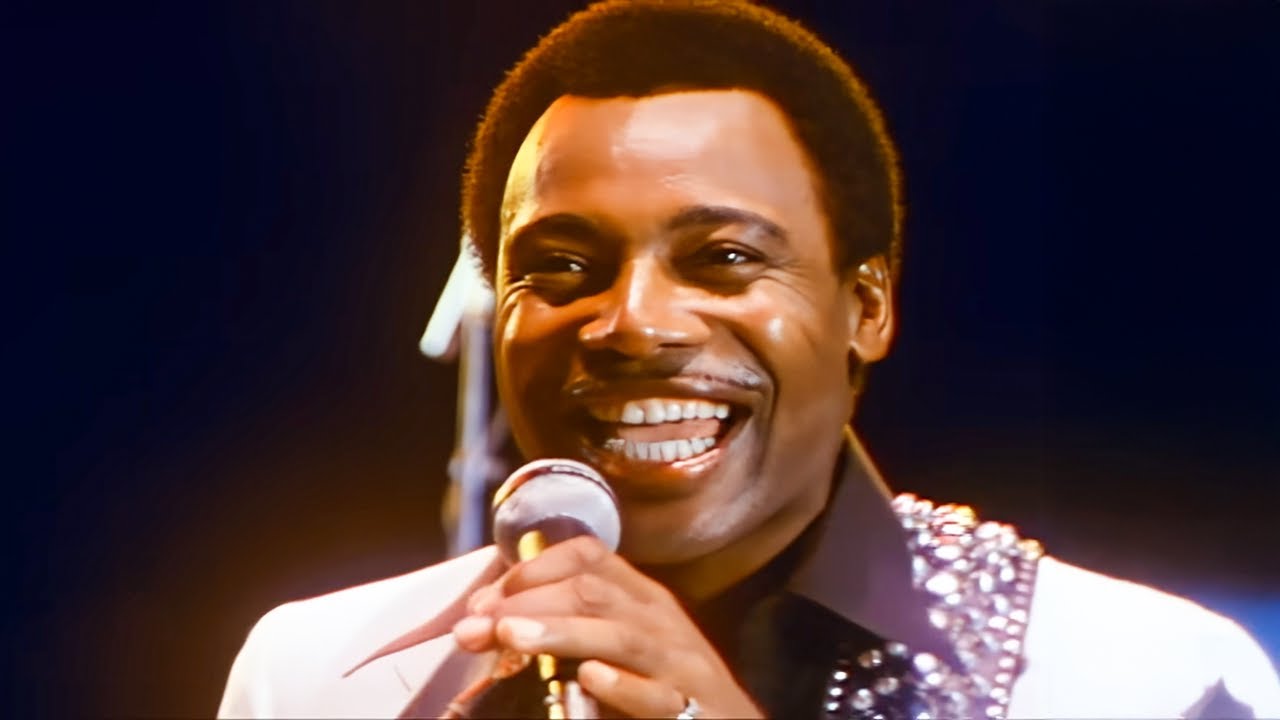
George Benson – Give Me The Night
He Was Packing His Bags When Quincy Said “One More Song”
“Give Me the Night” was released in June 1980 as the lead single from George Benson’s eighteenth studio album of the same name, becoming his biggest pop hit. The song peaked at No.4 on the US Billboard Hot 100, topped the Soul Singles chart for three weeks, reached No.2 on the Hot Disco Singles chart, and hit No.7 in the UK—tying with “In Your Eyes” as his highest-charting British single. What most fans don’t know: Benson had spent a month in the studio and was literally packing his bags to leave when Quincy Jones convinced him to stay for one more song—“Give Me the Night” was recorded in a single day. And the guitar solo everyone hears? That’s not entirely Benson. The second engineer accidentally erased part of Benson’s solo during mixing, prompting Jones to call Lee Ritenour at midnight for an emergency rescue mission—and swear him to secrecy for a decade.
The chart performance transformed Benson from jazz purist to pop crossover star. The parent album Give Me the Night, released in summer 1980, hit No.1 on both the Top Soul Albums and Jazz Albums charts, peaked at No.3 on the Billboard Pop Albums chart, and was certified Platinum by the RIAA just two months after release. This success came after Benson’s 1976 album Breezin’ had become the biggest-selling jazz album in history, and his 1977 live version of “On Broadway” had become an adult contemporary staple. But Give Me the Night represented something different—Jones asked Benson point-blank: “Do you want to make the world’s greatest jazz record, or go for the throat?” Benson’s answer was easy. He went for the throat.
The song was written by Rod Temperton, the Heatwave keyboard player who’d just penned several tracks for Michael Jackson’s Off the Wall album—including “Rock with You” and “Off the Wall.” In fact, it was listening to Off the Wall that convinced Benson to sign with Jones’ new startup label, Qwest Records. Jones recruited the same session players who’d worked on Jackson’s album, creating an all-star lineup: Herbie Hancock and Greg Phillinganes on piano, Richard Tee and George Duke on synthesizers, Lee Ritenour on guitar, Louis Johnson and Abraham Laboriel on bass, John Robinson and Paulinho Da Costa on percussion, Jerry Hey on trumpet, and Patti Austin providing the distinctive backing and scat vocals heard throughout. The song’s theme was pure Temperton—he specialized in songs about nighttime adventures, having previously written “Boogie Nights” for Heatwave. “Give Me the Night” offered a classier, more sophisticated version: wine, dancing, romance under the stars. Adult contemporary disco at its finest.
Recording took place at Cherokee Studios in Hollywood and Kendun Recorders in Burbank, with Bruce Swedien engineering and Quincy Jones producing. The sessions featured up to four Studer 24-track tape machines running simultaneously—one for horns, another for vocals, and so on—which Swedien would sync together to build the final sound. Jones used his “acusonic recording process,” tracking sources separately in stereo pairs rather than close mono mics, creating spacious reflections and reverb. After a month working on the album, Benson was ready to pack up and head east. Jones stopped him, insisting they record one more song. The recording of “Give Me the Night” was completed in a day. Then disaster struck during mixing: the second engineer accidentally put Benson’s guitar track into record mode, erasing part of his solo. It was midnight when Jones called Ritenour: “This is Q. You gotta get down here right now! We’ve got to fix George’s solo!” Ritenour rushed to Kendun, where Jones explained there was no way they could ask Benson to come back—he was already in Hawaii. Ritenour, who’d been helping Benson “update his tone” for the 1980s, knew Benson’s rig intimately. He nailed the replacement parts, and Jones, Swedien, and Ritenour breathed a collective sigh of relief. Then Jones issued his command: “Never, ever tell George what happened.”
“Give Me the Night” served as both the album opener and the lead single, marking the first official release on Quincy Jones’ Qwest Records label, distributed by Warner Brothers. The album spawned additional singles including “Off Broadway,” “Moody’s Mood” (a duet with Patti Austin that showcased Benson’s scatting), “Love x Love,” and “What’s On Your Mind” (which reached No.45 in the UK). The album’s success was unprecedented: Benson won three Grammy Awards in 1981, including Best Male R&B Vocal Performance for the title track, Best Jazz Vocal Performance, Male for “Moody’s Mood,” and Best R&B Instrumental Performance for “Off Broadway.” Quincy Jones and Jerry Hey also won the Grammy Award for Best Instrumental Arrangement for “Dinorah, Dinorah.” Various 12-inch releases featured a 5:04 “Long Version” and different B-sides across territories. This would be the only album Quincy Jones ever produced for George Benson, but it cemented the guitarist’s place in pop culture.
The music video became iconic in its own right. Filmed on the Venice Beach Boardwalk in Los Angeles in 1980, it featured Benson performing with a band and roller skating under sunset skies. In a 2024 interview with Spin, Benson revealed how the skating sequence happened: he saw roller skaters nearby during filming and asked his manager, “Where are my skates?” The crew protested, but Benson insisted: “Nobody here can beat me skating, that’s why. Your problem is that you think about falling. When I skate, I’m just thinking about skating. That doesn’t mean I never fall. I just never think about it. I just skate.” The resulting footage—Benson playing guitar while gliding on roller skates—captured the song’s breezy sophistication perfectly. Heavy D and the Boyz sampled the guitar riff for their hit “This Is Your Night.” Randy Crawford recorded a deep house cover in 1995. The song appeared in Richard Linklater’s Dazed and Confused. By November 2025, the track had been sampled in 117 songs across hip-hop and electronic music, and music critic Chris Molanphy classified it as a key example of yacht rock—sophisticated, yacht-club-ready fusion from the late 1970s and early ’80s.
The secret held for a decade. Then one day at an airport, Ritenour and Benson were walking together when Ritenour finally confessed. “George, did I ever tell you the story of ‘Give Me the Night’ and what happened to your guitar solo?” Benson said no, so Ritenour explained the whole midnight rescue mission, and how Quincy had sworn him to secrecy. Benson burst out laughing. “Oh man, now I gotta pull up that track and see if I can tell if it’s you,” he said. “I never knew it wasn’t me. You know, you did a good job. And it made a lot of money. So I’m happy.” That might be the most George Benson response imaginable: gracious, pragmatic, focused on the music rather than ego. The song remains what it always was—a last-minute addition that became a signature hit, recorded in a day, saved by a midnight phone call, performed on roller skates, and destined to soundtrack sophisticated nights out for generations to come.
SONG INFORMATION
Related videos
 Watch LaterAdded
03:43
Watch LaterAdded
03:43  Watch LaterAdded
 Watch LaterAdded
03:38
Watch LaterAdded
03:38