



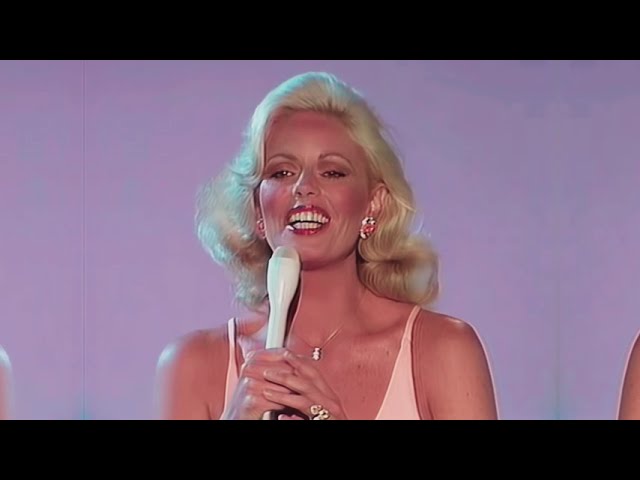





Captain & Tennille – Do That To Me One More Time
She Wrote A Song About Desire For A Man Who Never Read The Lyrics — And It Became Their Biggest Hit
There is a particular kind of irony that only reveals itself with time. When Toni Tennille sat down and wrote “Do That to Me One More Time” — a slow, unmistakably sensual ballad about longing and physical intimacy — she wrote it as a love song for her husband, Daryl Dragon. The man who wore a captain’s hat on stage, barely spoke in interviews, and had, by his wife’s own later account, never once shown her physical affection during their entire marriage. She wrote it for him, he never bothered to read the lyrics, and it became their second US number one. Pop music has always had a flair for the bittersweet. This one takes it to a different altitude entirely.
Released in late 1979 on Casablanca Records and included on the duo’s fifth studio album Make Your Move, the single was their 13th charting hit in the United States and their second number one on the Billboard Hot 100. It entered the chart on October 14, 1979, and peaked at number one on February 10, 1980, staying there for two weeks and spending over 27 weeks on the Hot 100 in total. It was held off the top spot for four agonising weeks by Michael Jackson’s “Rock With You” before finally breaking through. In the UK, it reached number seven. The album Make Your Move charted at number 23 in the US , and was certified Gold by the RIAA — the fifth certified record in a catalogue that had been threatening to run dry.
The route to that chart peak began with a moment of domestic performance that very few hit songs can claim. Toni Tennille played the song for Casablanca head Neil Bogart at her home in Pacific Palisades, California, on an electric piano, with Daryl Dragon beside her. Toni didn’t think much of this song when she wrote it, but when she played it for Bogart, he heard the hit potential right away and insisted they record it. Bogart reacted enthusiastically, saying: “That’s a smash! There’s no doubt in my mind that’s going to be your first single.” The song Toni had considered a minor album track — something to fill a gap, not to lead a comeback — was suddenly the most important record of their career. According to Toni Tennille, she wrote the song about how she felt for Daryl Dragon, but as she later put it: “the funny thing was, later on he told me that he never paid any attention to the lyrics.” The song that sang of desire, of wanting someone to do it again just one more time, was written for a man who genuinely hadn’t noticed.
The context behind their arrival at Casablanca matters. When their longtime label A&M began to move away from Daryl and Toni’s adult contemporary sound, the two jumped ship. A&M had originally signed them in 1974 after seeing them play nightclubs, famously describing them as “a slightly sexier Carpenters” — a label that stuck long after it stopped being accurate. Their debut, the Neil Sedaka-penned “Love Will Keep Us Together,” had been the biggest-selling single of 1975 and won the Grammy for Record of the Year. By 1978, the momentum had faded. They needed a reset. What they didn’t know was they also needed a song they didn’t fully believe in.
The finished recording features a Lyricon solo by saxophonist Tom Scott — though in the promotional video, the Captain mimed to this part on a descant recorder. The Lyricon was a wind-synthesizer, an instrument rare enough that most listeners had no idea what they were hearing — only that the breathy, gliding sound gave the track a warmth that separated it from the colder pop productions of 1979. The song was arranged with deliberate restraint: no disco percussion, no production excess, nothing to distract from Toni’s voice wrapping itself around a lyric that was far more charged than anyone at a US radio station seemed willing to acknowledge. Toni is clearly singing about foreplay, although ambiguously enough to keep the censors at bay. The track scraped into the lower half of the R&B singles chart, earning the duo a feature on Soul Train, where Don Cornelius introduced them as, “in our opinion, somewhat of a royal couple.”
What makes the story of Captain & Tennille genuinely strange — and genuinely compelling — is how little the public version of them matched the private reality. Daryl Dragon was the son of Oscar-winning conductor Carmen Dragon, and the godson of comedian Danny Thomas. By age 20 he was a full-time musician, songwriter, and producer. He had backed up soul artist Charles Wright, recorded psychedelic surf music with his brothers as The Dragons, and played keyboards on tour with the Beach Boys from 1967 onwards — where Mike Love gave him the nickname “Captain Keyboard.” Toni, meanwhile, had sung background vocals on Elton John’s Caribou album in 1974 and contributed backing vocals to Pink Floyd’s The Wall in 1979 — the same year she was recording the record that would become their last major hit. Two artists with genuinely adventurous musical lives, presenting the world with something that looked like wholesome sunshine pop and a picture-perfect marriage.
Tennille filed for divorce from Dragon in January 2014, after 39 years of marriage. Dragon was unaware of the termination until he was served with the divorce papers. In her 2016 memoir, Tennille wrote that Dragon was controlling and emotionally distant, saying she could not exaggerate that he showed no physical affection for her during their very long marriage. The song that had made them a romantic ideal — the one about needing more, wanting more, aching for more — turned out to be the most autobiographical thing she ever recorded. She was singing about a man who wasn’t listening. Five years after their divorce, on January 2, 2019, Daryl Dragon passed away. Tennille was right by his side.
In an odd bit of serendipity, Daryl Dragon and Toni Tennille finished their Top 40 history the same way they started — with a number one song. Two bookends, five years apart: “Love Will Keep Us Together” in 1975 to open the story, “Do That to Me One More Time” in 1980 to close it. The couple whose image was built on togetherness, on romance, on the eternal promise of love, ended with a song written in longing for something that was never quite there. Pop music rarely wraps things up so neatly — or so painfully.
SONG INFORMATION

Enjoyed this one? New forgotten gems every day — tap Music Videos Club below to visit and follow us on Facebook:
Related videos
 Watch LaterAdded
03:59
Watch LaterAdded
03:59  Watch LaterAdded
04:03
Watch LaterAdded
04:03  Watch LaterAdded
05:29
Watch LaterAdded
05:29