





![Little Big Town, Ashley Monroe – Sucker For A Sad Song [Official Music Video]](https://musicvideosclub.com/wp-content/uploads/2026/07/little-big-town-ashley-monroe-su-360x203.jpg)


Nitty Gritty Dirt Band – Mr. Bojangles
A Man In A New Orleans Jail Danced To Lift The Mood. Jerry Jeff Walker Was Watching. He Never Forgot.
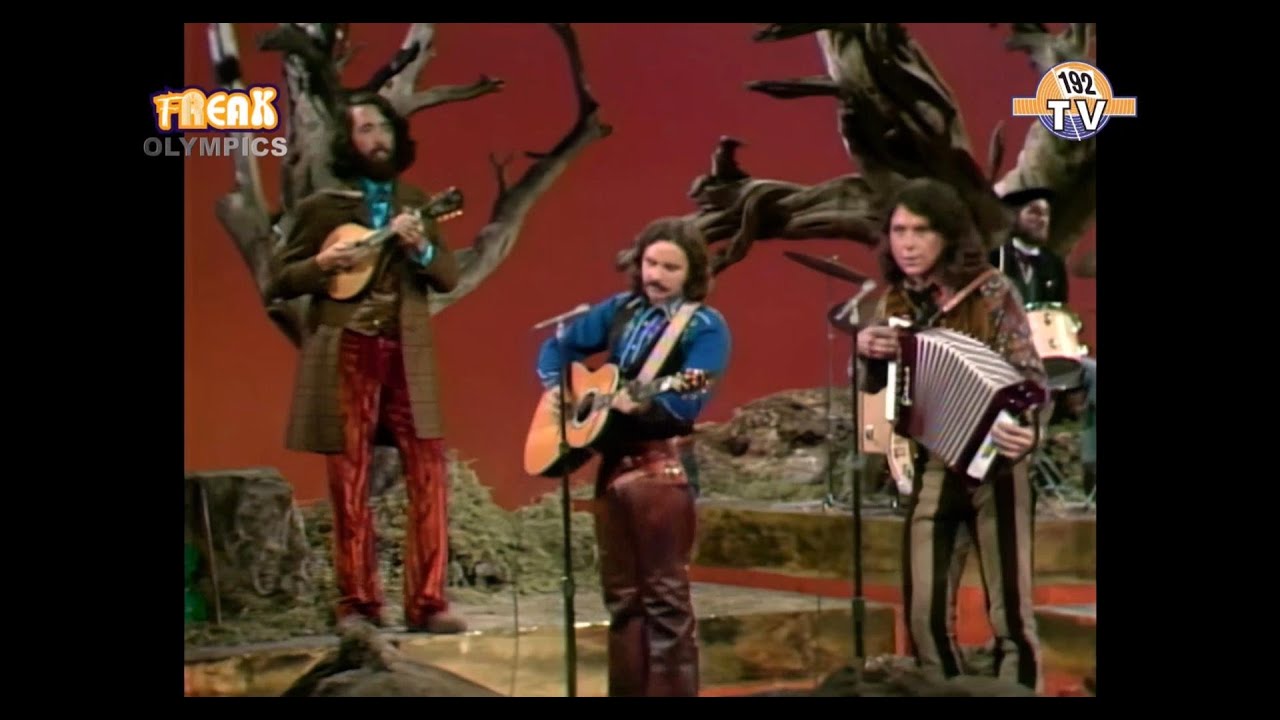
There is a moment in every great song where you can sense exactly where it came from — where the emotion behind it is so specific, so rooted in one real human encounter, that no amount of craft could have invented it. “Mr. Bojangles” is that kind of song. Written by Jerry Jeff Walker and recorded by the Nitty Gritty Dirt Band for their 1970 album Uncle Charlie & His Dog Teddy, it tells the story of a homeless tap dancer met in a New Orleans jail cell, a dog that died, and a man who still danced on request. It reached number nine on the Billboard Hot 100 in February 1971 and spent nineteen weeks on the chart. In the half century since, it has become one of the most covered, most beloved, and most misunderstood songs in American music.
The single rose to number nine on both the Billboard Hot 100 and Cash Box Top 100. In Canada it climbed to number two. Also charting from the same album were covers of Kenny Loggins’s “House at Pooh Corner” and Michael Nesmith’s “Some of Shelly’s Blues,” confirming that Uncle Charlie & His Dog Teddy marked a genuine turning point — not just a hit, but a whole new creative direction. It was the record that transformed the Nitty Gritty Dirt Band from a jug-band novelty act into something far more significant: pioneers of what would later be called Americana, a full decade before that word meant anything.
The backstory begins in 1965, in a New Orleans jail, with a young wandering folk singer named Ronald Clyde Crosby — who by then had renamed himself Jerry Jeff Walker — locked up for public intoxication. Mr. Bojangles had been arrested as part of a police sweep of indigent people that was carried out following a high-profile murder. The two men and others in the cell chatted about all manner of things, but when Mr. Bojangles told a story about his performing dog who was killed by a car, the mood in the room turned heavy. Then came the moment the song is built around. One of the guys in the cell jumped up and said, “Come on, Bojangles. Give us a little dance.” The old man said, “Yes, Hell yes.” He jumped up and started clapping a rhythm, and he began to dance. Walker never forgot it. When he eventually sat down to write about it, the words came in one straight shot down a yellow legal pad. “On a night when the rest of the country was listening to The Beatles, I was writing a 6/8 waltz about an old man and hope,” he later said. “In a lot of ways, Mr. Bojangles is a composite. He’s a little bit of several people I met for only moments of a passing life.”
One crucial detail tends to get lost in the song’s mythology. Most listeners, for decades, assumed the song was about Bill “Bojangles” Robinson — the legendary Black tap dancer who had appeared in Hollywood films with Shirley Temple in the 1930s. The homeless “Mr. Bojangles,” who was white, had taken his pseudonym from Robinson — both to conceal his identity from the police and because, in the street performer world of the South, “Bojangles” had become a category, not just a name. The song was written about a white man. The jails in New Orleans were segregated by race at the time. It’s a distinction Walker spent years patiently explaining in interviews, and one that fundamentally changes how the lyric reads — the drifter dancing for tips at minstrel shows throughout the South was a white man performing in a tradition rooted in racial imitation. That layer of melancholy was always there. Most people simply didn’t know it.
Walker recorded his own version in Memphis on June 7, 1968, and released it on Atco Records. It peaked at a modest number 77 on the Hot 100. Bob Dylan recorded the song in 1970 while working on his New Morning album, but his version was not released until it was included on the album Dylan in 1973. Harry Nilsson and Neil Diamond both covered it in 1969. John Denver took it to his 1970 album. Nina Simone recorded a devastating version in 1971. The song was moving through American music like water through sand, finding a different shape in every new vessel.
When the Nitty Gritty Dirt Band got hold of it for Uncle Charlie & His Dog Teddy, they gave it a bluegrass-flecked, country-folk arrangement that somehow felt definitive. The single version begins with a spoken intro — Uncle Charlie, a relative of producer William McEuen’s wife, talking about his dog Teddy. The juxtaposition of that homespun spoken intro with the song’s wrenching lyric about loss and resilience gave the recording an emotional texture that Walker’s original, beautiful as it is, never quite matched. Jeff Hanna performed most of the lead vocals, with Jimmy Ibbotson on harmony; the two switched roles on the final verse. When the record started climbing, the B-side was re-pressed to replace the Uncle Charlie interview with a clean version of the song — though anyone who has heard the full album version knows something essential is missing without that porch-front prologue.
Then came Sammy Davis Jr. — and the song’s meaning shifted once more. Initially, Davis thought it was a downer and that it hit too close to home. Nina Simone had been the first Black artist to record it. When Davis finally agreed to perform it, the result was unexpectedly personal. The song held deep personal resonance for Davis, who had grown up idolizing Bill “Bojangles” Robinson — a key influence on his own career as a singer, actor, and dancer. Davis often closed his live shows with “Mr. Bojangles,” incorporating elaborate tap dance routines that paid homage to Robinson’s pioneering style. Davis sang the song at President Richard Nixon’s invitation at a concert at the White House in 1973. That a song born from a segregated New Orleans jail cell ended up performed for a president in the White House, by a man whose career had been shadowed by racial discrimination from its first day to its last, is the kind of irony that history deposits quietly and says nothing about.
The Nitty Gritty Dirt Band’s success with “Mr. Bojangles” opened a door that led directly to their landmark 1972 triple album Will the Circle Be Unbroken — a record that brought together young country-rock musicians and ageing bluegrass legends like Earl Scruggs, Mother Maybelle Carter, Doc Watson, and Roy Acuff in one of the most consequential collaborative recordings in American music history. Without the credibility earned by “Mr. Bojangles,” that album almost certainly never happens. The song that Walker dashed down on a yellow legal pad — a 6/8 waltz about a man he met once and never saw again — proved to be a bridge: between generations, between genres, between the folk revival of the 1960s and the Americana movement that followed. Walker died from throat cancer on October 23, 2020, at the age of 78. He spent five decades watching the world argue about what his song meant. He always maintained that it meant exactly what it said: a man jumped up and danced, in worn-out shoes, and for a moment, something heavy lifted.