



![David Lee Roth – California Girls (Official Video) [HD]](https://musicvideosclub.com/wp-content/uploads/2026/10/david-lee-roth-california-girls-360x203.jpg)

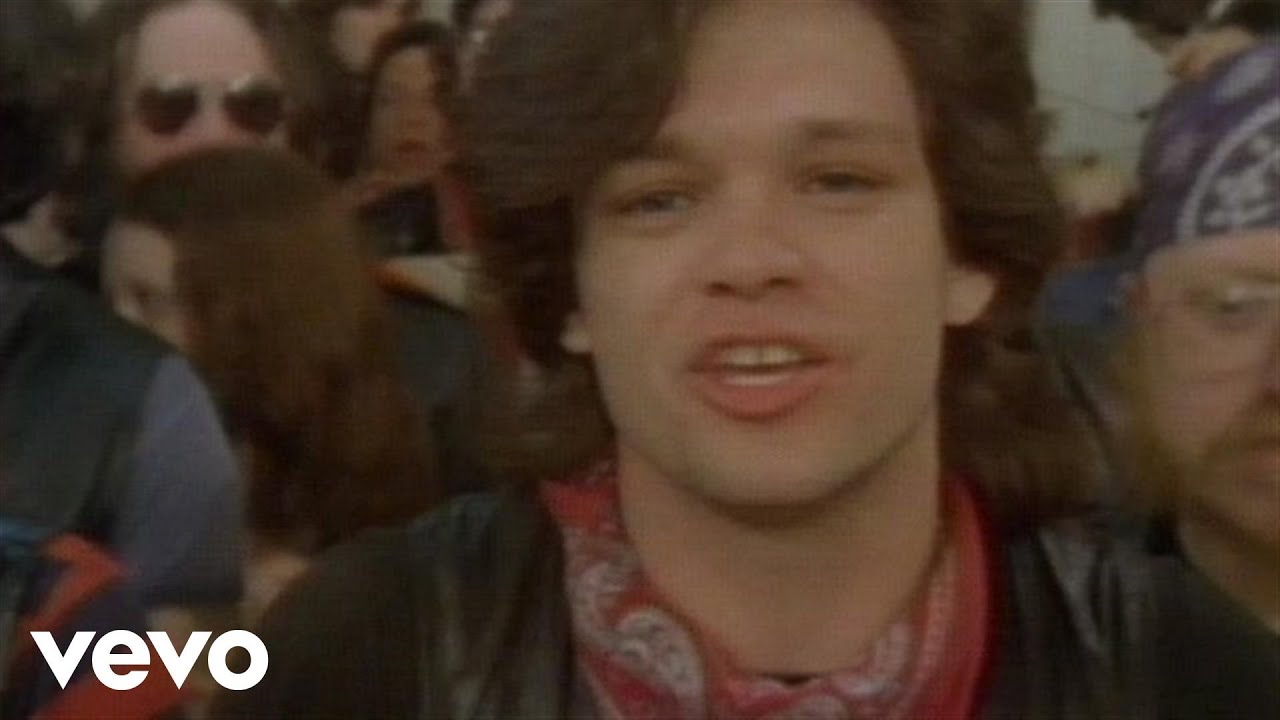
John Mellencamp – Hurts So Good
It never reached No.1 — and it spent longer in the Top 10 than any other record of the 1980s.
Sixteen weeks. That is how long Hurts So Good sat inside the Billboard Top 10 in 1982, and no other single released during the entire decade managed a longer run there. It never got to the top. It stopped at No.2 on August 7, 1982, held down by Survivor’s “Eye of the Tiger,” and then simply refused to leave — outlasting the record that beat it, outlasting most of what came after, and turning a singer his own label had written off into a household name.
Keep watching: more 80s music videos →
The name on the label was John Cougar, which is the first thing worth clearing up. Mellencamp had been saddled with the stage name years earlier by a manager who decided his own surname wouldn’t sell, and he spent the better part of a decade trying to get it back. This record is what bought him the leverage. The album that followed, in 1983, went out as John Cougar Mellencamp. The one after that eventually dropped the Cougar entirely. Anyone searching for “John Cougar” and anyone searching for “John Mellencamp” is looking for the same man, and this single is the hinge between the two.
The song came together almost carelessly. Mellencamp has said the phrase arrived first, out of his own mouth in conversation, and that he took it to George Green — a childhood friend from Indiana who had been writing with him on and off for years, and who would later co-write “Crumblin’ Down” and “Rain on the Scarecrow.” The two of them traded lines back and forth and laughed at what they were building. Then Mellencamp picked up a guitar and, by his account, had the chords within seconds. It is not a complicated record and it was never trying to be.
What made it land was the sound rather than the writing, and Mellencamp has been unusually blunt about that. Don Gehman produced it with him at Cherokee Studios in Los Angeles, and the thing everyone reacted to was the drums — Kenny Aronoff hitting a hard, unfussy backbeat with the snare pushed right to the front of the mix. Larry Crane and Mike Wanchic played the guitars, George Perry the bass. Cash Box heard steady four-four snare work and choppy fuzz-tone chords and said so approvingly. Riva had expected the album to fail. Mellencamp’s own read afterward was that people didn’t like the songs more than his previous ones; they liked how it sounded.
Twenty miles from where he grew up
Much of the video was shot in Medora, Indiana, a small town roughly twenty miles southwest of Seymour, where Mellencamp was born and raised. That choice mattered more than it looked at the time. MTV in 1982 was a parade of London soundstages and Los Angeles rented mansions, and here was a record putting rural southern Indiana on the same rotation. Everything Mellencamp built afterward — the Scarecrow record, Farm Aid, the whole heartland position — runs directly out of the decision to point a camera at the place he came from rather than away from it.
The record did what the label had refused to believe it could. It topped Billboard’s mainstream rock chart outright. It reached No.3 in Canada and New Zealand, No.5 in Australia. It finished the year as the tenth-biggest single in America on the Hot 100 year-end tally and eighth on Cash Box. On February 23, 1983, it won the Grammy for Best Rock Vocal Performance, Male. Billboard has since placed it at No.83 on its list of the greatest songs in Hot 100 history.
What the record bought him
American Fool spent nine consecutive weeks at No.1 on the Billboard 200 and remains the only album of his career to top that chart. It has sold five million copies in the United States. “Jack & Diane,” released three months later, went all the way to No.1 where this one couldn’t, and the two of them finished 1982 among the ten biggest singles in the country — a pair of hits off one record by an artist who, eighteen months earlier, nobody at his label expected to sell anything.
Mellencamp has never been especially warm about the album. He has said the songs weren’t better than his earlier ones, and he has spent the four decades since making records he clearly values more. That is a defensible position and it is also beside the point. Hurts So Good is the record that made everything after it possible — the name on the sleeve, the small towns on camera, the farm benefit concerts, the whole American argument he has been running ever since. Sixteen weeks in the Top 10 is not an accident. It is an audience deciding something.
SONG INFORMATION
Related videos
 Watch LaterAdded
04:50
Watch LaterAdded
04:50  Watch LaterAdded
03:30
Watch LaterAdded
03:30  Watch LaterAdded
06:49
Watch LaterAdded
06:49