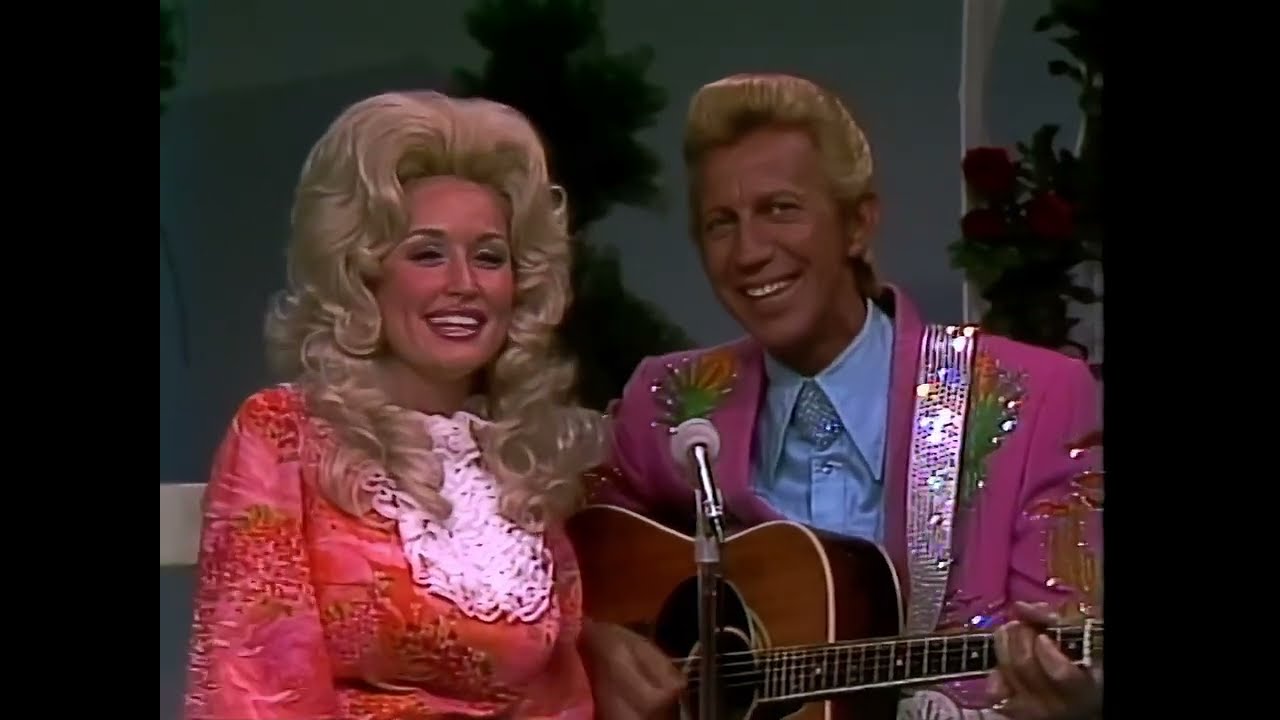
She sang it on Porter Wagoner’s show — four months after recording the song that told him she was leaving.
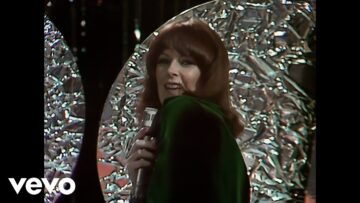
The footage on this page went out on October 30, 1973. Porter Wagoner introduces her, they talk for a moment, and she sings Jolene on the television show that had made her career. What no one watching could have known was that four months earlier, in the same Nashville studio where she cut this song, Parton had recorded I Will Always Love You — the song she wrote to tell Wagoner she was leaving him. It sat on tape for another year and a half. She is entirely warm in the clip. She had already written the goodbye.
The two songs were made three weeks apart. Parton recorded Jolene at RCA Studio B on May 22, 1973, with Bob Ferguson producing and Chip Young on guitar. She came back to the same room on June 12 and cut I Will Always Love You, with Young playing again. Both went onto the same album. Between them they account for a substantial share of everything Dolly Parton is now remembered for, and they were made within a month of each other by a twenty-seven-year-old trying to work out how to leave her job.
Jolene came from two unrelated places that collided. Parton had noticed her husband spending more time at the bank than the errands required, and worked out that a red-headed teller had developed a crush on him and that Carl Dean was enjoying the attention. It became a running joke between them rather than a crisis. Separately, a girl came up to the stage at a show wanting an autograph, and gave her name as Jolene. Parton has said she knew immediately the name belonged in a song. The teller supplied the situation; the child supplied the word.
Two chords and a name repeated
What she built from it is remarkable for how little it uses. The song runs 2:42, cycles the same figure, and repeats the name four times in a row before the first sentence finishes. There is no bridge, no key change, no resolution — the woman singing never finds out whether she wins. She simply asks, and the song ends with the asking. Country music had produced a great many songs about rivals; almost none of them addressed the rival directly, and none of them declined to settle the matter.
RCA had it out as a single in late 1973, which is why she was performing it on television that October, and it reached No.1 on Hot Country Songs in February 1974 — her second solo chart-topper and the first of four in a row. It crossed to No.60 on the Hot 100, the first time Parton had appeared on the all-genre chart at all. The album followed on February 4, 1974, her thirteenth as a solo artist.
Ninety-seven versions and counting
Something about the song’s plainness made it portable in a way almost nothing else in her catalog is. Olivia Newton-John gave it a disco treatment in 1976. The White Stripes played it for years and Jack White made it a fixture of their shows. Mindy Smith built a country career off her version. The Sisters of Mercy turned it into something gothic, Miley Cyrus recorded it in 2012, and Beyoncé rewrote its ending on Cowboy Carter in 2024, with Parton’s blessing. Cataloguers have counted somewhere near a hundred alternate recordings. Parton has said it is the most covered song she wrote.
Onstage at Glastonbury in 2014, in front of an enormous crowd, she explained where it came from and finished the story her own way: had it not been for that woman, she said, she never would have written it and never would have made all that money. She was seventy-seven when she made a rock record and eighty when she died at home in Nashville on August 25, 2026. The bank teller has never been identified.
SONG INFORMATION
Artist: Dolly Parton
Song: “Jolene”
Album:Jolene
B-side: “Love, You’re So Beautiful Tonight”
Released: Single, late 1973; album February 4, 1974
Recorded: May 22, 1973
Studio: RCA Studio B, Nashville
Label: RCA Victor
Songwriter(s): Dolly Parton
Producer(s): Bob Ferguson
Length: 2:42
Chart Performance: No.1 US Hot Country Songs, February 1974; No.60 US Hot 100
Performance: The Porter Wagoner Show, original air date October 30, 1973
Lineup: Dolly Parton (vocals, guitar), Chip Young, Wayne Moss, Jimmy Colvard and Dave Kirby (guitar)