








Leo Sayer – When I Need You
Leo Sayer had landed three UK singles at number two and watched all three stall there. Then his producer played him an Albert Hammond record nobody had bought, and the fourth try went to number one in three countries.
Leo Sayer had a problem only a successful artist can have. Between 1973 and 1976 the diminutive Sussex singer with the curly mane that had given him his stage name had landed three singles in the UK Top 5 — “The Show Must Go On” in 1973, “Long Tall Glasses (I Can Dance)” in 1974, and “You Make Me Feel Like Dancing” in 1976 — and all three had stalled at number two. A Slade album had blocked the first. A David Bowie reissue had blocked the second. Showaddywaddy’s cover of “Under the Moon of Love” had blocked the third. By the early winter of 1976 Sayer had four UK number twos to his name and zero number ones. His American producer, Richard Perry — by then already responsible for Carly Simon’s “You’re So Vain,” Ringo Starr’s “Photograph,” and the run of Barbra Streisand and Diana Ross records that had defined Los Angeles studio pop across the first half of the seventies — handed Sayer a song almost no one had heard.
“When I Need You” was Albert Hammond’s record first. The Anglo-Gibraltarian songwriter, by then five years past the success of his 1972 single “It Never Rains in Southern California,” had built the song with the New York lyricist Carole Bayer Sager — Sager had co-written The Mindbenders’ “A Groovy Kind of Love” in 1965 as a teenager — and Hammond had released his own reading as the title track of his September 1976 album When I Need You. The Hammond version was a touring-musician’s ballad: “It’s not easy when the road is your driver / Honey, that’s a heavy load that we bear,” the lyric ran. The album went almost nowhere. Perry had been carrying a tape of it around the Warner offices on Burbank’s Warner Boulevard since the autumn. He played it for Sayer in the studio one afternoon and watched the singer’s face change. “I was still a singer-songwriter, and so I had to find something I believed in,” Sayer told the journalist Mark White for his 1000 UK Number One Hits compendium. “There was a lot of compromising, but I liked Albert Hammond’s songs, and of course Carole wrote ‘Groovy Kind of Love.’ So I put on ‘When I Need You’ and wow!”
The Studio 55 session that broke the four-year streak
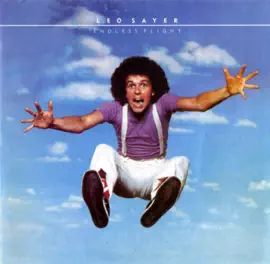
Sayer cut the song at Studio 55 in Los Angeles — Perry’s preferred Hollywood room, the converted RCA Records space at 5505 Melrose Avenue that had been home to Sayer’s recordings since the previous album. The session players Perry brought in were the same band that had defined the wider Endless Flight album: Steve Lukather and Ray Parker Jr. on guitars (this was three years before Lukather’s Toto debut and two years before Parker would write “Ghostbusters”); Larry Knechtel of the Wrecking Crew on piano; Jeff Porcaro on drums; Lee Sklar on bass; Ernie Watts on saxophone. Howard Steele engineered, Allen Zentz mastered. Perry arranged the track around a slow piano figure that opened in the verse and rose into the chorus on swelling strings — the kind of late-night FM ballad that A&M, Warner, and Columbia were collectively pressing into shape across the back end of 1976. The album was released on October 29, 1976. “You Make Me Feel Like Dancing” went to US number one in January 1977. “When I Need You” was released as the second single in February.
The British market broke first. The single entered the UK chart at number 39 on February 5, 1977; six weeks later it was at the top, where it stayed for three weeks. Sayer had finally cleared the runner-up curse. The American chart followed: the song entered the Billboard Hot 100 in late February, climbed steadily through the spring, and reached number one on the chart dated May 14, 1977. It held the top spot for a single week before Stevie Wonder’s “Sir Duke” reclaimed it; the year-end Billboard tally placed “When I Need You” at number 24 of 1977. The single went to number one in Canada and Ireland as well, top five in Australia, New Zealand, Norway, and the Netherlands, and platinum in the United States. Endless Flight, the parent album, was certified platinum in both the UK and the US and double platinum in Canada. Within twelve months Sayer had moved from a singer with no number ones to a singer with two American chart-toppers and one British number one. He has acknowledged in interviews since that he understood at the time that “When I Need You” was the song that did it.
Stephanie Mills’s show, November 7, 1980
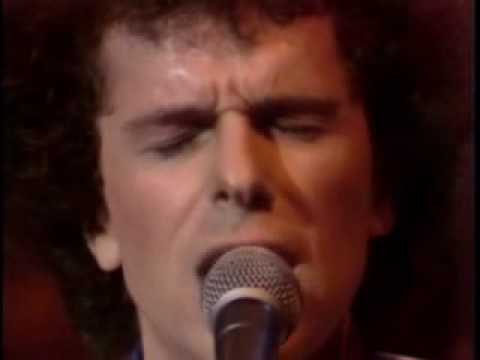
The performance featured on this page is from the November 7, 1980 broadcast of NBC’s The Midnight Special, the Burt Sugarman-produced late-night music series that ran on the network from 1973 to 1981 in the slot following The Tonight Show. The host that week was Stephanie Mills, then 23 years old, six months past the release of her breakthrough single “Never Knew Love Like This Before.” Mills opened the show with four of her own songs. Sayer’s set ran three: “More Than I Can Say,” the Bobby Vee / Sonny Curtis cover that was the lead single from his then-current album Living in a Fantasy; “When I Need You”; and “Time Ran Out on You,” a deep cut from the same album. Sayer was thirty-two. He was working with the producer Alan Tarney by then, was based in Los Angeles, and was nine months out from a touring schedule that had been carrying him through the US, the UK, Australia, and Europe at the rate of two hundred dates a year. The Midnight Special segment caught him in the middle of that run, performing the song that had three years earlier finally broken his pattern of UK runner-up finishes, in front of an NBC studio audience in Burbank that included the show’s regular Pete Townshend music-video block as part of the same broadcast.
The song has stayed in the working catalogue for nearly half a century. Sayer has performed “When I Need You” on every tour since 1977. Perry Como cut it. Rod Stewart cut it. Celine Dion cut it for her 1996 album Falling into You. Cliff Richard, Will Mellor, and a long list of Asian-territory artists have continued to record it, and Sayer has told interviewers that the song’s afterlife in unexpected territories — China, Nepal, the Philippines — has been one of the surprises of his career. “Apparently ‘When I Need You’ is massive in Nepal,” he told the New Zealand outlet Crow’s Feat in 2022. “I’ve been very, very lucky because that’s how the music travels.” He became an Australian citizen in 2009 and has lived in New South Wales since. He has continued to release new records — a Beatles-covers album in 2019, a follow-up in 2023 — and continues to tour. The song that finally broke the runner-up curse is still, by his own account, the one his audience holds back the loudest cheer for.
SONG INFORMATION