





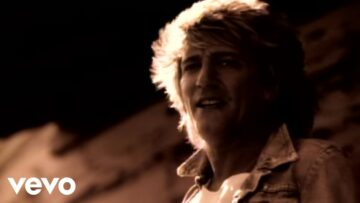

Marc Bolan & T.Rex – Hot Love
A stylist named Chelita Secunda dabbed two teardrops of glitter under Marc Bolan’s eyes before a Top of the Pops performance in March 1971 — and a movement that would reshape British pop, fashion, and gender expression for the next decade started rolling its cameras.
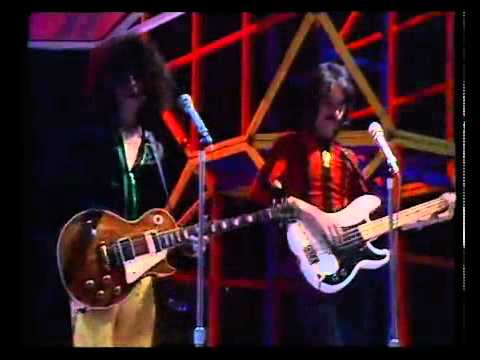
The actual birth of glam rock is one of the few cultural moments serious historians can pin to a specific Wednesday afternoon. On March 24, 1971, Marc Bolan and his band T. Rex arrived at the BBC Television Centre in west London to record their second appearance on Top of the Pops with their new single Hot Love. Bolan had been wearing increasingly extravagant clothing for months — corkscrew curls, silver satin shirts, the kind of androgynous magpie eclecticism his friend David Bowie had been quietly studying — but on that particular day a 26-year-old stylist named Chelita Secunda, the wife of Bolan’s manager Tony Secunda, suggested he try something else. She dabbed two small drops of silver glitter under each of his eyes. When the BBC studio lights caught them, they caught the camera too. That was the moment. Not the song. Not the haircut. Two small dabs of cheap glitter, applied seconds before a performance, that became the visual signature of an entire decade of pop music.
Hot Love had been released as a non-album single on February 12, 1971, on the Fly Records label, in the wake of T. Rex’s first significant hit, Ride a White Swan, which had reached number two in the UK the previous October and lit the fuse Marc Bolan had been holding for half a decade. Bolan had written this one during a US tour and recorded it at Trident Studios in London on January 21 and 22, 1971, with overdubs four days later. The band’s producer Tony Visconti — also the producer behind most of David Bowie’s run between 1969 and 1980 — built the arrangement around Bolan’s nylon-stringed acoustic guitar, Steve Currie’s bouncing bass line, the new drummer Bill Fifield (soon renamed Bill Legend), and Mickey Finn’s congas and handclaps. The percussionist Mark Volman and singer Howard Kaylan, both formerly of the Turtles and operating then as the comedy-music duo Flo & Eddie, came in to overdub the high-pitched call-and-response backing vocals on the chorus. The chorus does not really have words, in any conventional sense. It is mostly Bolan and Flo & Eddie singing “la-la-la-la-la.” That is the chorus. That is the whole song’s selling point.
The single entered the UK chart at the beginning of March 1971 and climbed to number one within two weeks. It then stayed there for six consecutive weeks — almost an entire chart era at the top — and became the first of four UK number ones T. Rex would have inside fourteen months: Hot Love, then Get It On (June 1971), then Telegram Sam (January 1972), then Metal Guru (May 1972). No other British solo act or band in that two-year window matched it. The press coined a word for the phenomenon. They called it T. Rextasy.
The look that launched a decade
What made Hot Love consequential beyond its own chart run is the visual moment that became attached to it. The glitter performance on March 24 was not the first time Bolan had appeared in glamorous clothing on television — the previous TOTP performance, also in March, had him in a silver satin sailor suit — but it was the first time he wore makeup. The English Heritage blue plaque outside Bolan’s old west London home, which the institution officially unveiled in 2010, cites this specific BBC appearance as the moment glam rock as a movement was born. The Edge from U2 has said the same thing in interviews. Elton John has said the same thing. Bolan himself, in a BBC interview in 1974, was characteristically casual about it: “There was some of my wife’s glitter and I just spit on me fingers and stuck it under me eyes. I thought it looked cute.”
Within months, David Bowie was wearing eye-makeup on stage and inventing Ziggy Stardust. Within a year, Roxy Music had released their first album. Within two, Queen, the New York Dolls, Sweet, Slade, Mud, and Suzi Quatro were all carrying parts of the same wardrobe out across the British and American charts. The whole movement — glam rock, glitter rock, the long arc that would eventually produce the New Romantics, Adam Ant, Boy George, Hanoi Rocks, Mötley Crüe, and every other pop act for whom looking spectacular mattered as much as the music — runs straight back to two teardrops Chelita Secunda put on Marc Bolan’s face one Wednesday in March 1971.
Marc Bolan was twenty-nine when he died, in a car crash on Queen’s Ride in Barnes, west London, in the early hours of September 16, 1977 — two weeks short of his thirtieth birthday. His girlfriend, the American singer Gloria Jones, was driving; she survived. The car, a Mini, hit a sycamore tree. The tree is still there. A small memorial called Marc Bolan’s Rock Shrine has stood at the site since 1997 and continues to draw fans from around the world. T. Rex were inducted, posthumously for Bolan, into the Rock and Roll Hall of Fame in 2020. The footage on this page is one of T. Rex’s many televised performances of the song from across its remarkable 1971 run. The specifics of which broadcast it is from are not always documented online, but the performance itself is documented well enough: this is the song, and the look, and the precise piece of British pop history that changed everything that came after. Watch the video.
SONG INFORMATION
Enjoyed this one? New forgotten gems every day — tap Music Videos Club below to visit and follow us on Facebook:
Related videos
 Watch LaterAdded
04:11
Watch LaterAdded
04:11  Watch LaterAdded
04:03
Watch LaterAdded
04:03  Watch LaterAdded
05:29
Watch LaterAdded
05:29