





Middle Of The Road – Chirpy Chirpy Cheep Cheep
The Song Nobody Wanted to Record — That Sold Ten Million Copies Anyway
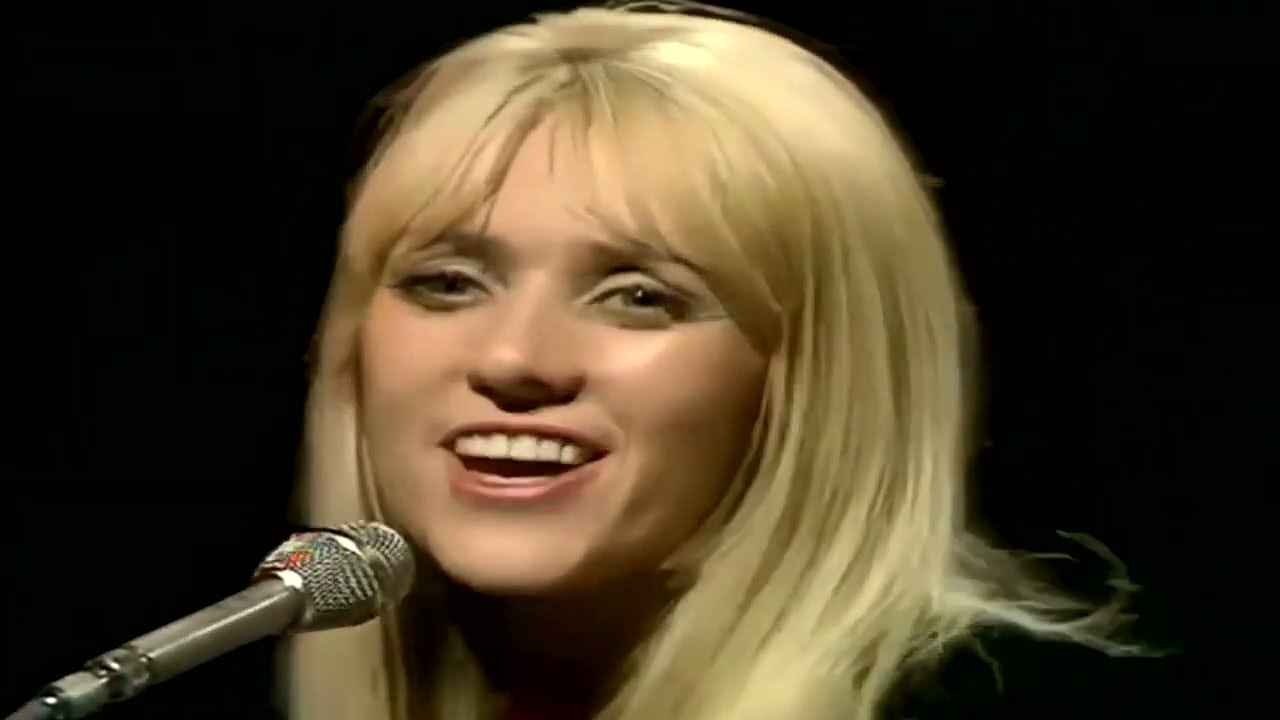
Ken Andrew, the drummer and de facto leader of Middle of the Road, was not enthusiastic when the song was first put in front of him. He said so plainly: “We were as disgusted with the thought of recording it as most people were at the thought of buying it.” Sally Carr, twenty-five years old and working her way up from Glasgow pub gigs, was similarly unimpressed. And yet something happened between the first listen and the moment they walked out of the studio in Rome — because what they recorded in 1971 with Italian producer Giacomo Tosti became one of only fifty singles in the entire history of recorded music to sell more than ten million physical copies worldwide. In the annals of songs that nobody believed in, “Chirpy Chirpy Cheep Cheep” sits near the very top of the list.
The single entered the UK chart in the final week of May 1971, climbed steadily, and hit number one in late June — where it stayed for five weeks. It reached the top ten in eighteen countries, topped the charts in Australia and Rhodesia, and became one of the defining pop moments of an entire British summer. In the US it was Mac and Katie Kissoon’s rival version, not Middle of the Road’s, that gained traction on radio, reaching number 20 on the Billboard Hot 100. In Canada the Kissoon version peaked at number ten. Neither fact diminished what Middle of the Road had achieved everywhere else: a record so ubiquitous it became almost unavoidable, playing from every transistor radio and corner jukebox across Europe for the better part of a year.
The song’s unlikely journey to that point begins in Liverpool with a singer-songwriter named Lally Stott — born Harold Stott — who wrote “Chirpy Chirpy Cheep Cheep” and recorded his own version for Philips in 1970. Stott had been living in Italy for several years, and the original recording found a small audience there and in a handful of European markets. Philips, reluctant to release it widely, offered it simultaneously to the Kissoons and to Middle of the Road, who were themselves based in Italy by then, having relocated from Glasgow after failing to crack the British market from home. The band’s Italian period had introduced them to Tosti, a producer who understood exactly how to give a song like this its maximum impact: a drum intro so distinctive it functions almost as a signature, Carr’s voice pushed forward in the mix, and a chorus that turns itself into a chant within the first thirty seconds of hearing it.
The lyric, on closer inspection, is considerably stranger than its cheerful delivery suggests. The song tells the story of a small child — “little baby Don” — who wakes to find both parents gone, vanished “far, far away,” with only their singing as a ghostly echo. Whether Stott intended a meditation on abandonment, a metaphor for the Vietnam War (as some listeners have speculated), or simply a set of sounds that felt emotionally true without requiring logical sense, he never quite clarified. He died in a motorcycle accident in June 1977, aged thirty-two, before the full scale of the song’s legacy had become apparent. The cheerfulness of the performance and the darkness of the scenario it describes is part of what gives “Chirpy Chirpy Cheep Cheep” its odd staying power: it sounds like pure joy and contains something considerably more unsettled underneath.
The song’s breakthrough in Britain owed a significant debt to Radio 1 DJ Tony Blackburn, who chose Middle of the Road’s version over the Kissoon recording and made it his record of the week on his breakfast show — a slot that in 1971 could move tens of thousands of copies in a single morning. Once Blackburn’s audience latched on, the chart trajectory was essentially inevitable. The band appeared on Top of the Pops and were catapulted from complete UK obscurity to the summit of the singles chart within a matter of weeks. It was the kind of acceleration that leaves musicians slightly dazed, and several band members later admitted they didn’t fully process what had happened until they looked back on it from a distance.
The success of “Chirpy Chirpy Cheep Cheep” unlocked a remarkable run for the band in the eighteen months that followed. “Tweedle Dee, Tweedle Dum” peaked at number two in the UK; “Soley Soley” reached number five; “Sacramento” sold over a million copies in Germany alone, where the group maintained a devoted following long after the British market had moved on. Four of their singles sold more than a million copies apiece. In Germany particularly, Middle of the Road became a genuine institution, charting eleven times across the decade. Sally Carr’s voice — that peculiar, brightly insistent instrument — became one of the most recognisable sounds in European pop, even if critics struggled to know what to do with her. In 2006, The Observer named “Chirpy Chirpy Cheep Cheep” the number one unintentionally creepy song ever made. Carr took the accolade in the spirit it was intended.
She survived a brain haemorrhage in 2012 and a stroke in 2013 that left her chances of recovery looking slim, and returned to performing with Middle of the Road in 2016 with the kind of determination that her whole story — from the mining village in Lanarkshire, to the Glasgow pubs, to the Rome recording studio — had always suggested she possessed. At her 80th birthday celebration in March 2025, surrounded by people who love her, she sang again. No grand stage. No spotlight. Just the voice. It is the same voice that once made a song about an abandoned child sound like the most carefree thing in the world — and sold ten million copies doing it. Few singers have ever managed a trick quite that specific, and quite that strange.
SONG INFORMATION
Related videos
 Watch LaterAdded
 Watch LaterAdded
 Watch LaterAdded