




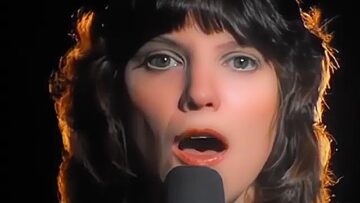


Quincy Jones – Stuff Like That
The Room Where It Started: The Quincy Jones Groove That Led to Everything
When Quincy Jones released “Stuff Like That” in the spring of 1978, almost nobody realized they were hearing the sound of a man warming up. It hit Number One on the Billboard R&B chart for the week ending July 1, 1978, and settled at Number 21 on the Hot 100 — respectable enough for a six-minute funk single on an album by a producer-arranger most fans still associated with jazz and film scores. What the charts couldn’t show was that the recording session that assembled Ashford & Simpson, Chaka Khan, and a handful of New York’s most sought-after session players in the same room had also introduced Quincy Jones to the precise creative approach that would produce the three best-selling Black pop albums in history.
“Stuff Like That” peaked at Number 21 on the Billboard Hot 100 and Number 34 in the UK, spending just one week at the top of the R&B chart — a modest run by the commercial standards of 1978, a year when the Bee Gees and the Saturday Night Fever soundtrack were consuming the airwaves and most of the available chart real estate. Jones was operating in a market almost entirely reshaped by disco, and he knew it. The smart move was not to resist but to absorb, filter, and reframe — which is exactly what the track does for six minutes and eighteen seconds.
The song began with no vocal concept at all. “Stuff Like That” originated as a pure rhythm track built collaboratively by Jones, Eric Gale, Steve Gadd, Ralph MacDonald, Richard Tee, and Nickolas Ashford and Valerie Simpson — which explains why all seven share the songwriting credit. Jones brought Ashford & Simpson in specifically because they were among the rare figures in pop who could handle both the writing and the singing, and who trusted each other’s instincts enough to move fast in the studio. Chaka Khan — then under contract to ABC Records and Warner Bros., meaning Jones had to formally clear her appearance, as the album’s credits carefully note — was called in to add the element that would make the track erupt. At the time, she was one of the most ferocious lead vocalists on the planet, and her label loan-out for a supporting role says something about the gravitational pull Jones generated.
The sessions ran across two coasts: Cherokee Recording Studios and Westlake II in Los Angeles for the rhythm tracks, and A&R Recording in New York for the vocal overdubs and brass. George Young played alto saxophone on the finished track. The assembled rhythm section — Gadd, Gale, MacDonald, and Tee — was the same core group of players who had drifted in and out of each other’s sessions for years across the A&R studios’ legendary back rooms, the same rooms where Paul Simon and Bette Midler and scores of others had recorded. Jones deployed them not as a hired band but as co-architects, letting the groove breathe and settle into something that resists easy categorization as either disco or funk. It is fundamentally both, and it sounds like neither is trying.
Sounds…And Stuff Like That!! was Jones’ eleventh solo album and, in retrospect, the last album of his first great run as a recording artist rather than a producer-for-hire. He had survived two brain aneurysms in 1974, returned to work on the groundbreaking television score for Roots in 1977, and then pivoted immediately into the musical supervision of The Wiz — the big-screen adaptation of the Broadway show, starring Diana Ross and a young Michael Jackson. By the time “Stuff Like That” was released, Jones was already deep in post-production on the film. He would be back in the studio the following year for Jackson’s solo debut. The album, the film, and the handshake that followed all happened in the same compressed window of months.
Jones revisited the song on his 1995 album Q’s Jook Joint, updating it for the hip-hop era with a new arrangement while keeping its essential character intact. The original, meanwhile, had already embedded itself into the sample culture Jones himself had celebrated. His broader catalog of rhythm tracks, film cues, and funk recordings had been lifted and recontextualized by everyone from Mobb Deep to LL Cool J to The Weeknd, with WhoSampled logging well over 3,600 uses across his entire body of work. “Stuff Like That” sits within that tradition as both source material and exemplar — proof that the groove was always the point, regardless of what credits appeared around it.
Quincy Jones died on November 3, 2024, at the age of 91. The instinct to hear “Stuff Like That” as a merely transitional record — something between the jazz of his earlier decades and the pop empire of Off the Wall and Thriller — is understandable but incomplete. Seven people wrote it, three of them sang it, and none of it was supposed to land the way it did. Jones himself once described his studio philosophy with characteristic economy: “Always leave a little room for God to walk in the room.” On this track, the door was wide open.
SONG INFORMATION
Related videos
 Watch LaterAdded
03:18
Watch LaterAdded
03:18  Watch LaterAdded
06:09
Watch LaterAdded
06:09  Watch LaterAdded
03:59
Watch LaterAdded
03:59