





Grateful Dead – Truckin’
Jerry Was Tipped Off At The Hotel But They Still Got Handcuffed For The Press Photos
Released in November 1970 on American Beauty, Grateful Dead’s “Truckin'” reached only number sixty-four on the Billboard Hot 100, making it the album’s highest-charting single despite modest commercial success. Yet the Library of Congress recognized it as a national treasure in 1997, cementing its cultural significance far beyond chart positions. Written by Jerry Garcia, Bob Weir, Phil Lesh, and lyricist Robert Hunter, the song debuted live on 18 August 1970 at the Fillmore West in San Francisco, where the band premiered multiple American Beauty tracks including “Operator,” “Brokedown Palace,” and “Ripple.” The song became the band’s story song, documenting their touring life through references to real events, most famously the 31 January 1970 New Orleans drug bust immortalized in the lines “Busted, down on Bourbon Street / Set up, like a bowling pin / Knocked down, it gets to wearing thin / They just won’t let you be.” That bust happened after their first of two shows at The Warehouse with Fleetwood Mac opening, when nineteen people including band members, crew, fans, and their legendary chemist Owsley Stanley were arrested after police raided their Bourbon Street hotel.
The chart performance understates the song’s impact on American culture. Performed 520 times over the band’s long concert career, “Truckin'” became the eighth-most performed Dead song, appearing at virtually every show from 1970 until Garcia’s death in 1995. The final performance came on 6 July 1995 at Riverport Amphitheatre in Maryland Heights, Missouri, just over a month before Garcia died. The Europe ’72 live album featured an extended version segueing into “Epilogue” followed by “Prelude,” becoming one of the band’s most beloved recordings. That live album showcased how the Dead transformed the five-minute studio version into lengthy jams sometimes exceeding fifteen minutes, with Phil Lesh noting that the last chorus defines the band itself. The single was backed with “Ripple,” another American Beauty track, while “Sugar Magnolia” from the same album reached number ninety-one. Neither achieved mainstream radio saturation, yet decades later both songs remain more culturally embedded than most number one hits from 1970.
The New Orleans bust that inspired the song’s most famous verse proved both farcical and ominous. Jerry Garcia had been tipped off when they arrived at the hotel that a raid was coming. Jefferson Airplane had been arrested at the same hotel just weeks earlier, making the Dead’s fate predictable. When the band returned from their Warehouse performance after 3am, police were waiting with warrants already in hand and drugs already confiscated from rooms they’d searched before the band arrived. Manager Lenny Hart told Rolling Stone the cops made it extra heavy, handcuffing them all together and lining them up in front of the building for press photos, enjoying themselves and getting their own thing on. Garcia later recalled the Southern cops had great fun with hippies, treating them like prized catches. Nineteen people were arrested including Phil Lesh for possession of marijuana and LSD, Bob Weir for narcotics and amphetamines and barbiturates, drummer Bill Kreutzmann for marijuana and barbiturates, crew member Lawrence “Ram Rod” Shurtliff for marijuana and barbiturates, Owsley Stanley the King of Acid, and a twenty-six-year-old spiritual advisor who gave her name as Summer Wind.
Recording took place during 1970 with the band self-producing alongside engineer Steve Barncard. According to various accounts, Robert Hunter fed Bob Weir the lyrics one line at a time during the vocal session, a technique that gave Weir’s delivery its conversational spontaneity. The song’s tongue-twister verses required precise enunciation, which Weir credited to the band’s 1967 experience backing vocalese singer Jon Hendricks. The track featured Garcia on lead guitar, Weir on rhythm guitar and lead vocals, Lesh on bass, drummers Bill Kreutzmann and Mickey Hart, and Hunter on lyrics though he didn’t perform instrumentally. The production exemplified what the band called a catchy shuffle associated with blues and early twentieth-century folk music. Garcia commented that early lyrics they tried to set to music were stiff because they weren’t really meant to be sung, but the result of Hunter getting into their touring world meant he could write better and they could create better music around it. The communal shared-group-experience feel came from all four chief songwriters participating, taking their road experiences and making them poetry both lyrically and musically.
“Truckin'” appeared as the opening track on American Beauty, released in November 1970, following Workingman’s Dead from earlier that year. Both albums marked the band’s return to roots after their psychedelic period, flowing with the back-to-roots movement led by The Band, Dylan, CSN&Y, and The Byrds. According to Hunter’s account in Skeleton Key, American Beauty was also the Dead’s attempt to make commercially safe music, though that effort proved ironic given “Truckin'” specifically mentions the rather unsafe Bourbon Street drug bust. The album captured a generally melancholic mood as Phil Lesh mourned his father’s death and Jerry Garcia’s mother lay in critical condition following a car accident, yet “Truckin'” remained upbeat and defiant rather than mournful. The song’s climactic refrain “What a long, strange trip it’s been” has achieved such widespread cultural use that it’s often quoted by people who’ve never heard the song, becoming shorthand for life’s unexpected journey.
The title and many lyrical references carried deeper historical resonance than casual listeners realized. Truckin’ was a dance step popular in the 1920s and 1930s, mentioned in numerous blues songs including “Keep on Truckin'” and Blind Boy Fuller’s “Truckin’ My Blues Away.” Some preferred calling the move strutting because trucking was also slang for fucking. The dance was so engrained in pop culture that John Lennon was photographed making reference to it via a silly walk at the 1971 Cannes Film Festival. The song’s city-by-city tour through America referenced both specific incidents and broader cultural observations. Dallas got a soft machine referenced William S. Burroughs’ 1961 novel The Soft Machine from his Nova Trilogy, though how that bizarre book represented Dallas remains mysterious. Houston too close to New Orleans directly referenced their wariness after the bust. The line about Sweet Jane probably reflected the broader view of folks the Dead saw time and time again while touring, with Hunter sounding like a disappointed parent observing how these kids today had veered from head drugs like weed, mushrooms, and LSD into hard drug territory with cocaine, speed, and heroin.
The aftermath of the New Orleans bust demonstrated both the band’s resourcefulness and their commitment to principles. Manager Lenny Hart used the thirty-seven thousand five hundred dollars they’d earned from the gig to bail out all nineteen arrested members of their touring party. Nearly out of funds, the Dead added a third show on 1 February and persuaded Fleetwood Mac to stay for the additional performance. A bucket was passed around the audience to collect extra cash for legal troubles, demonstrating the community bond between band and fans. Though originally charged with felonies, the charges were eventually pleaded down to misdemeanors with fines of a couple hundred dollars each. The band played both originally scheduled shows despite the arrests, refusing to let the bust derail their commitment to the Warehouse and New Orleans audiences. That gesture proved characteristic of the Dead’s touring philosophy: the show must go on regardless of obstacles, and the community they’d built with fans mattered more than comfort or convenience.
Looking back, “Truckin'” represents everything that made the Grateful Dead both musically significant and culturally irreplaceable. Phil Lesh observed there wasn’t any rock and roll bubble isolating them from the world as they went through it in those days, making them just a crew of shaggy guys on tour perfectly fine with that reality. Jerry Garcia remembered they were never climbers in the conventional success-seeking sense. Bob Weir talked about the romance of striking out on the road being a rite of passage for young people in the 1960s, noting we were starting to become real guys and really enjoying the hell out of it. That rite became their way of life, with the band never making tons of money from record sales but creating their unique legacy through touring. The lifestyle captured by “Truckin'” is gone now, replaced by anesthetized controlled environments without enough empty spaces for all that rambling. Mysteries can’t grow under camera surveillance; the plants will get sick if you try it under those lights. Only through the lens of time can dream-things remain. There will never be another Grateful Dead because that combination of factors can’t align again: six young men simultaneously chronicling a cultural revolution and fueling that revolution with their chronicles, naked of pretense in unmapped territory, with no idea whatsoever what lay around the next bend. As Jerry Garcia’s famous mugshot from the Bourbon Street bust shows him grinning at the camera clearly not very concerned about his arrest, the Dead maintained perspective that sometimes getting set up like a bowling pin and knocked down just meant you kept trucking on. What a long, strange trip it’s been indeed, and thank God it’s all still there in the music.
SONG INFORMATION
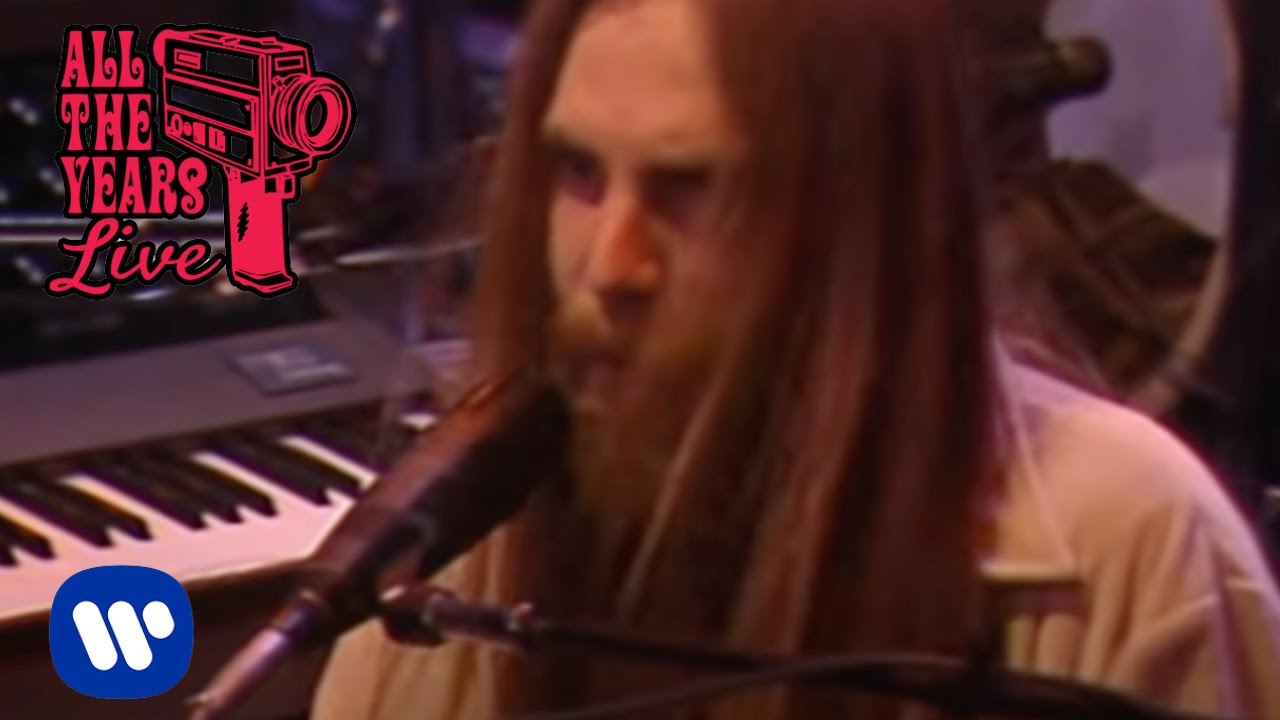
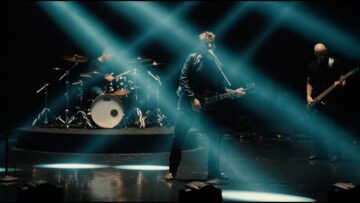
Video at the top: Grateful Dead performing “Trukin'” live at Radio City Music Hall on October 30, 1980.
It was recognized by the United States Library of Congress in 1997 as a national treasure.
Related videos
 Watch LaterAdded
04:48
Watch LaterAdded
04:48  Watch LaterAdded
05:28
Watch LaterAdded
05:28  Watch LaterAdded
02:46
Watch LaterAdded
02:46