In 1975 he failed to reach the British chart at all for the first time in seventeen years, and the record he made next became the biggest American hit of his life.
Zero. That is what Cliff Richard managed on the British singles chart in 1975 — not a low placing, not a near miss, but no entry of any kind, for the first year since he started in 1958. He was thirty-four, seventeen years into a career built on being the safe British alternative to something more dangerous, and the industry had reached its conclusion about him. Bruce Welch, his old Shadows bandmate, agreed to produce an album on the condition that Richard stop choosing the material himself. The album was called I’m Nearly Famous, which was a joke with a considerable amount of teeth in it.
Terry Britten brought Welch a song he had written with Christine Authors, a singer from the Family Dogg who also recorded it herself under the name Kristine. It is a story song, and a strange one: a man crosses a stray cat with evil eyes, believes himself cursed, goes to a fortune teller for help and works out that the woman offering to lift the curse is the one who laid it. Richard, whose Christianity was by then the most widely reported thing about him, altered lines so that the song read as a warning against temptation rather than an appreciation of the woman doing the tempting. The compromise is audible and it does the record no harm at all.
They cut it at EMI Studios in London on September 8 and 9, 1975, months before anyone knew whether the album had a future. Britten played the guitar, doubling the vocal melody through the chorus with a soft-edged distortion that sounds nothing like any Cliff Richard record before it. Alan Tarney played bass, Clem Cattini drummed, Graham Todd added the Rhodes, and Richard Hewson wrote the strings. EMI released it on April 23, 1976, with Rocket handling the United States.
The country that had never wanted him
Britain gave it No.9 in the week of June 5, 1976 and eight weeks on the chart, which was a recovery rather than a triumph. America was the surprise. Richard had been a star everywhere else on earth for eighteen years and had never had a hit there — his only previous Hot 100 entry of any consequence had stalled at No.99 in 1968. Devil Woman climbed to No.6 and held it for three weeks across late September and October, with Wild Cherry’s Play That Funky Music and then Walter Murphy’s A Fifth of Beethoven above it, spent twenty-two weeks on the chart, and was certified gold by the RIAA that October.
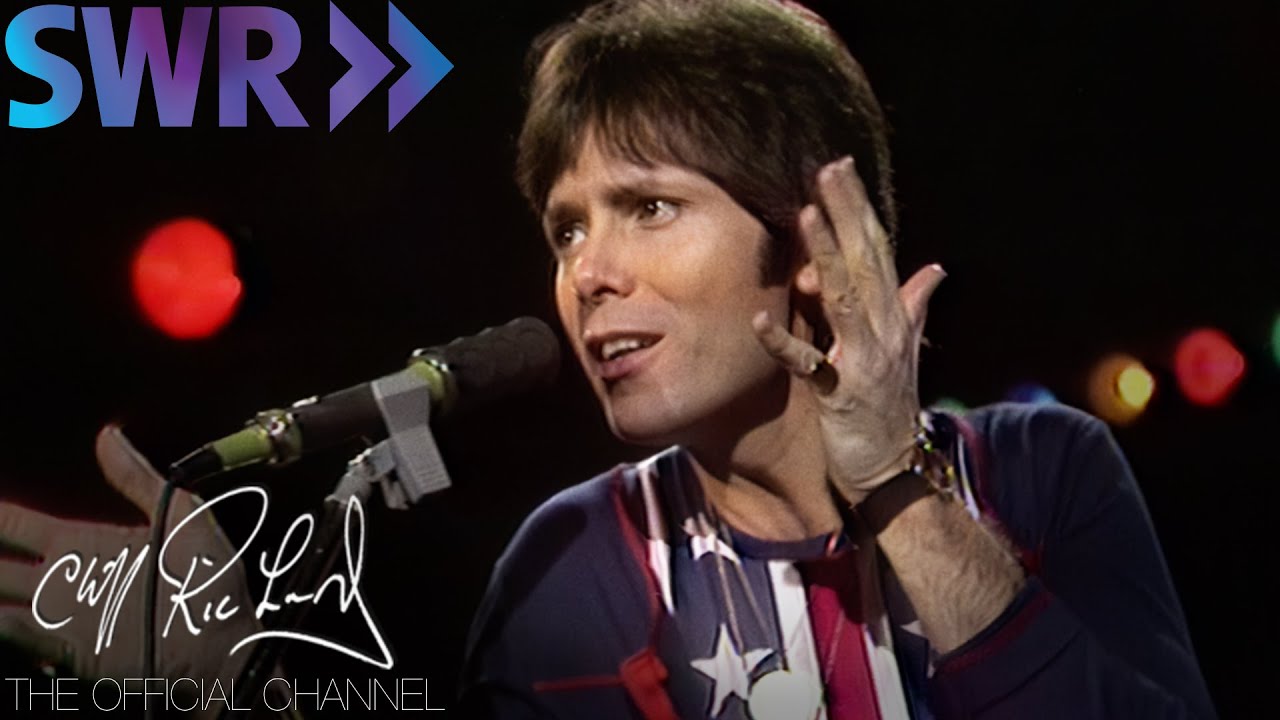
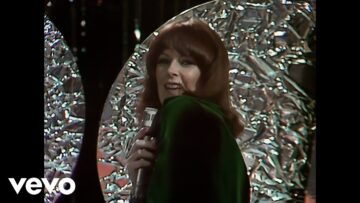
Both films on this page come from the following year, when the song had already done its work and Richard was performing it as a hit rather than a gamble. The primary clip is a German television performance from March 1977. The secondary is from Seaside Special, the BBC variety show broadcast from a circus tent on the British coast through the summer months, recorded on August 6, 1977 — a show designed for families on holiday, hosting a song about a curse laid by a woman with a cat.
That incongruity is the whole point of the record. Nothing about Devil Woman should have worked for the artist singing it, which is precisely why it did. An audience that had stopped listening to Cliff Richard had no reason to expect an occult story song with a distorted guitar hook, and an American audience that had never listened to him at all had no expectations to overturn. He went on working for another five decades on the strength of the year he spent being nearly famous.
The version of him that exists now — the knight, the tennis fixture, the Christmas singles — obscures how close the whole thing came to ending in 1975. One producer, one condition attached, one song he did not pick.
Here is the Seaside Special performance from August 1977.
SONG INFORMATION
Artist: Cliff Richard
Song: “Devil Woman”
Album:I’m Nearly Famous
B-side: “Love On (Shine On)”
Released: April 23, 1976
Recorded: September 8–9, 1975
Studio: EMI Studios, London
Label: EMI; Rocket (US)
Songwriter(s): Terry Britten, Christine Authors
Producer(s): Bruce Welch
Length: 3:41
Chart Performance: No.9 UK, No.6 Billboard Hot 100 (three weeks), 22 weeks on the Hot 100, No.3 Australia
Certification: Gold (RIAA); Gold (CRIA, Canada)
Performance: Pop 77, German television, March 6, 1977 (primary); Seaside Special, BBC, August 6, 1977 (secondary)
Lineup: Cliff Richard (vocals), Terry Britten (guitar), Alan Tarney (bass), Clem Cattini (drums), Graham Todd (keyboards), Richard Hewson (string arrangement)