





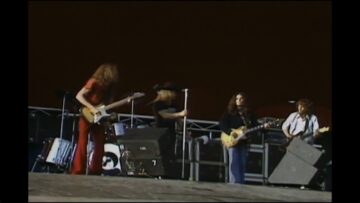
Shania Twains – What Made You Say That
The Midriff, the Ban, and the Phone Call That Changed Country Music Forever
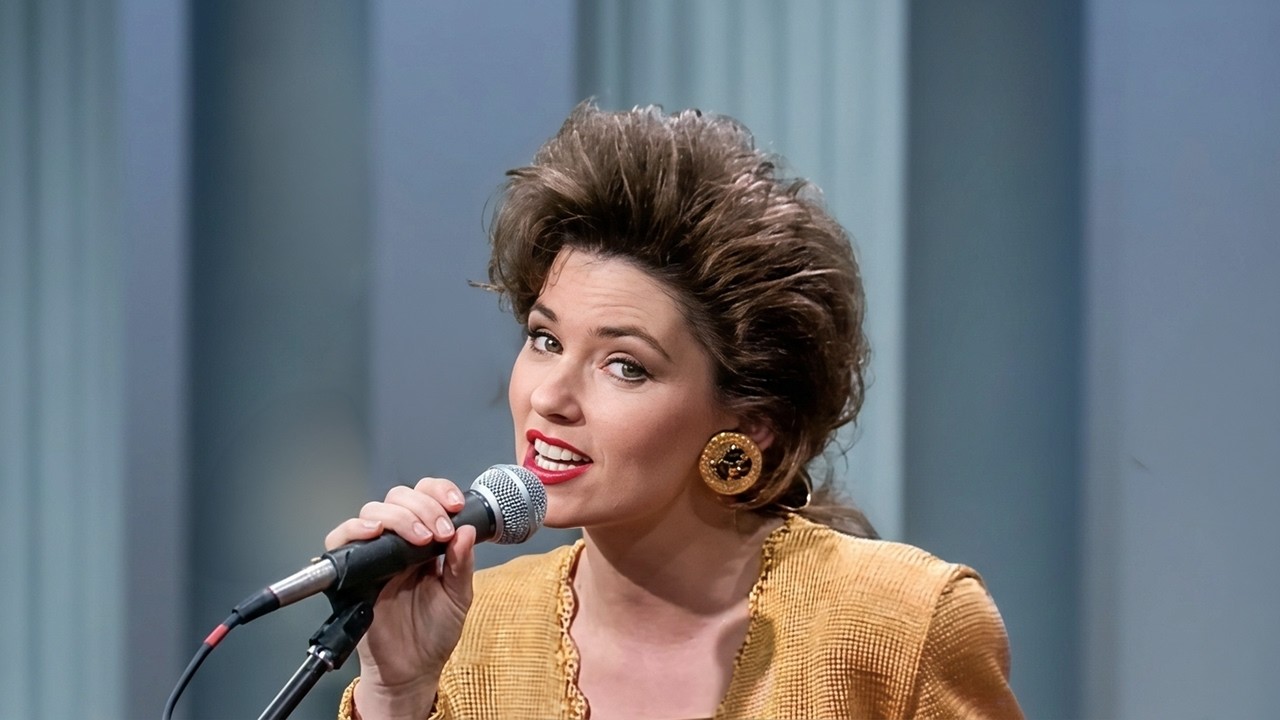
When Shania Twain walked onto the set of TNN’s Music City Tonight in late 1993, she was performing a single that had stalled at Number 55 on the country chart, from a debut album that her own label was quietly unsure about, wearing more clothes than she had in the music video. That video — shot on a Miami Beach in January of that year, featuring a cropped peasant shirt and a bare midriff — had been banned by CMT for being too suggestive, then reinstated after the network reconsidered. On CMT Europe, however, nobody banned anything. The video played on heavy rotation for weeks. A rock producer named Robert John “Mutt” Lange was watching, called Twain’s management, and was rebuffed so thoroughly that her manager Mary Bailey — who did not know who Lange was — sent him an autographed photograph in lieu of a phone number. Somewhere between that photograph and the Nashville Fan Fair of June 1993, the most commercially successful partnership in country music history quietly began assembling itself around a debut single that had barely cracked the Top 50.
“What Made You Say That” was released on March 6, 1993 on Mercury Nashville as the lead single from Twain’s self-titled debut album. It peaked at Number 55 on the Billboard Hot Country Songs chart, spending 18 weeks on the chart in total, and reached Number 70 on the Canadian RPM Country Tracks — modest figures that placed it well outside the mainstream country conversation of early 1993. All three singles from the album failed to reach the Top 40. The album itself was certified Platinum by the RIAA in 1999, a certification that arrived entirely on the coattails of the career that followed it rather than on any momentum the record generated in its own right. It was the only album of Twain’s career on which she did not write the majority of the material — a constraint she resented at the time and documented with considerable directness in her 2011 autobiography.
The song’s origin involves a last-minute studio decision that could easily have gone the other way. During the months-long process of selecting tracks for the album — which involved sifting through more than a hundred songs — Twain had set aside “What Made You Say That” as a reserve option. At a Nashville session at Music Mill with three songs already scheduled, she found herself with 45 minutes left on the clock and a choice: leave it or cut it. She brought it to the band. They agreed. The recording was done before the session ended. It became her debut single. The song had originally been recorded by Wayne Massey for a 1989 Mercury Records album — a male perspective on a tense relationship moment — and Twain flipped the gender, turning the confrontational central question toward a man. Tony Haselden and Stan Munsey Jr. had built a lyric sharp enough to survive the reversal completely intact, which is not always the case with gender-switched covers.
Producers Harold Shedd and Norro Wilson shaped the album in the Nashville tradition of that era — polished country pop, the arrangements conventional enough to please radio programmers, the sonics competent without being distinctive. Twain, in her autobiography, described her frustration with having almost no creative control over the project and being given very little opportunity to write. Of the ten tracks, she co-wrote one. She found the experience constraining enough that she spoke about it without particular diplomacy decades later. What the album did give her was a vehicle and a context — a reason to be on television, a reason for a video to air on CMT Europe, a reason for Mutt Lange to pick up a phone. Sometimes the most important thing a record does is not sell: it introduces you to the person who will produce the record that changes everything.
The live television context of this Dini Petty Show performance matters more than the charts suggest it should. The show — hosted by Dini Petty herself, broadcast on CTV out of Toronto and one of the most-watched daytime programs in Canada since its 1989 launch — gave Twain a home stage at a moment when the American country establishment had not yet decided what to make of her. She was, after all, a Canadian artist performing a debut single that Nashville radio had largely ignored, on a Canadian talk show, for a Canadian audience that had no particular reason to share the industry’s hesitation. Twain on that set, with arms covered and no Miami Beach in the background, had only the voice and the presence to work with. She was, by every account of people who saw those early television appearances, sufficient. The CMT ban had done something unintended: it demonstrated that the image was provocative enough to be worth banning, which is not nothing for a debut act trying to establish a visual identity in a format that had very fixed ideas about how women were supposed to present themselves. The career was being built from the outside in — Mutt Lange watching from Europe, Dini Petty hosting from Toronto — while Nashville took its time catching up.
The 2022 compilation Not Just a Girl (The Highlights) included “What Made You Say That” as the sole representative of the debut album — the only song from those sessions Twain considered worth revisiting in an official career retrospective. The 2004 Greatest Hits had not included it at all. That upgrade in status, nearly three decades on, reflects the song’s position honestly: not a hit, not a classic, but the first frame of a story that became one of the most remarkable in the history of popular music. Twain sold over 100 million records. She is the best-selling female artist in country music history. The best-selling country album ever made is hers. And it started with a song cut in 45 leftover studio minutes, a manager who sent a rock producer an autographed photograph, and a midriff that Nashville told her to cover up.
SONG INFORMATION
Related videos
 Watch LaterAdded
04:05
Watch LaterAdded
04:05  Watch LaterAdded
 Watch LaterAdded
02:34
Watch LaterAdded
02:34