












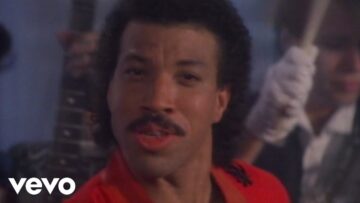
Ricchi e Poveri – Acapulco
From Quartet To Trio After Marina’s Departure
Released in 1983 on the album Voulez Vous Danser, “Acapulco” became a European smash hit throughout 1983 and 1984, capturing the escapist fantasy of trading Italian winter for Mexican sunshine. The song marked an important moment in Ricchi e Poveri’s career, coming just two years after vocalist Marina Occhiena left the group in 1981 to pursue a solo career, transforming the polyphonic quartet into a trio. What makes this track particularly significant is that it showcased how Angela Brambati, Angelo Sotgiu, and Franco Gatti successfully recalibrated their signature intertwining vocal style after losing Occhiena’s alto voice, proving the group could continue thriving as a three-piece while maintaining the melodic charm that had made them one of Italy’s most beloved pop exports since forming in Genoa in 1967.
The single performed strongly across European markets, becoming a summer staple on radio stations from Italy to Germany to the Netherlands. While specific chart positions varied by territory, the song achieved significant airplay and sales throughout the continent during the warm months when its beach-paradise theme resonated most powerfully. The track appeared on multiple compilations over subsequent decades including The Collection in 1994 and Le Canzoni la Nostra Storia in 2011, demonstrating its enduring popularity among fans. Ricchi e Poveri were riding high in the early eighties after their 1981 breakthrough “Sarà perché ti amo” had become a massive international hit, spending fifty-eight weeks on the Swiss charts and reaching number two. Follow-up singles “Mamma Maria” and “Made in Italy” had cemented their status as European pop royalty, creating high expectations for new material.
The songwriting team of Cristiano Minellono, Dario Farina, and Michael Hofmann crafted “Acapulco” as a sun-soaked fantasy about escaping the approaching Italian winter for tropical paradise. The lyrics painted vivid pictures of lying together under the sun while Christmas arrives back in Italy, contrasting the cold reality of European December with the warmth of Mexican beaches. Lines like sole, tanto sole captured the simple desire for endless sunshine, while the chorus celebrated tropical nights where falling in love becomes inevitable. The song’s narrative followed travelers departing on planes while the protagonists remained in paradise, waving handkerchiefs as others returned to reality and civilization. The bridge introduced a moment of temptation, leafing through an in-flight magazine advertising Acapulco and contemplating disembarking to stay just a bit longer, extending the dream before returning home after Christmas has already passed.
Recording details remain somewhat obscure, though sessions took place during 1983 at Italian studios with producer Dario Farina, who also co-wrote the track. The production featured the characteristic Europop sound of the early eighties, with synthesizers, programmed drums, and layered vocal harmonies creating a bright, radio-friendly arrangement. Angela Brambati’s soprano and Angelo Sotgiu’s tenor took primary vocal duties, with Franco Gatti’s bass voice providing depth and the group’s trademark polyphonic blend. The arrangement emphasized melody and accessibility over complex instrumentation, focusing on creating an immediately hummable chorus that listeners could sing along with regardless of language barriers. The production maintained the glossy, upbeat quality that defined Italian pop exports during this period, when groups like Ricchi e Poveri, Matia Bazar, and Gazebo were conquering European airwaves with sophisticated yet accessible arrangements.
Voulez Vous Danser was released in 1983 on Baby Records, distributed across Europe by various licensees including Indisc in Belgium. The album continued the commercial trajectory established by their previous releases, capitalizing on the momentum from “Mamma Maria” which had charted throughout Europe earlier that year. The band had been participating in Italy’s prestigious Sanremo Music Festival since 1970, achieving particular success with “Che sarà” in 1971 and representing Italy at Eurovision 1978 with “Questo amore,” finishing twelfth among twenty participants. By 1983, they’d sold millions of records across Europe and South America, with their songs recorded in both Italian and Spanish to maximize international appeal. The group’s name, meaning The Rich and The Poor, came from Roman songwriter Franco Califano who joked they were spiritually rich and financially poor, though by the eighties their financial situation had improved considerably.
The song became part of Ricchi e Poveri’s touring repertoire throughout the mid-eighties, performed at concerts across Europe and in their beloved Malta, where they maintained a particularly devoted following that resulted in multiple sold-out shows in 2009 and 2010. The track also appeared in various European film soundtracks and television programs, its cheerful escapism making it perfect background music for vacation scenes and summer montages. In 1984, the song was released as the B-side to “Hasta la vista,” creating a Spanish-language pairing that targeted Latin American and Spanish markets. The enduring appeal of the track led to its inclusion on numerous Ricchi e Poveri greatest hits compilations, introducing new generations to the group’s sunny Europop sound.
The band’s story took a bittersweet turn in 2016 when founding member Franco Gatti retired at age seventy-four, unable to continue performing after the 2013 death of his twenty-three-year-old son Alessio. The tragedy changed his life so profoundly that he could no longer make jokes about his mustache and big nose, feeling he couldn’t carry on touring the world. Angela Brambati and Angelo Sotgiu continued as a duo, touring Australia in 2023 with concerts in Sydney, Melbourne, and Adelaide, while competing in Sanremo Music Festival 2024 with “Ma non tutta la vita.” In 2020, the original quartet briefly reunited for the fiftieth anniversary of their Sanremo debut, a reunion made more poignant by Gatti’s death on October 18, 2022 at age eighty. Looking back, “Acapulco” captures Ricchi e Poveri at their commercial peak as a trio, demonstrating how they transformed Marina Occhiena’s departure from potential crisis into opportunity, maintaining their status as Italy’s beloved ambassadors of sunshine pop while painting musical postcards from paradise that made European winters feel just a little bit warmer.
SONG INFORMATION