






Small Faces – Whatcha Gonna Do About It?
The Manager Spent £12,000 Fixing the Charts — and the Band Didn’t Even Write the Lyrics
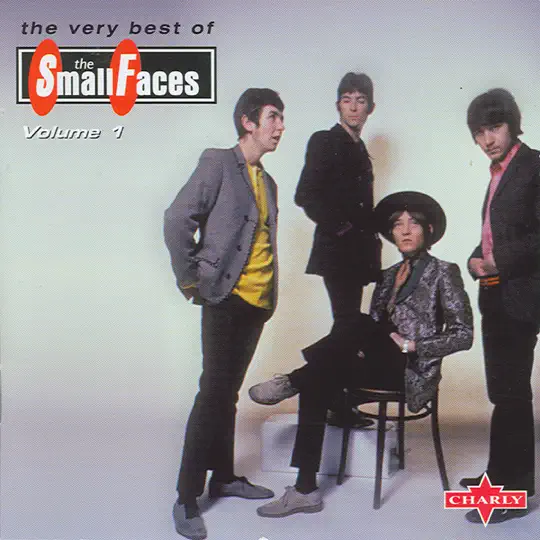
By the summer of 1965, the Small Faces had a melody and no words. Steve Marriott and Ronnie Lane had built the groove for what would become their debut single around the rolling momentum of Solomon Burke’s “Everybody Needs Somebody to Love,” the 1964 Atlantic record that had become something of a shared text among the mod scene they were emerging from in east London. The melody was there. The energy was there. The lyrics were not. Their manager Don Arden — never a man who waited patiently for problems to resolve themselves — brought in Ian Samwell to finish the job. Samwell was one of British pop’s most versatile operators: former rhythm guitarist in Cliff Richard’s original backing group, writer of “Move It,” staff producer at Warner Bros. in London, and, improbably, the man credited as the first British songwriter to have a song recorded by an American R&B act. He handed the band their words. He also produced the Decca 45.
“Whatcha Gonna Do About It” was released on August 6, 1965. It entered the UK Singles Chart at number 27, climbed steadily over the following weeks, and peaked at number 14 in the week of October 14 — sitting, as it happened, between Dusty Springfield’s “Some of Your Lovin'” and Sonny & Cher’s “I Got You Babe.” It stayed on chart for 14 weeks. Drummer Kenney Jones recalled to Uncut that the band had no reservations about the outside writing credit: they hadn’t yet found their own voice as songwriters, their live set was still built heavily around Otis Redding and other American R&B, and the track suited Marriott’s voice perfectly. What nobody mentioned publicly at the time — and what Arden later admitted — was that he had spent £12,000 on chart manipulation to guarantee the single would register as a hit. When Jones was asked about it years later, he was characteristically unperturbed: “Everybody did that at the time, including the Beatles. Probably still do.”
The Feedback Was Marriott’s Idea
The opening of the recording is defined by a brief squall of guitar feedback — arresting, mod-approved, immediately attention-grabbing. It was not a production decision. According to Jones, Marriott had been “pissing about in front of his old Marshall amp and it sounded lovely, so we kept it.” That pragmatic approach to sound — keeping what worked, discarding what didn’t, trusting the ear over the blueprint — would characterise the band throughout their run. The original recording’s lineup placed Jimmy Winston on Hammond organ and rhythm guitar alongside Marriott on lead vocals and guitar, Ronnie Lane on bass, and Jones on drums. Winston is prominent in the mix, his organ underpinning the track’s R&B momentum in a way that gives it more weight than a straight pop single of the period would typically carry. He would be replaced by Ian McLagan by November 1965 — just weeks after the single peaked.
The footage captured in the video linked here comes from a German television appearance on September 28, 1966, filmed at the Offenbach Stadthalle for the programme *Beat Beat Beat* — a separate German TV production often grouped under the broader Beat Club umbrella, though distinct from the Radio Bremen show. By this point McLagan had been in the band for nearly a year, and the lineup performing “Whatcha Gonna Do About It” on screen — Marriott, Lane, Jones, McLagan — is the classic four-piece configuration that would carry them through their most celebrated work. The footage is a live performance, which makes it a more valuable document than most of what survives from this period: the Small Faces mimed on most of their subsequent European TV appearances, but the 1966 *Beat Beat Beat* session caught them playing for real.
The song’s afterlife has been extensive and occasionally anarchic. The Sex Pistols incorporated it into their early live set with one lyrical alteration — “I want you to know that I love you baby” became “I want you to know that I hate you baby” — a modification that captured something essential about both bands’ relationship to the same R&B source material, approached from opposite ends of a decade’s worth of cultural turbulence. The Pretenders covered it on a 1981 flexi-disc for Flexipop magazine. The underlying melody, with its debt to Solomon Burke, proved durable enough to survive all of these reinventions and emerge on the other side still sounding like the Small Faces. Which is, in the end, the most significant fact about the record: whatever Arden spent on fixing the charts, whatever Samwell contributed to the lyrics, whatever the precise origins of the feedback squeal — the performance is entirely theirs, and it sounds like no one else.
SONG INFORMATION
Related videos
 Watch LaterAdded
03:47
Watch LaterAdded
03:47  Watch LaterAdded
04:12
Watch LaterAdded
04:12  Watch LaterAdded