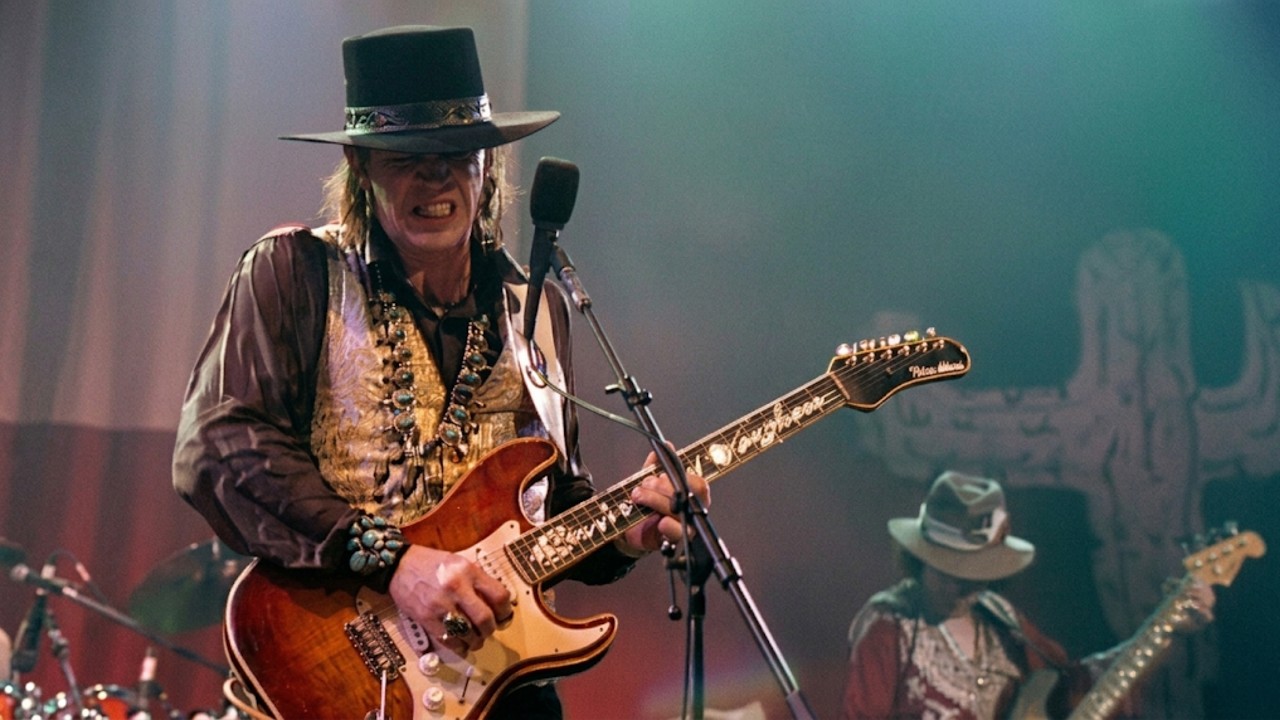
Stevie Ray Vaughan – Tin Pan Alley (Live at Capitol Theatre 1985)
8.9M
The first take was the one: John Hammond heard it before the engineers had even finished setting the sound.
The engineers at the Power Station in New York had not finished getting sounds when Stevie Ray Vaughan and Double Trouble started playing. It was January 1984, the song was the first one recorded for their second album, and the trio took the old slow blues down to almost nothing. When it ended, John Hammond spoke through the talkback. “That’s the best you’ll ever get that song,” he told them. The band pointed out that nobody had even set the levels yet.
Hammond had earned the right to say it. He had signed Bob Dylan to Columbia two decades earlier, and he was the man who had brought Vaughan to Epic. Drummer Chris Layton later recalled that the band tried the song again five, six, seven more times over the sessions, and none of those takes ever sounded like the first. The first is the version on the record.
The song was already more than thirty years old and was not theirs. Bob Geddins, an Oakland record man who ran a string of small West Coast labels, wrote it for Jimmy Wilson, a former gospel singer with a mournful voice. Geddins’s Big Town label released Tin Pan Alley in April 1953, and Billboard’s R&B chart ranked it as high as No.10, a hit that helped make Geddins a major name in West Coast blues. The lyric describes a street where violence starts at sundown and a man keeps losing what he loves to it. Other singers later recorded it as Roughest Place in Town, and Vaughan’s album carries both titles.
Epic released Couldn’t Stand the Weather on May 15, 1984, after nineteen days of sessions at the Power Station. The band produced it with Richard Mullen and Jim Capfer while Hammond supervised as executive producer, and Billboard ranked it as high as No.31 on the Billboard 200. Some reviewers complained about how many covers it carried. The same reception singled out Tin Pan Alley as one of the album’s high points, alongside the Jimi Hendrix cover that opened side two.
A trio’s accident, played by four
The band that cut the record was a trio: Vaughan on guitar and vocals, Tommy Shannon on bass, Layton on drums. By 1985 Double Trouble had become a four-piece, with Reese Wynans on keyboards, and Soul to Soul, released that year, was the first album to carry him. The slow blues stayed in the set. At the Montreux Jazz Festival on July 15, 1985, the band played it with Johnny Copeland sitting in. On September 21, 1985, they played it at the Capitol Theatre in Passaic, New Jersey, with Wynans on stage, the performance on this page.
The Capitol had a history of its own by then. John Scher, a young promoter from West Orange, took over the former vaudeville and movie house as the Fillmore East closed, and opened it to rock on December 16, 1971, with the J. Geils Band and Humble Pie. The 3,200-seat theater became a regular stop for touring acts through the 1970s and 1980s. It also ran an in-house, multi-camera video system, which is why so many nights there survive on tape. The Capitol closed in 1989, and the building came down in 1991.
Five years after Passaic, on August 27, 1990, Vaughan died in a helicopter crash in East Troy, Wisconsin. The Rock and Roll Hall of Fame inducted Stevie Ray Vaughan and Double Trouble in 2015. Hammond had been right about the studio. The band never recorded a better Tin Pan Alley than the one it played before anyone was ready, and a song whose best recording was an accident can only be caught again the way it was caught the first time: live, in a room, with nobody fixing anything afterward.
SONG INFORMATION
Artist: Stevie Ray Vaughan and Double Trouble
Song: “Tin Pan Alley (aka Roughest Place in Town)”
Album:Couldn’t Stand the Weather
Released: May 15, 1984
Recorded: January 1984
Studio: Power Station, New York City
Label: Epic
Songwriter(s): Bob Geddins
Producer(s): Stevie Ray Vaughan, Double Trouble, Richard Mullen, Jim Capfer; executive producer John Hammond
Original Release: Jimmy Wilson and His All-Stars, Big Town Records, April 1953
Original Chart Performance: No.10 Billboard R&B (Jimmy Wilson, 1953)
Performance: Capitol Theatre, Passaic, New Jersey, September 21, 1985
Lineup: Stevie Ray Vaughan (guitar, vocals), Tommy Shannon (bass), Chris Layton (drums), Reese Wynans (keyboards)