



![Gianna Nannini ft Laura Pausini – Sei nellanima [Live at San Siro] (Traducción en Español)](https://musicvideosclub.com/wp-content/uploads/2025/11/gianna-nannini-ft-laura-pausini-360x203.jpg)
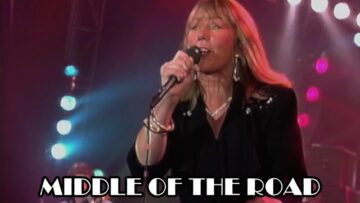
Suzi Quatro – Tear Me Apart
Three Years in the Wilderness — Then a French Château, Mickie Most, and a Return Nobody Had Predicted
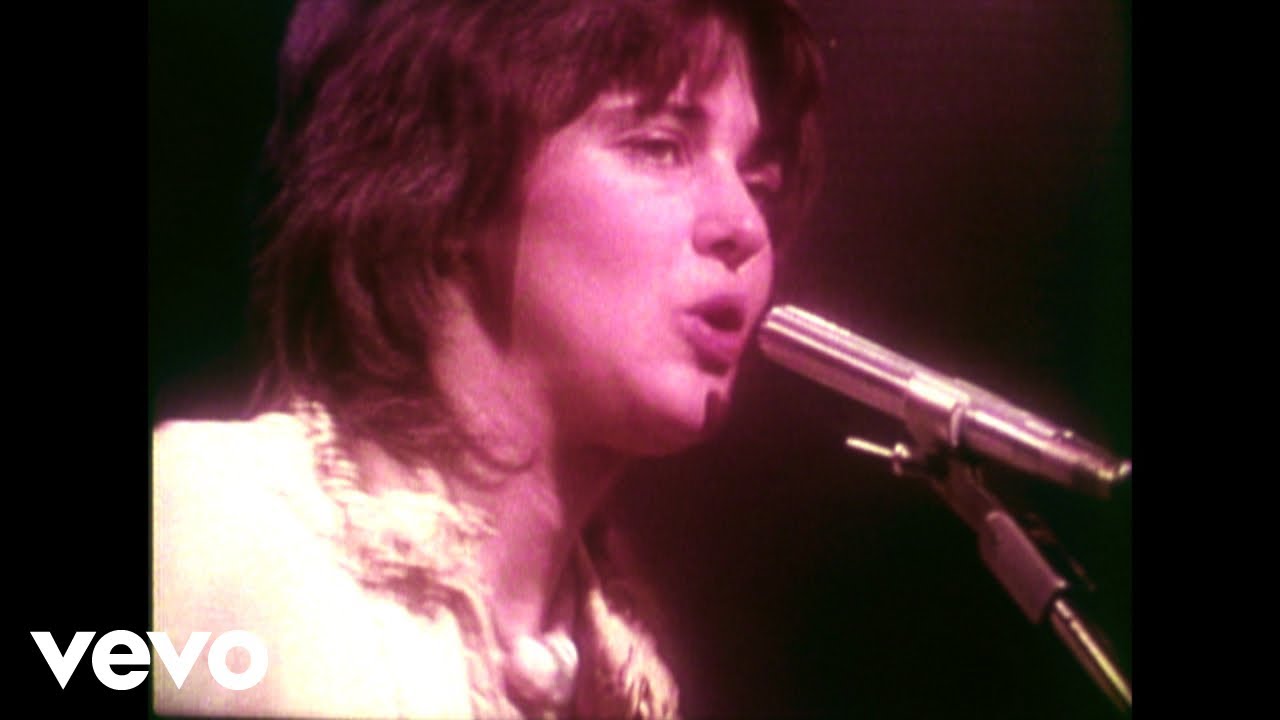
Between 1973 and 1974 Suzi Quatro had placed five singles inside the UK Top 10, two of them at Number One. Then Nicky Chinn and Mike Chapman — the songwriting partnership that had built her from a Detroit teenager into a leather catsuit-wearing UK rock sensation — went through a creative renegotiation with RAK Records, the pipeline of material slowed, and the run of hits stopped. “Tear Me Apart” arrived in early 1977 as the first single from Aggro-Phobia, and it did something none of the intervening releases had managed to do: it put Quatro back inside the UK Top 30. It was her first chart hit in three years. The music press treated it as a comeback. Quatro, characteristically, treated it as a resumption.
Released on RAK Records in early 1977, “Tear Me Apart” peaked at Number 27 on the UK Singles Chart, spending six weeks on the chart in total — modest by the standards of the 1973-74 peak, but significant given the silence that had preceded it. In Australia, where Quatro had maintained a devoted following since her debut, it reached Number 25. In Japan it climbed to Number 42. The parent album Aggro-Phobia reached Number 39 on the German Albums Chart — West Germany having been among the most consistently loyal markets for her music throughout the entire 1970s. Chart positions aside, what the single actually announced was the return of a particular quality: the combination of Chinn-Chapman’s melodic precision and Quatro’s physical, confrontational delivery that had made the early records work in a way that no amount of chart analysis fully explains.
Aggro-Phobia was recorded in the autumn of 1976 at Château Du Regard in Oise, France, using the RAK mobile recording unit — a location choice that produced the right conditions for an album that needed to re-establish its footing rather than experiment further. The previous album, Your Mama Won’t Like Me, had pushed toward a funkier, more American sound that reflected Quatro’s own instincts but had left her British audience uncertain about which version of her they were listening to. Aggro-Phobia returned deliberately to the hard rock foundations of the first two records — the chassis that had worked because Quatro’s voice and bass playing had always been better suited to attack than to groove. Chinn and Chapman understood that. So, on this album, did Mickie Most. Aggro-Phobia holds the specific distinction of being the only Suzi Quatro album that Most produced himself throughout — his fingerprints were on every previous release as label head and creative overseer, but this was the one where he sat at the desk for every session. His instinct was to strip back and remind everyone of what the original proposition had been.
The story behind Quatro’s arrival in Britain begins with a very specific choice. Elektra Records had offered her a deal with the pitch that she could become the new Janis Joplin. Mickie Most offered to take her to London and let her be the first Suzi Quatro. She chose Most — and spent her first year in England living in a hotel, developing the identity that would eventually become one of the most genuinely distinctive in 1970s rock. She had grown up in Detroit, played bass in an all-female garage rock band called the Pleasure Seekers with her sisters — including Patti, who would later marry Mike Chapman — and built her confidence in the clubs and cabarets of the Midwest before Most relocated her entirely. The leather catsuit that became her signature was not a label directive. It was a practical decision made by a woman who moved physically when she played and needed something that could keep up with her.
The argument for Quatro’s place in rock history does not rest on chart positions alone — it rests on what followed from her example. Joan Jett has cited her directly as the reason she believed a woman could front a rock band without softening anything. Kathleen Hanna, Chrissie Hynde, and the Runaways all arrived downstream of the image Quatro had established in 1973: a woman at the center of a stage playing bass and projecting physical authority in a genre that had never made that space available before. The 1977 Happy Days casting — Leather Tuscadero, Fonzie’s leather-jacketed foil — introduced her to American audiences who had somehow missed everything else, and produced what remains a profound irony: the musician who had been too rock and roll for US radio spent her most visible American moment playing a sitcom character on prime-time television. She has made her peace with the irony. The records were always the real argument.
“Tear Me Apart” is not the centrepiece of the Quatro catalog — that position belongs to “Can the Can,” “Devil Gate Drive,” and the more nakedly emotional later recordings. But it is the song that proved the first chapter wasn’t finished when it appeared to be, and that the combination of Chinn-Chapman craft and Quatro’s delivery had enough momentum left to relaunch what had looked like a stalled career. The title, in retrospect, reads less like a lyric and more like a statement of intent. She had sold 45 million records by the time the tally was taken. Nobody tears through that kind of catalog without meaning it.
SONG INFORMATION
Related videos
 Watch LaterAdded
02:54
Watch LaterAdded
02:54  Watch LaterAdded
03:59
Watch LaterAdded
03:59  Watch LaterAdded