



![David Lee Roth – California Girls (Official Video) [HD]](https://musicvideosclub.com/wp-content/uploads/2026/10/david-lee-roth-california-girls-360x203.jpg)


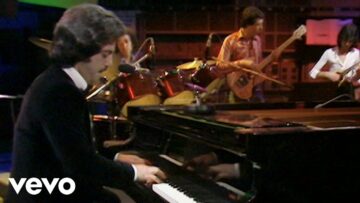
Simply Red – Holding Back The Years
Written At 17 About His Mother Leaving—Flopped At 51, Then Hit Number One
Originally released in November 1985 as the third single from Picture Book, “Holding Back the Years” peaked at number 51 in the UK and disappeared, becoming another in a series of disappointing releases for Simply Red. When the label re-issued it in May 1986, the song caught fire, reaching number one on the Billboard Hot 100 on July 12 for one week and number two in the UK, becoming Simply Red’s breakout international hit. The ballad topped charts in Ireland, reached number three in the Netherlands, and spent 23 weeks on the Hot 100. It earned platinum certification from the RIAA for over one million copies sold in the United States and was nominated for Best Pop Performance by a Duo or Group with Vocals at the 29th Annual Grammy Awards, losing to Dionne Warwick and Friends’ “That’s What Friends Are For.” What nobody listening to Mick Hucknall’s anguished vocals knew was that he’d written the song eight years earlier at age 17 while living with his father, processing the trauma of his mother leaving the family when he was just three years old—a wound so deep he didn’t even realize what the song was about until after he’d finished writing it.
While “Holding Back the Years” dominated American radio throughout the summer of 1986, it represented a dramatic reversal of fortune for Simply Red. Their debut single “Money’s Too Tight (To Mention),” a cover of The Valentine Brothers’ 1982 song, had reached number 13 in the UK and number 28 in the United States in early 1986, establishing them as a promising new act. The second single “Come to My Aid” stalled at number 66 in the UK, while the initial release of “Holding Back the Years” performed even worse at number 51. The commercial disappointments threatened to derail the band before they’d properly launched. The re-release strategy proved brilliantly successful—American audiences embraced the song’s vulnerable honesty and spacious production, propelling it to number one and transforming Simply Red from a struggling Manchester group into international stars. The success meant Picture Book reached number two on the UK Albums Chart, spent 137 weeks in the Top 100, and earned five-times platinum certification for sales exceeding 1.5 million copies.
Mick Hucknall wrote “Holding Back the Years” in 1978 when he was 17, still a fine-art student at Manchester School of Art and living at his father’s house. A lecturer had suggested the greatest paintings are produced when artists work in a stream of consciousness, getting lost in the creative process rather than overthinking every decision. Hucknall wanted to make music, not art, so he tried applying the same principle to songwriting. “Holding Back the Years” was the second song he wrote using this method, allowing lyrics to flow without censoring or editing his thoughts. The words came directly from his subconscious, describing emotional landscapes he hadn’t fully processed. Lines like “Strangled by the wishes of pater / Hoping for the arms of mater” captured his conflicted feelings about his father and longing for his absent mother using formal Latin terms that created emotional distance even while expressing profound pain. Hucknall later explained he didn’t realize what the song was about until it was finished—only then did he understand he’d been writing about the moment when you know you have to leave home and make your mark, but the outside world is scary, so you’re holding back the years.
The song originated with Hucknall’s first band, the Frantic Elevators, a post-punk group formed in Manchester in 1976. The Frantic Elevators performed early versions throughout the late 1970s and early 1980s, but the song lacked its defining chorus. Writing credits were shared between Hucknall and Neil Moss, a friend and Frantic Elevators member, though Hucknall later clarified that Moss didn’t actually co-write the song. Hucknall added the credit “to remember the great times we had” because the pair had written so many other songs together and he wanted to honor their collaboration. The iconic “I’ll keep holding on” chorus wasn’t added until many years later, after the Frantic Elevators split in 1982 and Hucknall formed Simply Red in 1985. That final piece transformed the song from an introspective meditation into something with commercial appeal, giving audiences a melodic hook they could sing along to while still maintaining the track’s emotional honesty.
Recording sessions for Picture Book took place in 1985, with Hucknall serving as primary producer alongside Stewart Levine. The duo created a soul-ballad arrangement that stripped away the post-punk edges of the Frantic Elevators version, building the track around Hucknall’s voice, subtle keyboards, sparse guitar, gentle drums, and atmospheric production that emphasized space and restraint. The arrangement featured almost no percussion during verses, allowing Hucknall’s vocals to float over minimal instrumentation before the rhythm section entered during the chorus. The production created an uncomfortably intimate atmosphere—no dramatics, no fireworks, just a man processing emotional damage with nothing to protect him but melody. Engineers captured every breath and crack in Hucknall’s voice, preserving the vulnerability that made the recording so affecting. The final mix ran just over four minutes, balancing radio-friendly accessibility with artistic integrity that refused to compromise the song’s painful honesty for commercial considerations.
Picture Book, released on October 1, 1985, via Elektra Records in America and Warner Music Group elsewhere, established Simply Red’s blue-eyed soul sound across eleven tracks that blended covers with Hucknall originals. Beyond “Holding Back the Years,” standout tracks included “Jericho,” “Look at You Now,” “Heaven,” and “Sad Old Red.” AllMusic awarded the album 8.1 out of 10, praising its steady R&B grooves reminiscent of 1960s Stax recordings. The album showcased Hucknall’s remarkable vocal range and emotional expressiveness, establishing him as one of Britain’s premier blue-eyed soul singers alongside Paul Young and Steve Winwood. The band’s lineup during this period featured Hucknall on lead vocals, Tim Kellett on trumpet and keyboards, Fritz McIntyre on keyboards, Sylvan Richardson on guitar, Tony Bowers on bass, and Chris Joyce on drums. Their sound combined elements of soul, funk, pop, and jazz into a hybrid that felt both retro and contemporary, honoring classic soul traditions while incorporating modern production techniques.
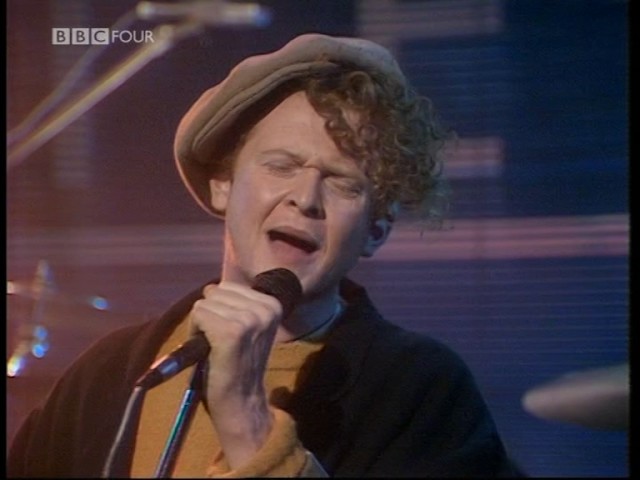
The music video, directed by Tony van den Ende who’d also helmed “Money’s Too Tight (To Mention),” focused entirely on Hucknall walking through English countryside near Whitby Abbey carrying luggage while reflecting on childhood memories and his difficult relationship with his father. Other Simply Red members except keyboardist Fritz McIntyre appeared as local cricketers who greet Hucknall as he passes by, later watching him climb the Whitby 199 steps. The final scenes showed Hucknall riding a train, filmed at and around Goathland railway station on the North Yorkshire Moors Railway. The video’s melancholic imagery perfectly matched the song’s themes of departure, loss, and the painful necessity of leaving behind everything familiar to find your own path. MTV played the clip constantly throughout 1986, helping drive the song’s extended chart run and introducing Hucknall’s distinctive red hair and soulful vocals to American audiences discovering blue-eyed soul for the first time.
Simply Red followed “Holding Back the Years” with a second number one American hit in 1989—their cover of Harold Melvin & the Blue Notes’ “If You Don’t Know Me by Now,” which became one of the year’s biggest singles internationally. The band’s 1991 album Stars became one of the best-selling albums in UK chart history, certified 12-times platinum and spending years on the charts. Hucknall declared in 1991 that Simply Red was essentially a solo project, acknowledging what had become obvious to observers—he was the creative force while other members were essentially hired musicians. The band initially disbanded in 2010 after a farewell tour, with Hucknall releasing solo material before reuniting Simply Red in 2015. They’ve released multiple albums since, including Time in 2023, and continue touring with Hucknall as the only original member. In 2025, Simply Red celebrated their 40th anniversary with a world tour and live concert film Holding Back the Years: 40 Years of Simply Red, Live in Santiago, captured during performances in Chile earlier that year.
As music historians have noted, “Holding Back the Years” represents one of the 1980s’ most emotionally honest ballads—a song that refused to dress up pain in metaphor or hide vulnerability behind production flourishes. Hucknall’s willingness to expose his deepest wounds created something that resonated across demographics, proving that audiences respond to authentic emotion regardless of genre conventions. The song’s commercial failure followed by massive success demonstrated how timing, marketing, and audience readiness matter as much as quality when determining chart performance. “Holding Back the Years” didn’t change between November 1985 and May 1986—the same recording that peaked at number 51 climbed to number one six months later. What changed was context, awareness, and the cumulative effect of Simply Red’s growing profile. The song remains Simply Red’s signature recording, the track that defined Mick Hucknall’s career and proved that sometimes the most personal songs—the ones written at 17 by teenagers processing trauma they don’t even understand—become the most universal, touching millions who recognize their own pain reflected in a stranger’s confession.
SONG INFORMATION
Enjoyed this one? New forgotten gems every day — tap Music Videos Club below to visit and follow us on Facebook:
Related videos
 Watch LaterAdded
04:41
Watch LaterAdded
04:41  Watch LaterAdded
04:50
Watch LaterAdded
04:50  Watch LaterAdded
04:30
Watch LaterAdded
04:30