


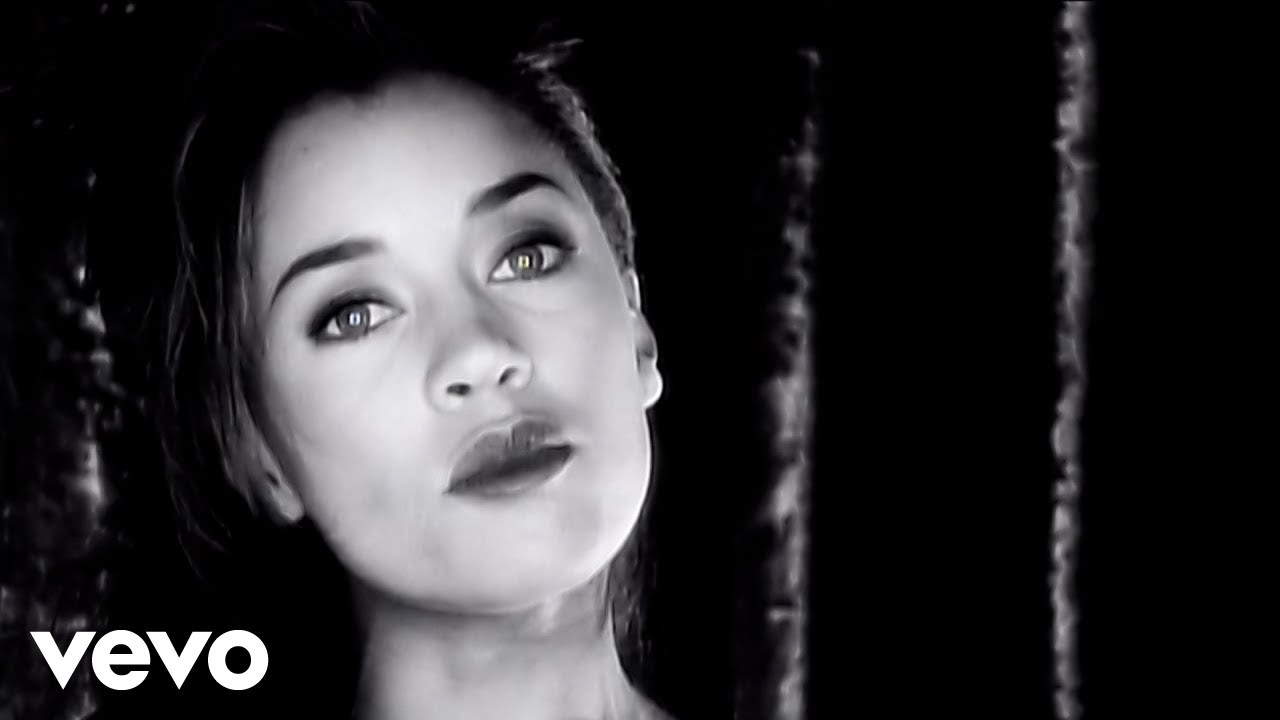



Vanessa Williams – Save The Best For Last
The Song She Called Her Whole Life Story — Written Dark, Rewritten Bright, Rejected Three Times Before It Changed Everything
Phil Galdston and Jon Lind began writing “Save the Best for Last” in March 1989 at a friend’s apartment in Los Angeles. Galdston was at a keyboard, Lind was developing the melody, and by the end of the session they had the musical essence of the song and a title. The lyric they built around it was bitter and ironic — the story of romantic partners who conceal their worst qualities until a relationship is already ending. Then Wendy Waldman read it, flew in from New York, and told them flatly that they had the wrong idea. The music was too beautiful for a dark lyric. She rewrote the concept entirely, turning the song inside out — and in the process produced the lines that would eventually appear on the most-performed song in America in 1992. “Sometimes the snow comes down in June,” she wrote. “Sometimes the sun goes ’round the moon.” The song they had started with barely survived the revision. The song they finished with went to Number One for five weeks.
Released as a single on January 14, 1992, “Save the Best for Last” reached Number One on the Billboard Hot 100 on February 15 and held the position for five consecutive weeks — peaking simultaneously at Number One on the Adult Contemporary chart and the R&B chart, a crossover sweep that had eluded Williams throughout her entire career to that point. She had scored six consecutive Top 10 hits on the R&B chart and two Number Ones in that format, but mainstream pop radio had kept its distance. The song was too strong for any programmer to resist on any format. ASCAP named it Song of the Year for 1992, meaning it was performed more than any other song released that year. At the 35th Grammy Awards the following February — where Williams performed it live, visibly pregnant — it received nominations for Song of the Year, Record of the Year, and Best Female Pop Vocal Performance.
Before Williams heard it, the three writers pitched the demo to three other high-profile female artists. All three passed. The demo then reached Ed Eckstine, President of Mercury Records, via a publishing executive named John Anderson at Windswept Pacific Music. Eckstine played it for Williams immediately, predicting it would be a pivotal moment in her career unless they ruined it in the studio. Williams received the cassette demo sometime in the late 1980s and described it to her label as the song she had been waiting her whole life to record — the song that was her whole story. That reading was not accidental. The lyric’s central premise — a woman who has been overlooked while the person she loves pursues a string of failed relationships, before that person finally turns around and sees her — mapped onto Williams’ own professional history with an accuracy that the songwriters had not designed but could not have improved upon. She recorded her vocal in a single take.
Producer Keith Thomas — whose recent credit at the time was Amy Grant’s “Baby Baby” — shaped the track around Williams’ voice with an arrangement built on strings, piano, and acoustic guitar that sat deliberately apart from the harder-edged R&B that dominated the first two singles from The Comfort Zone. The resulting record sounded warmer and more restrained than most of what was on pop radio in early 1992, which was precisely its advantage at a moment when vocal acrobatics were becoming the default currency. Williams’ voice on the finished track is controlled and precise rather than demonstrative, which gave the song a sophistication that wore better over time than its louder contemporaries. Waldman, hearing the finished record for the first time, said her eyes glazed over. She didn’t know what to make of it. Galdston called it a magical experience. The three writers had not expected anyone to interpret their song this way.
The Comfort Zone was Williams’ second studio album, released in 1991 on Wing Records, the PolyGram subsidiary she had signed to after a PR manager named Ramon Hervey negotiated the deal in the aftermath of her forced resignation from the Miss America title in 1984. Penthouse had published photographs taken without her knowledge or consent; Williams had become the first Black woman to win Miss America in 1983 and was stripped of the title within 72 hours. Hervey, who later became her husband and the father of her daughter Jillian — now the singer of R&B duo Lion Babe — had spent years methodically rebuilding what the scandal had taken from her. “Save the Best for Last” did not merely confirm that the rebuilding had worked. It retroactively reframed the entire story, making the Miss America scandal a footnote to a career rather than the defining event of a life.
The song appeared in The Adventures of Priscilla, Queen of the Desert in 1994, playing over the closing credits as a drag queen lip-synched to Williams’ recording — a deployment that was both comic and genuinely moving in context, and which introduced the song to audiences who might not have encountered it otherwise. In the UK, where it peaked at Number 30 on initial release, it became attached to a different kind of immortality entirely: a series of television commercials for Bisto Best gravy granules used it throughout the 1990s, and Williams has confirmed, with characteristic dry humor, that in Britain she is known primarily as the woman from the gravy ads. The song has been recorded more than eighty times and remains a wedding reception staple, a karaoke standard, and what one of its writers described as a drag number — a description the song handles without difficulty, because a lyric about patience, timing, and being finally, properly seen travels well across any context where those things matter.
Williams went on to record “Colors of the Wind” for Disney’s Pocahontas in 1995 and pivoted increasingly to a parallel acting career that produced a long-running role in Ugly Betty and a regular judging position on RuPaul’s Drag Race. She said it herself, more than once, and without apparent bitterness: “Success is the best revenge.” “Save the Best for Last” remains the only Number One of her career. It is also, by any honest reckoning, one of the most complete vindications in pop music history — a song that three artists turned down, that its own writers almost made into something entirely different, that Williams recorded in a single take from a cassette demo, and that spent five weeks at the top because there was simply nothing on the radio in the spring of 1992 that could compete with it.