A nonsense nursery rhyme about a boy who won’t go home became Sweet’s biggest American hit — written by two men who weren’t in the band, played by musicians who weren’t either.
Nobody has ever satisfactorily explained what Little Willy is about, least of all the band that sang it. Willy won’t go home; you can’t push Willy around; he does a “star shoe shimmy shuffle.” It is, by design, glorious nonsense — and in 1972 it became the unlikely vehicle that carried Sweet from British teen-pop curiosity to genuine American chart force, peaking at No. 3 on the Billboard Hot 100 and finishing as one of the biggest songs of 1973.
The song was the product of a hit factory. By 1972 Sweet had tied their fortunes to Nicky Chinn and Mike Chapman, the songwriting and production team who would soon be known across the British pop industry simply as “Chinnichap.” The pair had a formula — a thumping, Slade-style stomp, dirty guitars, a chorus engineered to lodge in the ear and refuse to leave — and they aimed it squarely at the singles chart. Little Willy came out in Britain in 1972 and climbed to No. 4, another in a run of Chinn-Chapman hits that had been conquering the UK Top 20 since the previous year.
The hit factory and the boys who only sang
What most listeners never knew is how little of the record Sweet actually played. On their Chinnichap singles, the band typically supplied only the vocals; the instrumental tracks were cut by session musicians brought in to nail the sound exactly to Chapman’s specification. It was an open secret of the early glam era — a machine built for maximum chart efficiency, with Brian Connolly’s voice and the band’s flamboyant image as the front end of an operation engineered behind the scenes. The members chafed against it, and within a couple of years they would break free to write and play their own hits. But on Little Willy, the formula was the point, and the formula worked.
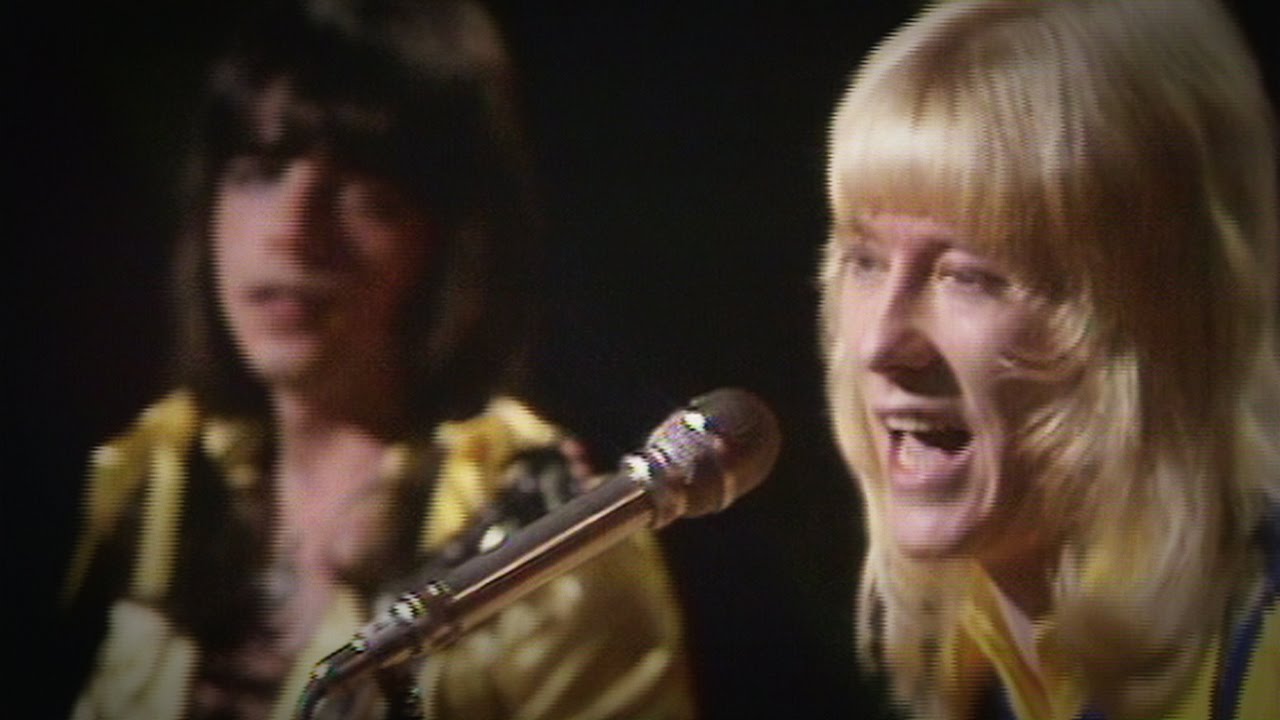
The performance that introduced the song to most British viewers was a 1972 appearance on the BBC’s Top of the Pops — Connolly out front, the band in full glam plumage, the whole thing pitched somewhere between a pop show and a pantomime. The lyrics did a lot of fast-talking without ever saying much, which was exactly the appeal: critics in Britain sneered at the “bubblegum” and even called the words “nursery porn,” but the audience didn’t come for meaning. They came for the chorus, and the chorus delivered.
The American comeback nobody expected
The song’s first run at America fell flat. Released in the US in 1972, it made little impression and looked like another British hit that wouldn’t translate. Then it was reissued — and the second time, something caught. Through the spring of 1973 it climbed steadily, finally peaking at No. 3 on both the Billboard Hot 100 and the Cash Box chart in May, becoming Sweet’s biggest American hit and the lead single from their US debut album. Billboard ranked it the No. 18 song of the entire year. A non-album throwaway had outrun nearly everything around it.
Its afterlife has been just as durable. Little Willy became shorthand for a whole era of glam-pop excess, turning up decades later in the pilot of the British time-travel series Life on Mars to drop viewers instantly into the early 1970s. For a band that desperately wanted to be taken seriously as a rock group — and that would later prove the point with self-written hits like Fox on the Run — it is a small irony that one of their most enduring calling cards is a piece of cheerful gibberish about a boy who simply refuses to go home.
SONG INFORMATION
Artist: Sweet
Song: “Little Willy”
Released: UK 1972 (non-album single); reissued in the US, peaking 1973
Label: RCA (UK); Bell (US)
Songwriter(s): Nicky Chinn, Mike Chapman
Producer: Phil Wainman
Chart Performance: UK Singles Chart No. 4; US Billboard Hot 100 No. 3; Billboard No. 18 song of 1973
Performance: BBC Top of the Pops, 1972
Lineup: Brian Connolly (lead vocals), Steve Priest (bass), Andy Scott (guitar), Mick Tucker (drums)










![Eric Clapton – I Shot The Sheriff [Crossroads 2010] (Official Live Video)](https://musicvideosclub.com/wp-content/uploads/2026/09/eric-clapton-i-shot-the-sheriff-360x203.jpg)