




![Bruno Mars – Risk It All [Official Music Video]](https://musicvideosclub.com/wp-content/uploads/2026/02/bruno-mars-risk-it-all-official-360x203.jpg)

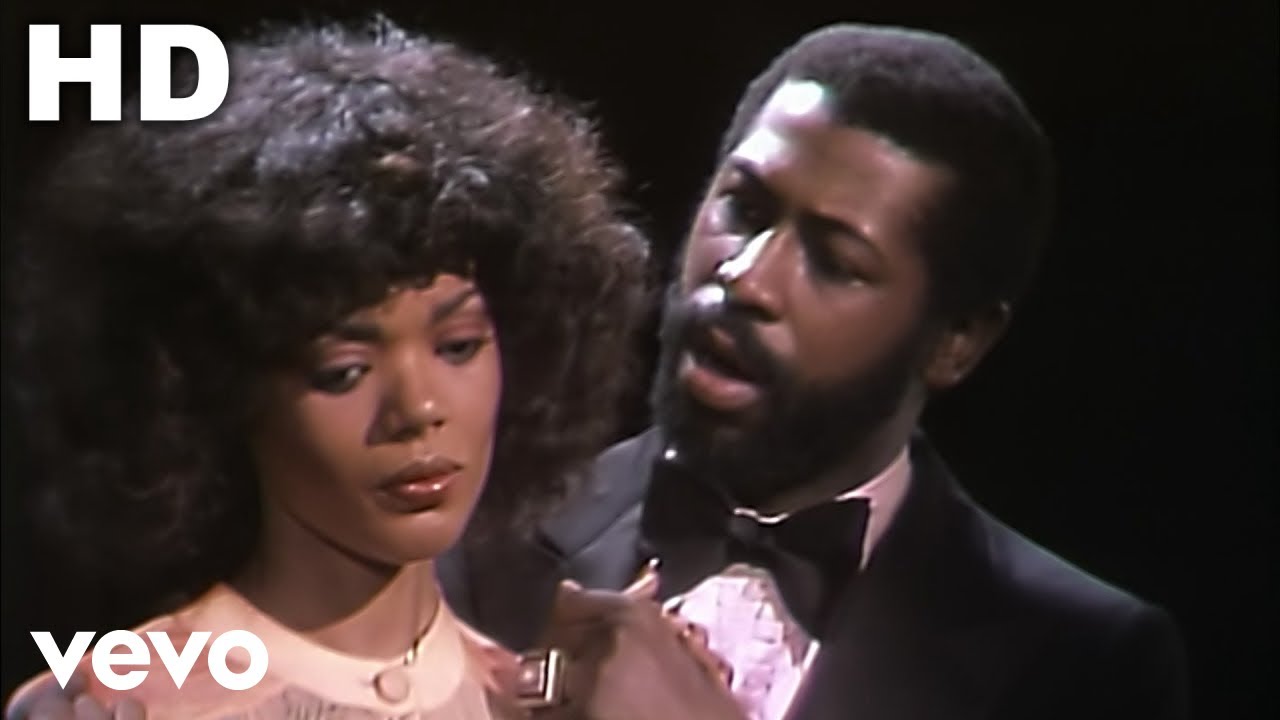
Teddy Pendergrass – Close The Door
The Man Who Turned a Soul Ballad Into a Religion — and Packed Arenas to Prove It
Kenny Gamble and Leon Huff wrote a lot of songs. They wrote songs that defined a city, a decade, and a mood. But when they handed “Close The Door” to Teddy Pendergrass in 1978, they gave him something that became almost less a recording than an event — a weekly ritual on bedroom radios across America, and a live concert showstopper so charged that one eyewitness described the crowd’s response as “a collective orgasm.” That isn’t hyperbole. It’s just what happened when Pendergrass sang this song in a room full of people who felt like it had been written for them personally.
Released in May 1978 as the lead single from his second solo album Life Is a Song Worth Singing, “Close The Door” spent two weeks at number one on the Billboard R&B chart and peaked at number 25 on the Hot 100, where it spent twelve weeks. It was certified Gold by the RIAA, and in the UK it appeared as a double-sided release alongside “Only You,” reaching number 41. These are respectable numbers. What they don’t capture is the song’s gravitational pull — the way it stopped conversations, emptied dancefloors in favour of slow movement, and made its way into the personal mythology of anyone who heard it at the right moment in their life.
The song was a product of the Philadelphia International Records machine at its most precise. Gamble and Huff had been building a Philly soul empire since the early 1970s — lush orchestration, immaculate grooves, and a gift for writing desire as something both elegant and earthy. With “Close The Door”, they stripped the formula back: the arrangement breathes, the rhythm section holds steady, and all the drama lives in Pendergrass’s voice. He had been the lead singer of Harold Melvin and the Blue Notes before launching his solo career in 1976, and by this point, eighteen months into his independence, he was becoming something the music world hadn’t quite seen before — a male R&B artist whose entire public identity was centred on erotic presence rather than dancing or spectacle.
Recording took place at Sigma Sound Studios in Philadelphia, the home studio of the Gamble-Huff operation and the room where most of the great Philadelphia International recordings had been made. The MFSB house musicians — the orchestra, rhythm section, and string arrangers who underpinned the entire Philly soul catalogue — provided the instrumental bed, as they had on every Pendergrass record since the Blue Notes days. What made the session distinct was the intimacy of Pendergrass’s delivery: he sang as if the microphone were an ear, not an instrument. Leon Huff would later say that Teddy’s voice simply “roared over you.” On “Close The Door”, it does the opposite. It leans in.
Life Is a Song Worth Singing was the second of five consecutive platinum albums Pendergrass released between 1977 and 1981 — a streak that set a record for any artist at the time. Each album deepened his standing as the dominant male voice in R&B, a position he held until the 1982 car accident that left him paralyzed from the chest down. In late 1978, his manager Shep Gordon, noticing that women of all backgrounds were filling his sold-out shows, devised a concert format called “For Women Only.” Audiences received teddy bears at the door. The demand was immediate and the concerts became the stuff of legend. “Close The Door” was there at the beginning of all of it — the song that most precisely distilled what the whole phenomenon was about.
The song appeared in the 1982 film Soup for One, in which Pendergrass had a small acting role — one of the stranger footnotes in its history. Its legacy in hip-hop runs deeper: it has been sampled more than 45 times, including by Mary J. Blige on “All Night Long” from her landmark 1994 album My Life, by 3LW on “Neva Get Enuf,” and by Keith Murray on “Get Lifted.” Each new generation that encountered those samples eventually found their way back to the original, which is exactly what a great source record does.
Pendergrass returned to the stage in 1985 at Live Aid, performing in a wheelchair three years after the accident to a crowd of 100,000 in his hometown of Philadelphia, and an estimated 1.5 billion television viewers worldwide. He continued recording until his retirement in 2006 and died on January 13, 2010. Of everything he left behind, “Close The Door” remains the clearest proof of what he was at his peak: a singer who made intimacy feel like ceremony, and made ceremony feel like the most natural thing in the world.
SONG INFORMATION
Related videos
 Watch LaterAdded
03:45
Watch LaterAdded
03:45  Watch LaterAdded
03:51
Watch LaterAdded
03:51  Watch LaterAdded