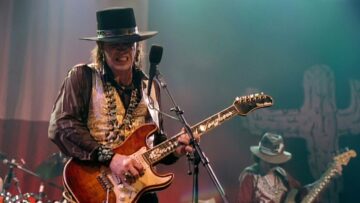
The Heavy – Short Change Hero (This Ain’t No Place For No Hero)
- LUD:
The cowboy boots at the start are a guitarist walking through a tray of clean cat litter.
The first thing you hear is footsteps in dirt — a man in boots walking into town, which is exactly the image the band wanted and precisely the opposite of how they got it. Dan Taylor put on cowboy boots and walked through a tray of clean cat litter in the studio. Kelvin Swaby’s own summary of it is seven words long: that was Dan walking in cat litter. Everything else about how this record reached the world is roughly that unlikely.
It began in an airport. Swaby and Taylor spent a great deal of their lives in departure lounges and did a lot of writing there, and on this occasion Swaby was tapping out a rhythm and humming over it. He took it to Taylor, who immediately played something that sounded like a Western. Swaby recognized what it was — the sentiment of the bad guy walking into town and being run straight back out of it — and they agreed to build the whole thing as though Ennio Morricone were scoring it.
Underneath the Western dressing is something considerably less playful. Swaby wrote it about a relative of his, around fifteen at the time, who had got into serious trouble with the police during a period when knife crime among young people in Britain was rising sharply and children were dying. He has been careful in interviews not to give details, saying only that it was extremely painful for the whole family. That is the song: not a hero, a boy in a situation nobody could get him out of.
Jim Abbiss produced it, with Ali Chant engineering, across 2009 sessions at Toybox Studios in Bristol and State of the Ark in Richmond. Abbiss had made the first Arctic Monkeys album and would go on to work on Adele’s 19. The Heavy at that point were Swaby on vocals, Taylor on guitar, Spencer Page on bass and Chris Ellul on drums — four men from Bath, Somerset, playing soul and garage rock and blues in a year when British radio wanted indie guitar bands. Shingai Shoniwa of the Noisettes sang backing vocals on this and two other tracks.
It was never a single
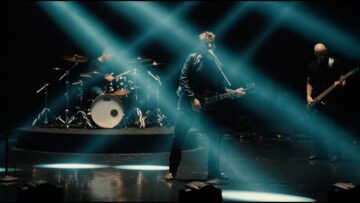
This is the part people find hard to believe. Short Change Hero was not released as a single. It was the fifth track on the band’s second album and it stayed there. There was no radio campaign, no picture sleeve, and — the detail that matters most on a site like this one — no official video was ever made for it. None exists. The footage on this page is a live performance uploaded by somebody who was there, because live footage is the only kind of footage there is.
What happened instead is that the song got discovered by people who make other things. It became the main theme of Borderlands 2 in 2012, opening the game’s cinematic and setting the tone for the whole of Pandora. It ran under the trailer for Batman: Arkham City. It became the theme for Strike Back from its second season. It turned up in Suits, The Umbrella Academy, The Vampire Diaries, Longmire, Driver: San Francisco, the Dwayne Johnson film Faster, and an instrumental jazz arrangement of it appeared in Poker Night 2. In 2012, off the back of the game alone, it charted in France — at No.109, which is a strange and rather wonderful number for one of the most recognized rock recordings of its decade.
The Letterman thing
The band’s other break came from television. When the Heavy played How You Like Me Now? on Late Night with David Letterman, the host asked them to play it again — the first time he had done that with any act on the show. Album sales rose 537 percent in a single week. The House That Dirt Built never reached the British chart at all and made the Billboard 200 in 2010.
They have kept working. The Glorious Dead followed in 2012, Sons reached No.31 on the US independent albums chart in 2019, and they recorded Put It On The Line for Borderlands 3. By 2025 this track had passed 188 million streams on Spotify, which is a great many people for a song that was never sold to anybody as a song. Most of them found it inside something else — a game, a trailer, a title sequence — and went looking afterward for what it was.
SONG INFORMATION
Artist: The Heavy
Song: “Short Change Hero”
Album:The House That Dirt Built
Released: October 13, 2009 (album track; never issued as a single)
Recorded: 2009
Studio: Toybox Studios, Bristol; State of the Ark, Richmond
Label: Counter Records
Songwriter(s): The Heavy
Producer(s): Jim Abbiss
Length: 5:22
Chart Performance: No.109 French Singles Chart, 2012
Lineup: Kelvin Swaby (vocals), Dan Taylor (guitar), Spencer Page (bass), Chris Ellul (drums), Shingai Shoniwa (backing vocals)