


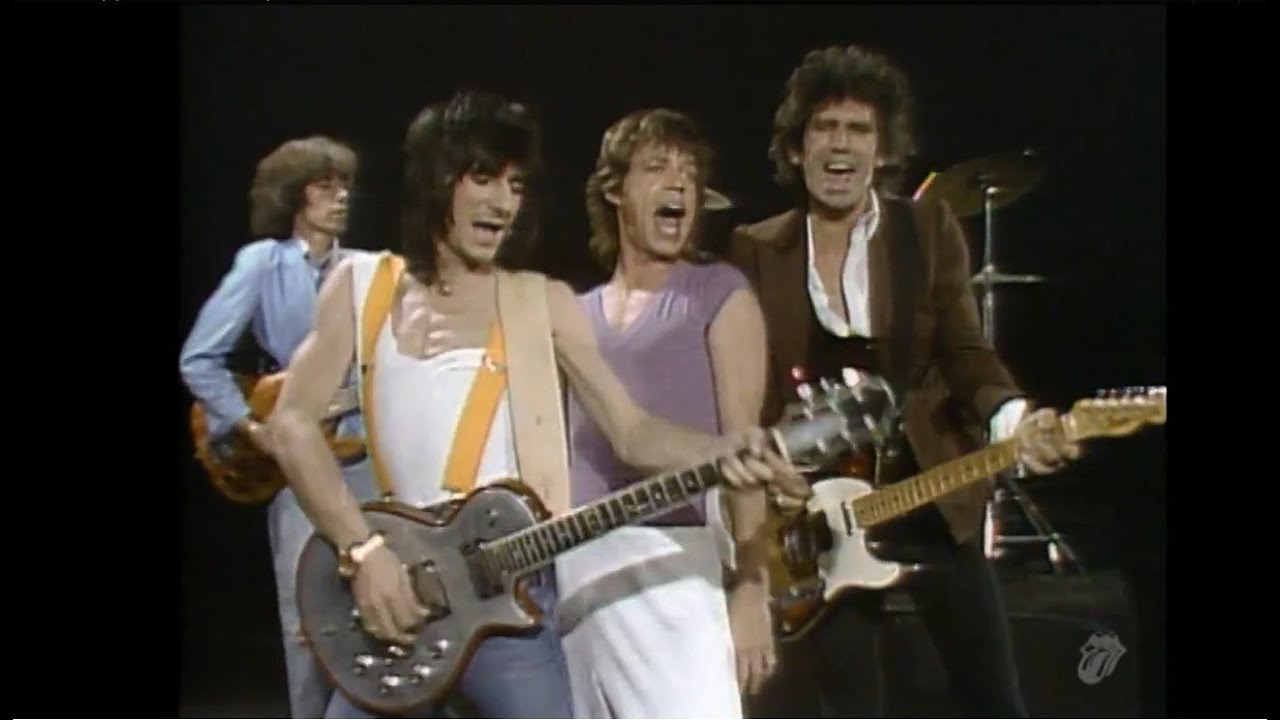



The Rolling Stones – Start Me Up
The Rolling Stones’ Biggest Hit of the 1980s Was a Single Forgotten Burst of Rock Buried Inside Dozens of Reggae Takes — and Nobody in the Band Even Remembered Recording It
One of the most recognizable guitar riffs in rock history spent roughly five years lost in a vault, buried inside take after take of a completely different song. When the Rolling Stones first recorded “Start Me Up” during sessions in 1977 and 1978, they were trying to make it a reggae number — and they tried hard, cutting somewhere between thirty and seventy takes of it under the working title “Never Stop.” Keith Richards was convinced it was a reggae song. So was Mick Jagger. It never worked. But somewhere in the middle of all those reggae attempts, Richards and drummer Charlie Watts had spontaneously knocked out a single rock-and-roll version just to shake things up — then immediately went back to reggae and forgot it ever happened. “Nobody remembered cutting it,” Richards said. That forgotten accident became the biggest hit of the band’s 1980s.
Keep watching: The Rolling Stones – Miss You · She’s So Cold
The rescue happened almost by chance. By 1981, the Stones needed a new album to tour behind, but Jagger and Richards were feuding and had no time to write fresh material. Associate producer Chris Kimsey proposed a solution: he knew there was usable material sitting in the band’s archives, and he set about combing through a decade of unfinished session tapes to build an album out of leftovers. That album became Tattoo You. Sifting through the old “Start Me Up” reels, Kimsey found that buried rock take. “After doing about 70 takes,” Richards recalled, “he found that one in the middle — it was just buried in there. Suddenly, I had it.” The band leapt on it, added overdubs at New York’s Electric Lady and Hit Factory studios in early 1981, and mixer Bob Clearmountain gave it the punchy, reverberant kick that made the final record explode out of speakers.
What they had was a monster. Released on August 14, 1981, as the lead single from Tattoo You, “Start Me Up” rocketed to No. 2 on the Billboard Hot 100 — held off the top only by Christopher Cross’s “Arthur’s Theme” — and hit No. 1 in Australia, No. 7 in the UK, and the top of the US rock tracks chart. It drove Tattoo You to No. 1 on the Billboard 200, where it sat for nine weeks, becoming the band’s best-selling studio album of the decade. Credited, like nearly all Stones material, to Jagger and Richards and produced by the Glimmer Twins with Kimsey, the song arrived just as MTV launched, and the band — by then being mocked in some quarters as the “Strolling Bones” — proved they could dominate the video age as completely as they’d ruled the 1960s and ’70s.
“You Make a Grown Man Cry”
The lyric works on two levels at once, which is part of why it endured. On its surface it’s a song about desire, about the overwhelming effect one person can have on another, with Jagger’s most-quoted line — “you make a grown man cry” — selling pure intensity. Jagger has acknowledged the obvious double meanings threaded through the words, but he’s also described the song as being about something larger: the unstoppable momentum of rock and roll itself, the thing that starts you up and never stops. That second reading turned out to be prophetic. For a band that had already been written off more than once, a song literally rescued from the scrap heap became an statement of permanence.
The Song That Opens the Show
More than four decades on, “Start Me Up” has become arguably the most reliable workhorse in the entire Rolling Stones catalog. It has opened more of the band’s concerts than almost any other song, that opening riff functioning as a starter’s pistol for stadiums full of people across generations. It soundtracked the global launch of Microsoft’s Windows 95 in a deal reportedly worth millions, played at the Super Bowl, and became shorthand for the band itself — when you need one song to mean “the Rolling Stones,” this is often it. Charlie Watts, whose offhand drumming on that forgotten take helped make the whole thing possible, played it on stage for the rest of his life until his death in 2021. It’s a remarkable fate for a recording nobody remembered making: the throwaway rock take that got buried under the reggae experiment became the song the world now reaches for first. As Richards put it, looking back on the album of leftovers that housed it, Tattoo You turned out beautiful precisely because it wasn’t planned.