The Bar Song That Nearly Derailed A Career Before It Started
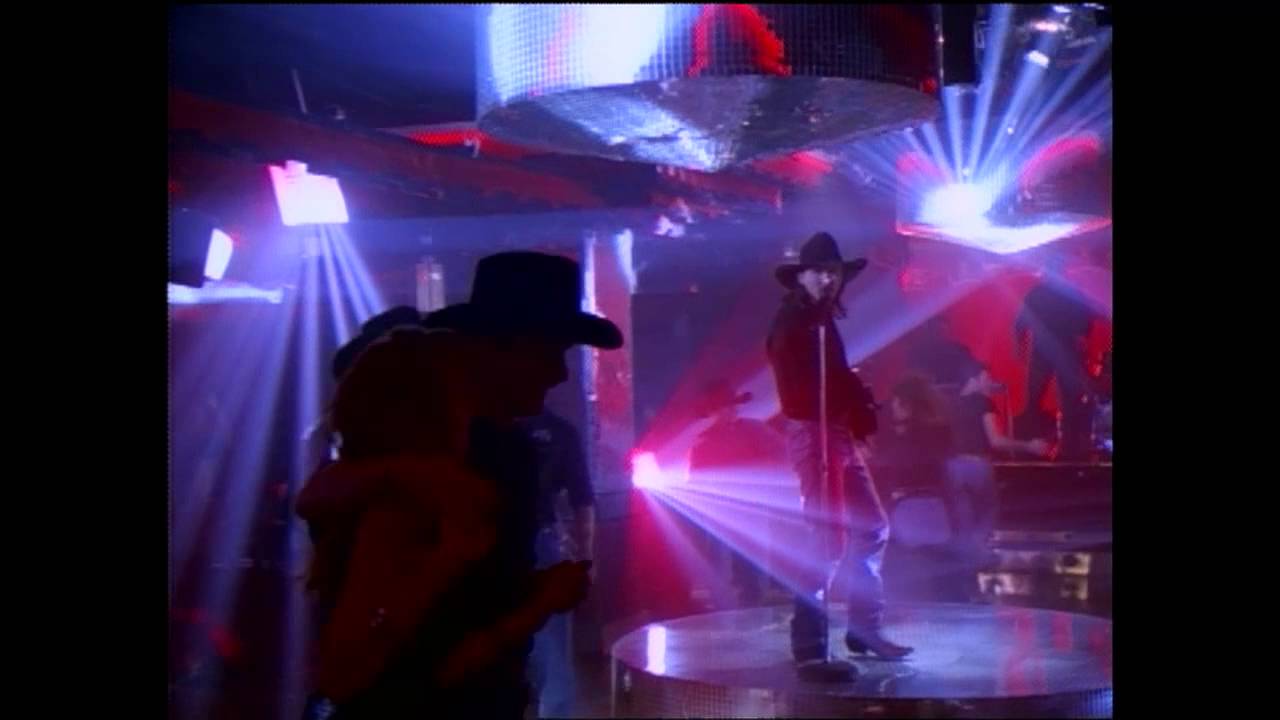
Few country debuts have sparked as much controversy as Tim McGraw’s “Indian Outlaw.” Released in January 1994 as the lead single from his sophomore album Not a Moment Too Soon, the song managed to simultaneously ignite a firestorm of criticism and crack the Top 10 — a double-edged sword that would define the early days of one of country music’s biggest careers.
“Indian Outlaw” peaked at number eight on the Billboard Hot Country Singles chart and crossed over to number 15 on the Billboard Hot 100, giving McGraw his first real foothold in Nashville after four years of grinding with little to show for it. Its success helped push Not a Moment Too Soon to number one on both the Billboard Top 200 and Country Albums charts, where it camped for 26 straight weeks and became 1994’s best-selling country album overall.
The origin of the song stretches back even further than the recording. McGraw first heard “Indian Outlaw” when he met songwriter Tommy Barnes — who co-wrote it with Jumpin’ Gene Simmons and John D. Loudermilk — all the way back in 1989. Rather than rushing it into the studio, McGraw road-tested it live for nearly four years. “We played it for about four years live before we recorded it,” he said. “I could tell it would be a really big record because of the crowd response.” That instinct proved brutally accurate.
The song drew immediate heat from Native American groups who objected to its stereotypical imagery — tomahawks, teepees, wigwams, peace pipes. Radio stations in Arizona, Nevada, Oklahoma, South Dakota, and Minnesota pulled it from their playlists. The then-chief of the Cherokee Nation called it “offensive.” About a dozen protestors picketed a McGraw concert in Tulsa; he met with them backstage but still performed the song. The track even samples John D. Loudermilk’s “Indian Reservation” in its closing moments, adding yet another layer of controversy to an already lightning-rod release.
Produced by Byron Gallimore and James Stroud, the album gave McGraw the platform to follow up the controversy with substance. His next single, “Don’t Take the Girl,” went all the way to number one — and Not a Moment Too Soon eventually sold six million copies in the US alone, earning ACM Album of the Year. From one polarizing song, an entire superstar career was born.
McGraw was 26 when all of this landed on him, and he handled the backlash with a pragmatism that hinted at the longevity ahead. “It’s meant to be a fun record,” he told the LA Times. “I have a hard time seeing how people can take it seriously, but I guess anything you do is up for interpretation.” Over 650,000 copies sold suggests plenty of people took it exactly the way he intended — as a good time on a Friday night.
SONG INFORMATION
Artist: Tim McGraw
Song: “Indian Outlaw”
Album:Not a Moment Too Soon
Released: January 1994
Label: Curb Records
Songwriter(s): Tommy Barnes, Jumpin’ Gene Simmons, John D. Loudermilk
Producer(s): Byron Gallimore, James Stroud
Chart Performance: No.8 US Billboard Hot Country Singles, No.15 US Billboard Hot 100