



![David Lee Roth – California Girls (Official Video) [HD]](https://musicvideosclub.com/wp-content/uploads/2026/10/david-lee-roth-california-girls-360x203.jpg)


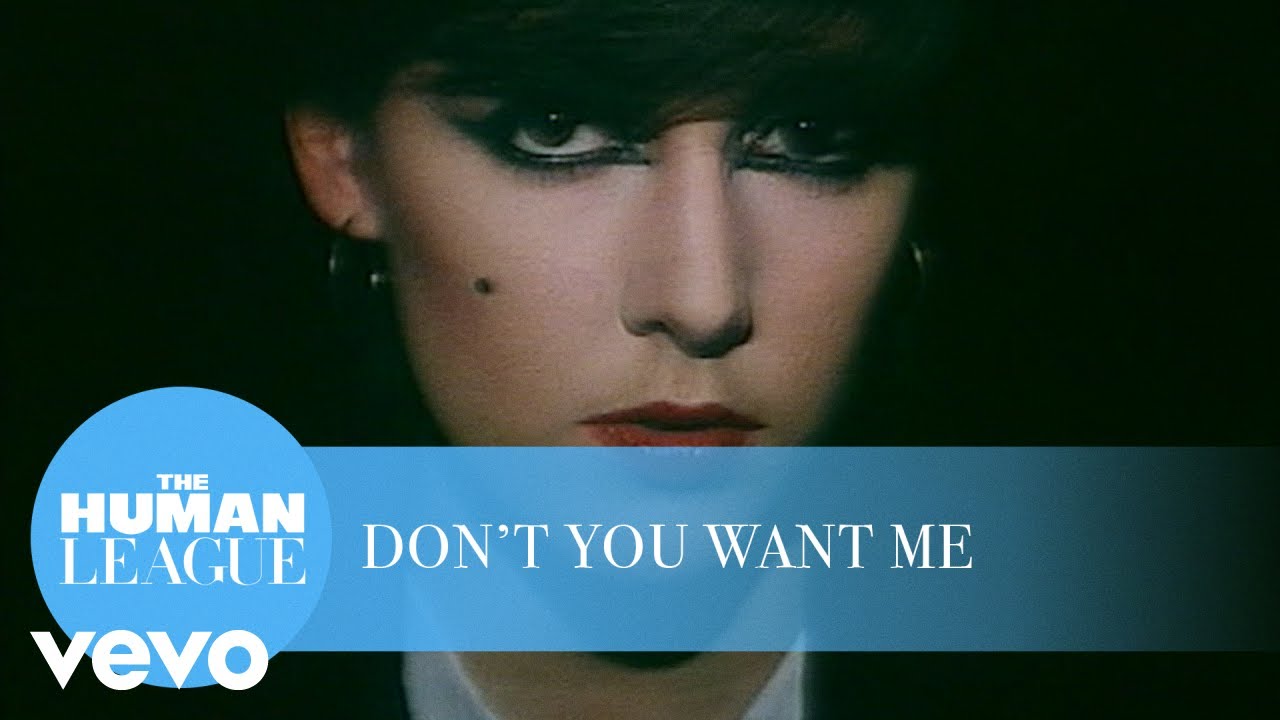
The Human League – Don’t You Want Me
Philip Oakey called it poor quality filler and buried it at the end of side two. Virgin released it anyway, and it outsold every other British single of 1981.
Philip Oakey did not want anyone to hear it. When Virgin’s chief executive Simon Draper picked Don’t You Want Me as the fourth single from Dare, Oakey argued that the public had heard enough of the Human League that year and that releasing a “poor quality filler track” would undo everything the band had just built. He had already buried the song at the end of side two. He gave in only on the condition that Virgin package the seven-inch with a large color poster, so that fans handing over their money for something substandard would get something for it.
Keep watching: Soft Cell – Tainted Love · more 80s videos →
The song had started somewhere unlikely. Oakey took the idea from a photo-story in a teen magazine, and the band recorded it in the studio as a male solo. Then he saw A Star Is Born and decided the song needed two voices arguing across it, one telling the story and one refusing it. Susan Ann Sulley and Joanne Catherall had joined the band in 1980 and had sung only backing parts until then. Sulley got the call, and has always described the choice as luck of the draw.
What Callis and Adrian Wright first built around the lyric was harsher than the record anyone knows. Martin Rushent, the producer Virgin had appointed, disliked those versions, so he and Callis remixed the track into something softer. Oakey has called that version poppy, and he meant it as a complaint. It set off one of his rows with Rushent, and it is why the song ended up last in the running order. The band recorded the album at Genetic Sound in Streatley, Berkshire, and the drum part came from Roger Linn’s LM-1, the machine that played back recordings of real drums rather than synthesizing them.
Virgin released the single on November 27, 1981. It entered the UK chart at No.9, went to No.1 the following week, and stayed there for five weeks across Christmas. It sold more copies than any other single released in Britain that year, a title the Official Charts Company later confirmed by reassigning it from Soft Cell’s Tainted Love. UK sales have passed 1,560,000, which puts it among the two dozen best-selling singles in British chart history. In America, where the band was barely known, it reached No.1 on the Billboard Hot 100 on July 3, 1982, held that position for three weeks, and finished as Billboard’s sixth-biggest hit of the year. The Human League took the 1982 Brit Award for Best British Breakthrough Act.
A film about a film about a film
MTV launched in 1981, and Virgin understood what that meant. The label commissioned a video, and Steve Barron shot it near Slough, Berkshire, that November. Instead of a performance clip, Barron conceived a crime film being shot and edited, with the band members playing both characters and crew and the cameras, lights, and editing benches kept in frame. Sulley plays an actress who is also an assistant editor, and she walks out on Oakey, who plays the director. Barron has said he took the idea from Truffaut’s Day for Night and wanted to push it into a film within a film within a film. Sulley has described it as a version of The French Lieutenant’s Woman. Small realities intrude on the artifice: Jo Callis could not drive, so the car he appears to be driving had to be pushed into shot.
The video was released in December 1981, and in America it did the work the record alone could not. In November 1983, Rolling Stone named the song the breakthrough of the Second British Invasion. The song has kept returning since. Virgin reissued it with Snap! and Red Jerry remixes in October 1995, and that version reached No.16. The Farm’s cover went to No.18 in Britain in 1992, and the Swedish group Alcazar cut a Eurodance version in 2002. In March 2014 it re-entered the UK chart at No.19 after a social media campaign by Aberdeen supporters.
Oakey’s description was accurate and his judgment was wrong. It is a pop record, softer than the band had intended to sound, and it sits at the end of an album that was trying to be something more severe. What he could not hear was that the argument inside it was the point. Two people in the same song give completely different accounts of the same relationship, and neither one concedes. Draper heard that, Barron built a film around it, and the track Oakey tried to hide became the most successful thing the band ever released.
SONG INFORMATION
Related videos
 Watch LaterAdded
03:30
Watch LaterAdded
03:30  Watch LaterAdded
06:49
Watch LaterAdded
06:49  Watch LaterAdded
04:05
Watch LaterAdded
04:05