The song Cass Elliot almost refused to record became the one that made her a star on her own
Cass Elliot didn’t want to sing it. When the Mamas & the Papas gathered to record Dream a Little Dream of Me in early 1968, she thought the old standard was too campy, too far from where her head was. She sang it anyway — and by the time it reached the public later that year, it had become the record that defined her, the one that carried her out of the group and into a career of her own.
The song was older than almost anyone singing it. Written around 1930 with music by Fabian Andre and Wilbur Schwandt and lyrics by Gus Kahn, Dream a Little Dream of Me was first recorded in February 1931 by Ozzie Nelson, and over the following decades it passed through the hands of Ella Fitzgerald, Louis Armstrong, Nat King Cole, and Doris Day, settling into the Great American Songbook as a well-worn evergreen. The Mamas & the Papas knew it because Michelle Phillips did — her father had been friends with co-writer Fabian Andre years earlier. When word reached the group that Andre had died, they found themselves picking out the melody together, trying to remember the words, and decided to record it.
They cut it for their April 1968 album The Papas & the Mamas, with Elliot on lead and her bandmates behind her, backed by the Los Angeles session players later known as the Wrecking Crew. The group was already coming apart. Their label, Dunhill, saw where the future lay: Elliot was the most recognizable and best-loved member, and the song was plainly a hit. So they released it under her name.
From the last Mamas & Papas hit to the first Cass Elliot solo record
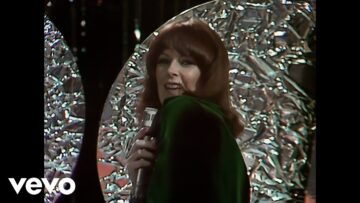
It worked exactly as Dunhill hoped. Dream a Little Dream of Me reached No. 12 on the US pop chart, No. 2 on Adult Contemporary, and No. 11 in the UK, and it became the launching pad for her solo debut album of the same name, released in October 1968 and produced by John Simon. Elliot found her way into the song by imagining it fresh — as she later put it, she tried to sing it as though it were 1943 and someone had just handed her a brand-new tune. Whatever reluctance she’d felt in the studio, it doesn’t show. Her voice on the record is warm, unhurried, completely at ease, and more than fifty years on it remains the version people mean when they name the song. The performance you’re watching here comes from British television in 1970, with the studio single from 1968 embedded below it.
You can hear the original 1968 studio recording here: