The record that made them is the same one that finished them off three years later.
Four musicians from Long Island took a Motown single that ran two and a half minutes at a brisk clip, slowed it to a crawl, stretched it past seven, and recorded it in a single take. It made their name, put them on The Ed Sullivan Show in front of an estimated fifty million people, and defined them so completely that they spent the next three years unable to be anything else. Vanilla Fudge released five albums between 1967 and 1969 and broke up in 1970. The thing that killed them was their own first single.
The song belonged to Holland–Dozier–Holland, who wrote it for the Supremes in 1966. Their version went to No.1 that November — taut, urgent, driven by a guitar figure imitating Morse code, the sound of somebody who needs this conversation over with. What the band then called the Pigeons did to it was close to an act of violence. They took the same lyric of a woman begging to be released and played it as though the begging had been going on for years and would go on for years more.
Their manager Phil Basile talked producer Shadow Morton into coming to see them in early 1967. Morton had made records with the Shangri-Las and Janis Ian and knew what to do with drama. He heard the arrangement and offered to record it as a single, which brought a deal with Atco — and a condition. Atco wanted a different name. They settled on Vanilla Fudge, which Morton reportedly liked for the contrast between four white musicians and the soul music they were dismantling.
One take, seven and a half minutes
They cut it in one pass. Mark Stein’s Hammond organ carries the whole arrangement, Carmine Appice’s drums land like something being dropped rather than struck, and the tempo is so far below the original that the melody barely holds together. The album version runs 7:26. Atco edited it down to 2:50 for the 45, which meant removing most of what made it interesting. There is a further oddity: the stereo pressing of the debut album has this track mixed entirely in mono, so the biggest thing on the record is also the flattest-sounding.
The album arrived in 1967 — the band’s own history places it on June 2, the day after Sgt. Pepper’s Lonely Hearts Club Band — and climbed to No.6 on the strength of word of mouth and live shows. The single did not follow it. It was released, it went nowhere, and for a year the record everybody now associates with 1967 was a commercial failure.
The second attempt
What changed was television. In January 1968 the band played it on The Ed Sullivan Show, all of it, at full length and full volume, to an audience of around fifty million. That summer Atco put the same single out again. This time it reached No.6 on the Hot 100 and became the record their entire career rested on.
The influence ran further than the chart position suggests. When Led Zeppelin came to America for the first time in early 1969, they opened for Vanilla Fudge on some of those dates. Deep Purple, Yes and Uriah Heep all took something from what Stein was doing with an organ and Appice was doing behind him — the idea that you could take a pop song, remove its speed, and find something enormous and slightly menacing underneath.
The trap was that it only worked once. The formula — take a famous song, halve the tempo, add an organ — produced diminishing returns across four more albums, and the band that had invented a way of playing spent three years repeating it. They split in 1970, reunited on and off through the eighties and nineties, and reformed properly in 1999. Bogert died in 2021. Appice is still playing. The single that took two attempts to become a hit outlived every band it influenced.
SONG INFORMATION
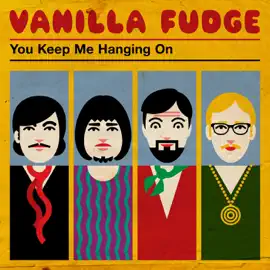
Artist: Vanilla Fudge
Song: “You Keep Me Hangin’ On”
Album:Vanilla Fudge
Released: 1967; reissued as a single summer 1968
Recorded: 1967, in one take
Label: Atco (US); Polydor (UK)
Songwriter(s): Brian Holland, Lamont Dozier, Eddie Holland
Producer(s): Shadow Morton
Length: 7:26 (album version); 2:50 (single edit)
Original Release: The Supremes, 1966, No.1 on the Billboard Hot 100
Chart Performance: No.6 US Hot 100 on the 1968 reissue; the 1967 single did not chart
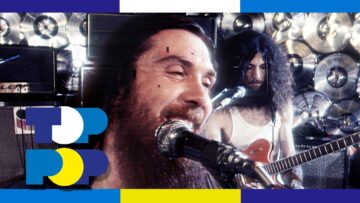
Performance: Beat-Club, German television
Lineup: Mark Stein (organ, vocals), Vince Martell (guitar, vocals), Tim Bogert (bass, vocals), Carmine Appice (drums, vocals)