When ABBA touched down in Sydney in March 1976, Australia had already been gripped by a mania that the rest of the world was only beginning to understand. “I Do, I Do, I Do, I Do, I Do” had done it — the song that lit the fuse. Released in April 1975, it became ABBA’s first Australian chart-topper, triggering 14 consecutive weeks at the top of the local charts as “Mamma Mia” and “SOS” followed in its wake. The TV special filmed during their visit, later packaged for international audiences as ABBA Down Under, would draw 58% of Australian viewers — a ratings figure that reportedly eclipsed the moon landing of July 1969.
The song itself had a surprisingly mixed global reception at the time. While it topped charts in Australia, France, New Zealand, Switzerland and South Africa and hit the Top 5 across much of Europe, it stalled at a lowly No. 38 in the UK — the one market ABBA was most desperate to crack. In the United States it climbed to No. 15, making it, curiously, the only ABBA single ever to outperform in America what it managed in Britain. Australia, though, embraced it unconditionally, and that love affair was very much on display when ABBA arrived to film the special.
The track was built around a deliberate nostalgia trip. Benny Andersson, Björn Ulvaeus, and ABBA’s manager Stig Anderson wrote it as a direct homage to the European schlager tradition of the 1950s and ’60s, and to the lush saxophone sound of American bandleader Billy Vaughn. Most ABBA fans have no idea the song was essentially a love letter to mid-century easy listening — the big horn riff that opens it wasn’t a stylistic accident but a conscious callback to an era two decades gone. American trade publication Cash Box picked up on it immediately, praising the “excellent horn riff” and calling the vocals richly textured; British critics were far less charitable.
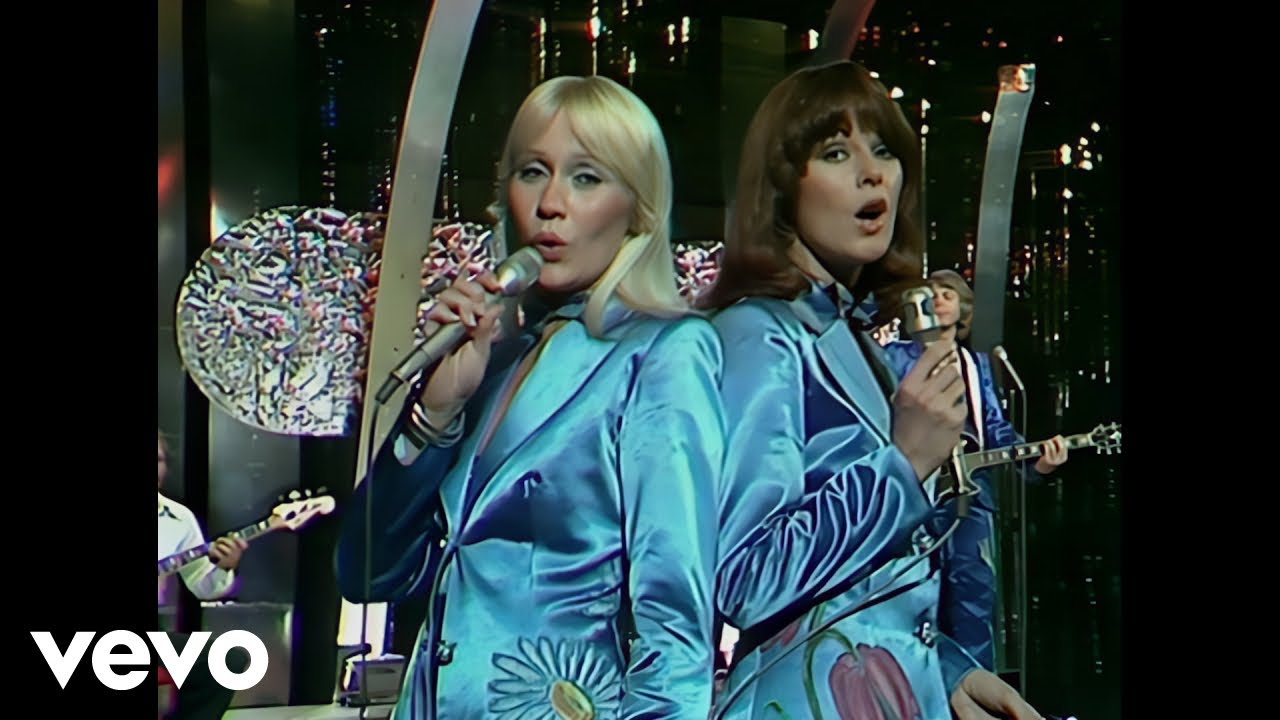
The live performance captured in ABBA Down Under was filmed across two days, March 11 and 12, 1976, at Channel 9 Studios in Artarmon, Sydney, in front of a studio audience who had won their seats through a competition in the Daily Mirror. Australian broadcasting regulations required ABBA to perform alongside three local backing musicians — members of Sydney band The Executives — though the four principals absolutely commanded the room. Channel 9 had reportedly paid $100,000 to secure the special, outbidding television companies from Germany and France. The overseas export version wove in footage of the group on the Hawkesbury River, attempting boomerang throws and feeding wallabies at Taronga Zoo, giving the special its distinctly sun-drenched, wide-eyed atmosphere.
The special was timed to coincide with the Australian release of the compilation The Best of ABBA, which went on to sell over 1.1 million copies in the country — a figure that remained in the Australian supplement of the Guinness Book of Records for years. “I Do, I Do, I Do, I Do, I Do” was performed as part of a full set that also included the brand-new “Fernando”, which had just been released that same week and would proceed to spend 14 weeks at No. 1 — itself a record that stood until 2017. ABBA were, at this precise moment in time, the biggest act on the planet in Australian terms.
The song’s legacy in Australia is inseparable from the special. Seeing the group perform it live — joyful, polished, dressed in their iconic late-1975 stage costumes — cemented for an entire generation what ABBA meant. The schlager formula that British critics dismissed as throwback kitsch was, in Australian living rooms, pure joy. Internationally, the song has since appeared in stage productions of Mamma Mia! and been covered across multiple languages, but nothing quite matches the electricity of watching it performed here, in this moment, in the country that received it with open arms first.
In ABBA’s catalog, “I Do, I Do, I Do, I Do, I Do” occupies an unusual space: a song that divided critics and conquered continents simultaneously. As a studio track it’s a charming, purposefully retro detour; as a live performance in ABBA Down Under, it becomes something more — a document of a band discovering, in real time, just how adored they were on the other side of the world. Benny Andersson later reflected that Australia changed how the group understood their own reach. You can see it in the performance: four people who arrived as pop stars and left as phenomena.
SONG INFORMATION
Artist: ABBA
Song: “I Do, I Do, I Do, I Do, I Do” (Live)
TV Special:ABBA Down Under (also known as ABBA in Australia)
Performed: March 11–12, 1976
Venue: Channel 9 Studios, Artarmon, Sydney, Australia
Broadcast: March 20, 1976 (Australia)
Original Release: April 10, 1975
Original Album:ABBA
Label: Polar Music
Songwriters: Benny Andersson, Björn Ulvaeus, Stig Anderson
Producers: Benny Andersson, Björn Ulvaeus
Chart Performance (original single): No. 1 in Australia, No. 1 in France, No. 1 in New Zealand, No. 1 in Switzerland, No. 1 in South Africa, No. 15 in US, No. 38 in UK