


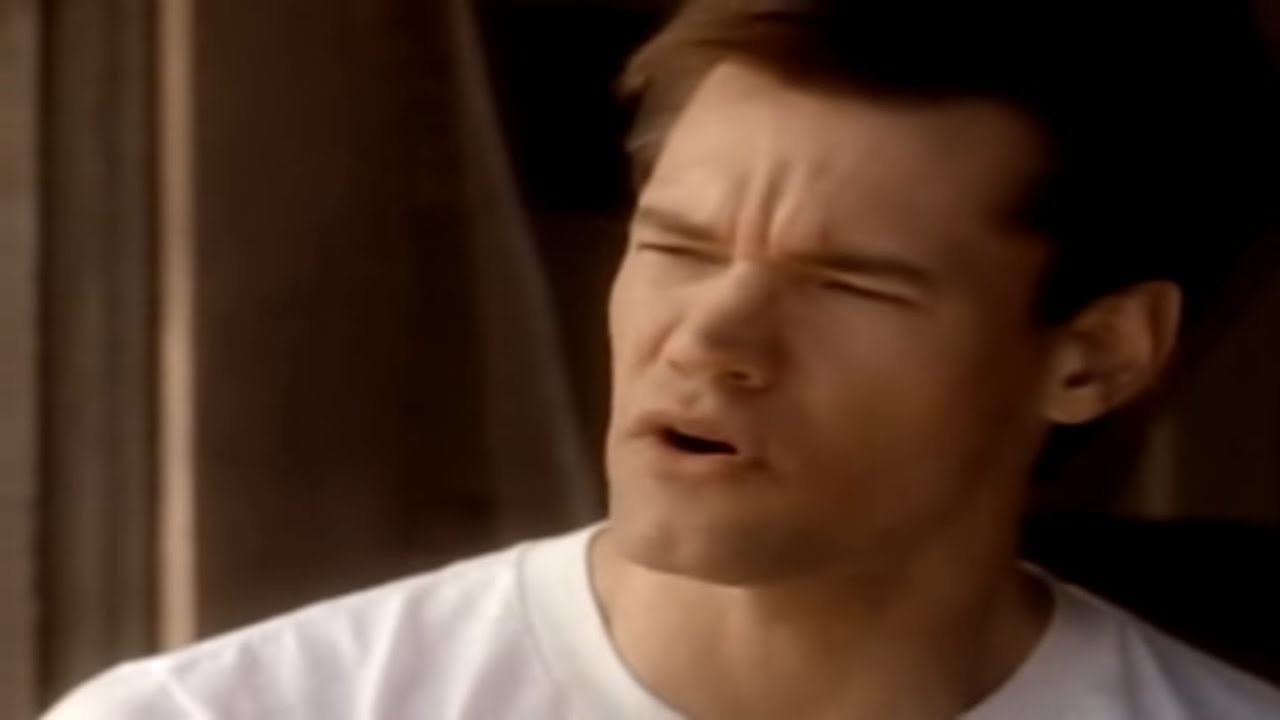










Randy Travis – He Walked On Water
A Nashville Songwriter Who Had Been Parking Cars for Two Years Wrote a Song About His Great-Grandfather in Twenty Minutes. Randy Travis Took It to Number Two and Made Both of Their Careers in the Same Stroke.
Allen Shamblin had been in Nashville for two years and had not had a song recorded. He had moved from Austin in August 1987 with fourteen finished songs in a notebook, a marketing degree from Sam Houston State, and a previous career as a real estate appraiser he had walked away from at twenty-five. He was parking cars to pay rent. He had signed with Hayes Street Music in May 1988. He had developed what he later called “massive writer’s block” — two years in town without writing anything he believed in — and his publisher had eventually told him to go back to Texas, reconnect with where he was from, and try writing alone. The first song he wrote on the trip back was about his maternal great-grandfather, a man called “Poppy” Fugate whom he had met once at age four, in his own home in Texas, when his mother brought the old man over to introduce him. Fugate had been a working cowboy around Galveston in the late nineteenth and early twentieth centuries, and the impression he made on the four-year-old in front of him became the entire spine of He Walked on Water: the way a small child idolises an old man, the way an old man’s smallest gestures take on the weight of biblical metaphor, the way a memory of someone you barely knew can outlast the people you knew well. Shamblin wrote the song in roughly twenty minutes.
Randy Travis was on top of the country music world when he heard the demo. Storms of Life in 1986 had gone triple platinum and made him the leading figure in what country radio had begun calling the neo-traditionalist movement — a deliberate return to the steel guitar and fiddle textures of George Jones and Merle Haggard after a decade of Urban Cowboy crossover production. He had followed it with Always & Forever in 1987, then Old 8×10 in 1988, both multi-platinum, both topping the country albums chart. No Holdin’ Back, released August 8, 1989, was his fifth straight number-one country album in four years. The first two singles from it — It’s Just a Matter of Time and Hard Rock Bottom of Your Heart — had each been Top 5 country singles, with Hard Rock Bottom spending four weeks at number one and remaining the longest-charting number one of his career. He Walked on Water would be the third and final single from the album. He chose to record it because it reminded him of his own grandfather.
The Lehning Production: Restraint as Statement
Kyle Lehning produced the recording, as he did virtually every Travis album of the era. Lehning’s signature with Travis was restraint — orchestration kept simple enough that Travis’s baritone, the most distinctive male country voice of the period and the one critics most often compared to Lefty Frizzell and Merle Haggard, could carry the emotional weight of the lyric without competing against the arrangement. He Walked on Water is built almost entirely around acoustic guitar, brushed snare, and a sympathetic pedal steel that enters in the second verse. Travis sings the song quietly. The narrator’s voice is the voice of a small boy looking up at an enormous figure, and Travis has the confidence to deliver the lyric without pushing it. The vocal performance trusts the song. Cash Box magazine’s reviewer Kimmy Wix called it a ballad with detailed lyrics that listeners could relate to, well-suited for Travis’s voice — the kind of contemporary review that reads, three decades later, like understatement.
The single was released in April 1990 and climbed steadily through that spring and summer, reaching number two on the Billboard Hot Country Singles & Tracks chart and number one on Canada’s RPM Country chart. It would have been Travis’s longest-running country number one of the year, but for one record above it that refused to move. No Holdin’ Back was certified Double Platinum. Allen Shamblin’s career, after two years of parking cars, opened in a single moment: He Walked on Water was followed by Mike Reid’s Walk on Faith, Collin Raye’s In This Life, John Michael Montgomery’s Life’s a Dance, Mark Wills’ Don’t Laugh at Me, and — most enduringly — Bonnie Raitt’s I Can’t Make You Love Me and Miranda Lambert’s The House That Built Me, both of which Shamblin co-wrote. He had a hundred-plus songs recorded by major artists by the time he was inducted into the Nashville Songwriters Hall of Fame. The Randy Travis cut started all of it.
The Song That Came Back to Him
On July 7, 2013, Randy Travis was hospitalised in Dallas with viral cardiomyopathy — a virus that had attacked the muscles of his heart, possibly contracted on the set of a film he had recently shot in a humid Louisiana feed store. The condition led to congestive heart failure. Travis flatlined and was placed on life support. While doctors revived him, he suffered a massive stroke. The damage to his brain’s left hemisphere left him unable to walk, unable to speak, and unable to sing. He underwent three tracheostomies and two brain surgeries. His chance of survival was estimated at one percent. He survived. The recovery, however, was incremental in a way no one had been prepared for — years of physical therapy to walk again, the development of aphasia that left him able to understand language fully but unable to produce it in conversation, and a return to music that came in fragments rather than performances.
His wife Mary Travis told CNN in 2017 that one of the most painful early stages of his recovery was that he could not bear to listen to his own voice on his old recordings. Eventually, slowly, he could. The songs he returned to first, she said, were Diggin’ Up Bones, gospel material, and He Walked on Water — the song about a young boy looking up at a man who seemed indestructible, recorded by a singer who, in the spring of 1990, had not yet imagined the events that would test his own indestructibility. Randy Travis was inducted into the Country Music Hall of Fame in October 2016. At the induction ceremony, with great difficulty, he sang Amazing Grace — a single verse, a fragment of a song, performed standing, in a voice that was still partly his and partly someone else’s. He Walked on Water remained on his playlist. He had recorded it as a duet with Kenny Chesney in 2012, less than a year before the stroke, for his Anniversary Celebration compilation — his last full studio recording made with the voice that had defined American country music in the late eighties and the front half of the nineties. The song’s afterlife in Travis’s own life turned out to be something its writer, Allen Shamblin, parking cars in Nashville in 1989, could not have anticipated. The song about a great-grandfather who walked on water became, in time, a song about its singer.